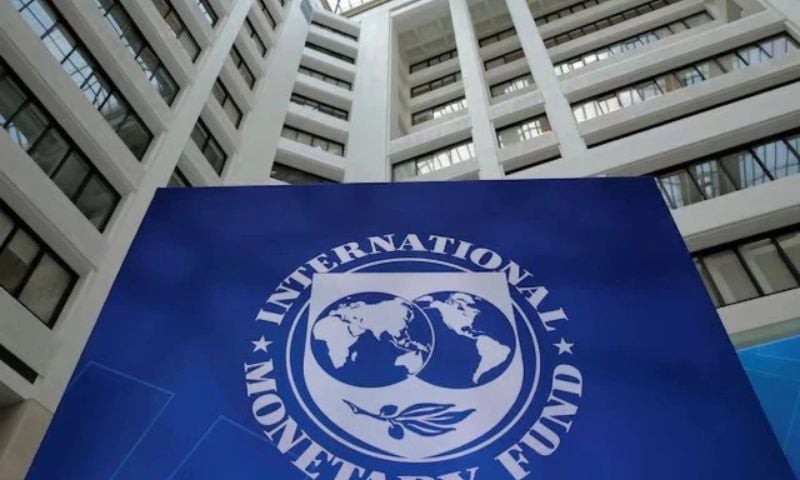
ISLAMABAD: The Executive Board of the International Monetary Fund (IMF) has described Pakistan’s performance under its ongoing economic reform programme as “exceptional”, while dismissing Indian propaganda about the use of loan proceeds, officials familiar with the board discussions said.
According to officials aware of the deliberations held earlier this month, the IMF board broadly appreciated Pakistan’s progress in implementing key programme conditions, particularly in stabilising the economy, controlling inflation and strengthening foreign exchange reserves.
However, the board also noted the importance of further strengthening Pakistan’s tax base, improving revenue mobilisation, and continuing efforts to address social protection needs in order to support inclusive and sustainable economic growth.
The IMF Executive Board met on May 8 and approved the release of a $1.1 billion tranche under the Extended Fund Facility (EFF), along with an additional $220 million under the Resilience and Sustainability Facility (RSF).
Nigel Clarke, the IMF’s First Deputy Managing Director, who chaired the meeting, termed Pakistan’s overall performance “exceptional”, signalling growing confidence among international lenders in the country’s economic management.
Officials said board members commended Pakistan’s commitment to meeting programme targets during the July-December 2025 review period. Pakistan successfully met all major programme conditions and most indicative targets, although the Federal Board of Revenue (FBR) fell slightly short of some tax collection goals.
According to Express Tribune, Board members also acknowledged progress on structural reforms aimed at improving fiscal discipline and economic governance. India, however, once again made propaganda and opposed the approval of IMF funding, alleging that Pakistan could divert the resources towards defence spending. Sources said the IMF board rejected those claims due to a lack of evidence and approved the funding package through a majority vote.
The IMF financing is intended primarily to support Pakistan’s balance of payments and strengthen external financial buffers, while the climate resilience funding under the RSF is designated for budgetary and environmental support initiatives.
Officials noted that India had previously attempted to obstruct Pakistan’s access to financial support from other international institutions, including the Asian Development Bank, the Asian Infrastructure Investment Bank and the World Bank, but without success.
The IMF board viewed Pakistan’s improving economic credibility positively, with officials suggesting that stronger relations with the lender could help Islamabad seek flexibility in future reviews if regional geopolitical tensions or external shocks affect fiscal stability.
Despite the positive assessment, IMF directors noted social indicators in Pakistan for further improvement. The official poverty rate has climbed, while income inequality has risen. Unemployment has also increased to 7.1 per cent, according to official data.
The board urged Pakistan to further accelerate efforts to broaden the tax net, improve tax administration and reduce dependence on external borrowing through export-led growth and increased foreign direct investment, particularly in the manufacturing sector.
The IMF also highlighted the need to shield vulnerable segments of society from inflationary pressures. Directors encouraged the government to further expand support under the Benazir Income Support Programme (BISP), although officials acknowledged that the programme currently covers only around 10 million families, leaving many lower and middle-income households exposed to rising living costs.
Officials said Pakistan’s political leadership is aware of the IMF’s observations and is considering additional administrative measures to improve revenue collection and economic inclusion ahead of the next programme review.