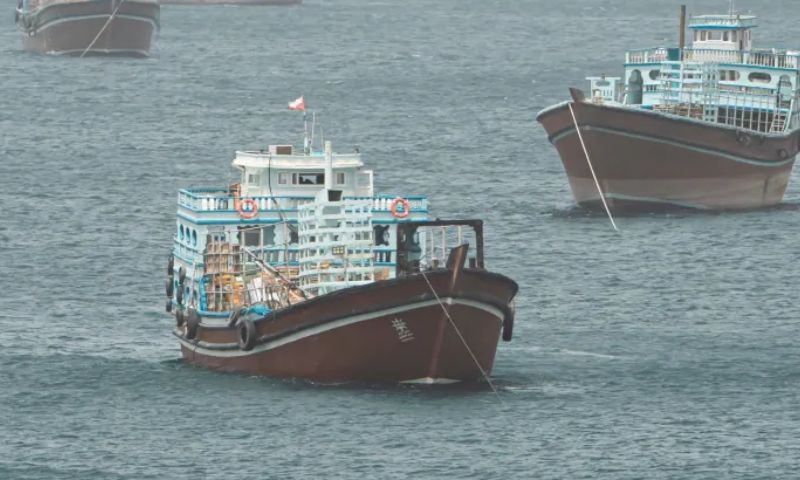
ISLAMABAD: Iran’s Islamic Revolutionary Guard Corps (IRGC) has claimed that it coordinated the passage of 26 vessels through the Strait of Hormuz over the past 24 hours, signalling Tehran’s tightening control over one of the world’s most strategically important maritime routes amid continuing tensions with the United States.
According to a statement carried by Iran’s state-linked ISNA news agency on Wednesday, all vessel movements through the strait are now being conducted “with permission and in coordination with the IRGC Navy”.
The announcement comes as negotiations between Tehran and Washington regarding the reopening of unrestricted maritime traffic through the narrow waterway remain deadlocked.
According to Al Jazeera, later in the day, Iran’s Gulf Strait Authority released a new maritime map on X outlining what it described as a “controlled maritime zone” in the Strait of Hormuz.
Under the newly declared arrangement, vessels will reportedly require authorisation before entering or transiting through designated areas of the strategic corridor.
The authority stated that the zone extends from Kuh-e Mubarak in Iran to waters south of Fujairah in the United Arab Emirates at the eastern entrance of the strait. On the western side, the controlled area stretches from the southern tip of Qeshm Island to Umm al-Quwain.
The Strait of Hormuz remains one of the world’s most critical shipping lanes, historically carrying nearly one-fifth of global energy exports. However, maritime traffic through the passage has been severely disrupted since the outbreak of the United States-Israel conflict with Iran on February 28, after Tehran imposed a blockade on the waterway.
In response, the administration of US President Donald Trump moved to intensify pressure on Tehran by enforcing restrictions on Iranian ports, significantly reducing the country’s oil export capacity — a key pillar of Iran’s economy.
The ongoing standoff has fuelled volatility in global energy markets and sparked growing concerns over the wider economic fallout of prolonged disruptions in the Gulf region.
On Wednesday, the United Nations’ Food and Agriculture Organization (FAO) warned that the continued blockage of shipping routes could trigger a major global food price crisis within the next six to 12 months.
The Rome-based agency described the situation as “the beginning of a systemic agrifood shock”, warning that the impact was already spreading far beyond the energy sector.
“The shock is unfolding in stages: energy, fertiliser, seeds, lower yields, commodity price increases, then food inflation,” the FAO said in its assessment.
Analysts warn that disruptions in shipping and fuel supplies could heavily affect agricultural production and transportation costs worldwide, particularly in import-dependent economies.
Meanwhile, diplomatic efforts to ease tensions appear to have made little progress despite public statements from both sides. President Trump on Wednesday spoke of “progress” in negotiations with Tehran but reiterated that military action remained an option should talks fail to produce an agreement.
Iranian Foreign Minister Abbas Araghchi responded with a warning that any renewed conflict would bring “many more surprises”, while the IRGC cautioned that further attacks on Iran could lead to a broader regional escalation extending beyond the Middle East.
Will Todman, a senior fellow at the Center for Strategic and International Studies, said both Tehran and Washington appear convinced that prolonging economic pressure will ultimately strengthen their negotiating positions.
“I think it’s very difficult to see something that will fundamentally change the calculation, because both sides seem to believe that the longer this goes on, the greater their leverage will be because the more their opponents will be suffering economically,” Todman said.