
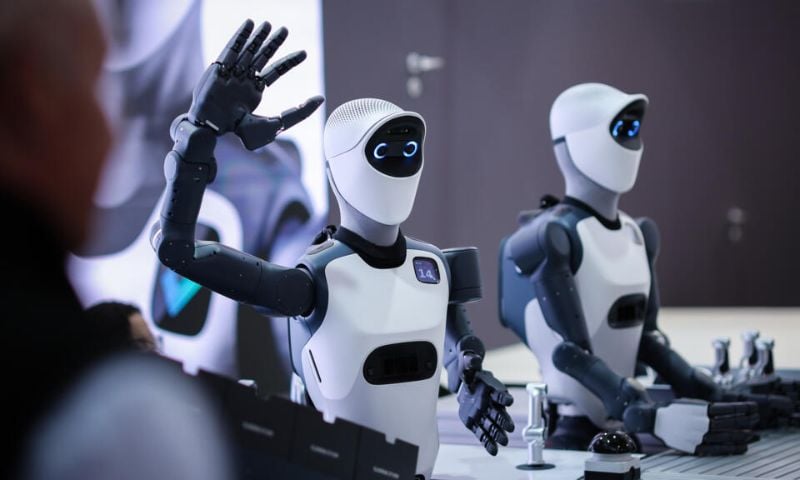
HANOVER, Germany: Artificial intelligence-powered robots are emerging as a potential lifeline for Germany’s struggling manufacturing sector, with cutting-edge technologies showcased at a major industrial trade fair highlighting their growing role in modern industry.
At the event, a humanoid robot developed by Agile Robots demonstrated “physical AI” capabilities by carefully handling tools, drawing significant attention from visitors.
The display underscored optimism that integrating AI into industrial processes could revitalise German factories and help Europe compete with technological advances in the United States and China.
Rory Sexton, chief executive of Agile Robots, said such systems can “actually solve industrial problems”, particularly in sectors like automotive manufacturing.
He added that the company aims to begin deploying its robots in German factories from next year.
Physical AI
The concept of “physical AI” — artificial intelligence applied to real-world, hands-on tasks — was a central theme at the Hanover fair, which hosted more than 3,000 exhibitors.
German Chancellor Friedrich Merz also visited the exhibition, expressing strong support for expanding AI use in industry.
Merz stressed that AI should be “embedded in the key sectors of our industry and especially” in small- and medium-sized enterprises to generate “industrial added value and high-quality jobs”.
Despite this momentum, Germany faces stiff competition from China, where companies like Unitree have made notable progress in humanoid robotics.
Humanoid robots
However, Sexton maintained confidence, stating “we’ll soon be able to do what (Unitree) are doing”, while emphasising Germany’s strengths in engineering and automation.
Industry surveys suggest growing confidence, with 58 percent of firms believing humanoid robots could help address labour shortages.
Experts also point to Germany’s vast industrial data resources as a competitive advantage.
However, concerns remain. Critics argue that data use is fragmented, while some industry leaders warn of risks associated with AI errors.
“With AI, I also see the dark side of the force,” said Jochen Heinz, highlighting potential challenges as adoption increases.