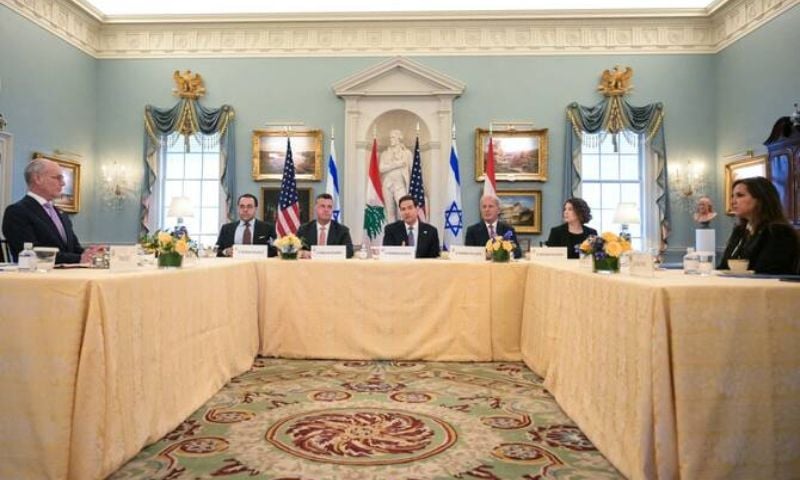
WASHINGTON: The United States is set to host a new round of talks between Israel and Lebanon on Thursday, as part of ongoing efforts to stabilise a fragile ceasefire and move towards a broader agreement, a US official said.
The discussions will take place at the State Department in Washington, DC, and will again be held at the ambassadorial level.
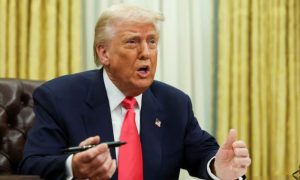
The initiative follows a tentative US-brokered truce announced last week by Donald Trump, aimed at halting hostilities between Israel and Hezbollah.
“We will continue to facilitate direct, good-faith discussions between the two governments,” the State Department official said, speaking on condition of anonymity, according to AFP.
The latest talks come after a rare meeting between Israeli and Lebanese ambassadors on April 14 in Washington. Despite the announcement of a 10-day truce three days later, sporadic violence has persisted, underscoring the volatility of the situation on the ground.
Pressure on Hezbollah
Israel has signalled that its strategy combines both diplomatic engagement and military pressure. Defence Minister Israel Katz said the overarching aim remains the disarmament of Hezbollah and the removal of threats to northern Israeli communities.
“The campaign in Lebanon seeks to neutralise Hezbollah through a combination of military and diplomatic measures,” Katz said during a memorial event. He also warned that Israeli forces, still deployed in southern Lebanon, would respond with “full force” to any threats.
Lebanon’s balancing act
Lebanese President Joseph Aoun has defended the decision to enter talks, framing it as a necessary step to end hostilities and restore sovereignty in the south. “The choice to negotiate aims to stop hostilities, end the Israeli occupation of southern regions and deploy the Lebanese army to internationally recognised borders,” Aoun said.
He emphasised that the negotiations are being conducted independently and are not linked to parallel US-Iran diplomacy. Tehran had reportedly tied its willingness to resume talks with Washington to a ceasefire in Lebanon.
Aoun has appointed former ambassador to the US Simon Karam to lead the Lebanese delegation, signalling Beirut’s intent to pursue a structured diplomatic track. “Lebanon is facing two options: either continued war with all its consequences, or negotiations to achieve lasting stability,” Aoun said. “I have chosen negotiations, and I am full of hope that we will be able to save Lebanon.”
Domestic backlash intensifies
However, the move towards negotiations has sparked sharp criticism within Lebanon, particularly among Hezbollah supporters and allies.
Graffiti in Beirut’s southern suburbs – a Hezbollah stronghold – condemned Aoun and Prime Minister Nawaf Salam, accusing them of betrayal. Messages rejecting any form of normalisation with Israel have also appeared.
Senior Hezbollah official Mahmud Qamati criticised the government’s approach, while lawmaker Hassan Fadlallah warned that any agreement reached without broader consensus would not be accepted by the public. “The people will not accept that their sacrifices be squandered,” Fadlallah said, referring to the heavy toll of the conflict.
According to Lebanese authorities, nearly 2,300 people have been killed and over one million displaced since the escalation began, after
With no formal diplomatic relations between Israel and Lebanon, the US-facilitated talks represent a rare channel of engagement. Whether they can translate into a sustainable peace remains uncertain, particularly amid internal divisions in Lebanon and continued military tensions on the ground.