
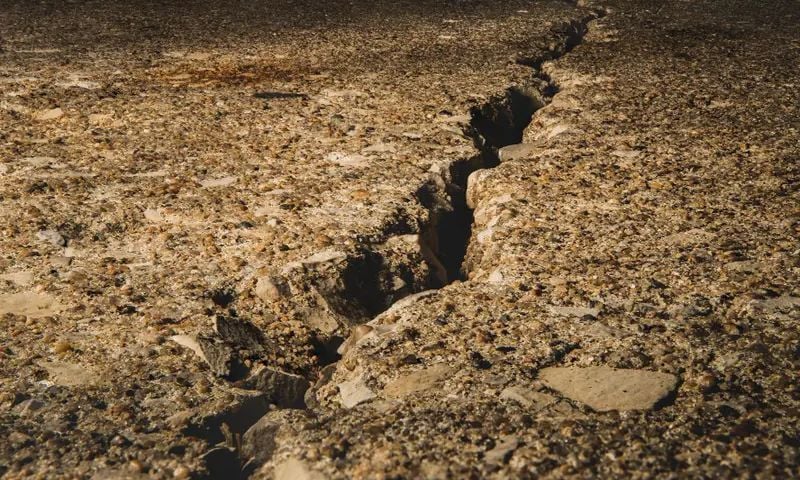
TOKYO, Japan: A powerful 7.4-magnitude earthquake struck northern Japan on Monday, prompting the Japan Meteorological Agency (JMA) to issue a tsunami warning for waves that could reach up to three metres (10 feet).
The quake occurred at 4:53 pm (0753 GMT) in the Pacific Ocean off Iwate prefecture, with tremors felt strongly enough to sway buildings as far away as Tokyo, several hundred kilometres from the epicentre.
The agency warned that the first tsunami waves could reach coastal areas shortly after the quake.
“Evacuate immediately from coastal regions and riverside areas to a safer place such as high ground or an evacuation building,” it said, cautioning that significant damage from incoming waves was possible.
“Tsunami waves are expected to hit repeatedly. Do not leave safe ground until the warning is lifted,” it added.
In response, the prime minister’s office announced the formation of a crisis management team.
Japan lies along the seismically active Pacific “Ring of Fire”, where four major tectonic plates meet. The country experiences around 1,500 earthquakes each year, accounting for roughly 18 percent of global seismic activity.
While most quakes are minor, their impact depends on factors such as location and depth. Japan’s vulnerability was highlighted in 2011, when a magnitude-9.0 earthquake triggered a tsunami that killed or left missing around 18,500 people and led to a nuclear disaster at Fukushima.