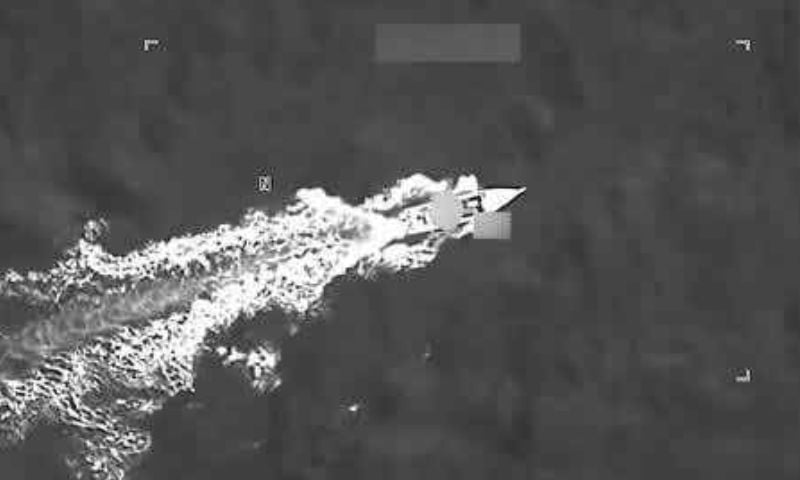
WASHINGTON: The United States military has confirmed that three people were killed in a strike on a suspected drug-trafficking vessel in the Caribbean on Sunday, marking the latest escalation in a controversial campaign that has now reportedly claimed at least 180 lives.
According to US Southern Command, which oversees American military operations in the region, the vessel was targeted in what it described as a “lethal kinetic strike” against a craft allegedly operated by designated terrorist organisations.
The incident forms part of a broader US operation that began in September last year under the Trump administration, which has declared it is effectively engaged in conflict with what it calls “narco-terrorists” operating across Latin America.
In a statement posted on social media platform X, US Southern Command said intelligence had confirmed that the boat was travelling along established narcotics trafficking routes in the Caribbean and was engaged in drug-smuggling activities. It further stated that “three male narco-terrorists were killed during this action.”
On April 19, at the direction of #SOUTHCOM commander Gen. Francis L. Donovan, Joint Task Force Southern Spear conducted a lethal kinetic strike on a vessel operated by Designated Terrorist Organizations. Intelligence confirmed the vessel was transiting along known… pic.twitter.com/yMtPhXBdNn
— U.S. Southern Command (@Southcom) April 20, 2026
Military officials have indicated that at least six similar strikes have been carried out during April alone, bringing the total number of fatalities in such operations to a minimum of 180, according to an AFP tally.
However, the campaign has drawn increasing scrutiny internationally. The US administration has not released conclusive evidence publicly to substantiate claims that the targeted vessels were involved in drug trafficking, fuelling concerns among legal experts and human rights organisations.
Critics argue that the strikes may constitute extrajudicial killings, particularly as they appear to have targeted individuals who were not posing an immediate threat to the United States at the time of the attacks.
International law specialists have also questioned the legal basis for such operations, warning that the campaign risks undermining established principles of due process and the rules of armed conflict.
Despite the controversy, Washington has maintained its stance, insisting that the operations are necessary to combat transnational criminal networks it designates as terrorist organisations and to disrupt narcotics flows into the United States.
The latest incident is likely to intensify the ongoing debate over the legality and proportionality of the US military’s actions in the Caribbean, as scrutiny grows over the expanding scope of its anti-drug operations in the region.