Key Points
- 79 new foreign companies have begun operations since 2023
- Rs 40.7 billion invested across priority sectors
- Major acquisitions in energy, telecom and pharmaceuticals
- 1,157 foreign firms are currently operating in the country
- Limited exits despite global corporate restructuring
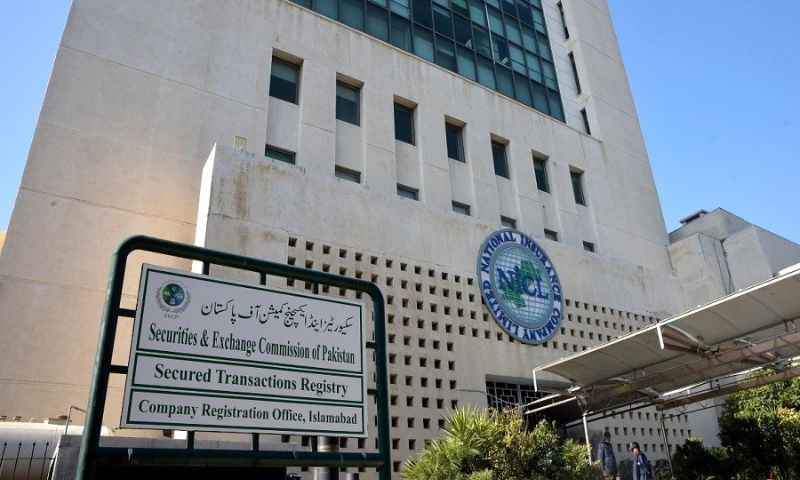
ISLAMABAD: Pakistan has attracted sustained foreign corporate interest across various sectors, including energy, logistics, telecommunications, pharmaceuticals, mining, and digital services, over the past three years, according to the country’s corporate watchdog.
The Securities and Exchange Commission of Pakistan, which is the sole registry and regulator for corporate entities, reported that 79 new foreign companies commenced operations between 2023 and 2025, reflecting continued cross-border investment despite global economic uncertainty. During the same period, foreign firms invested Rs 40.7 billion in key sectors and carried out 61 shareholding transactions involving Pakistani entities.
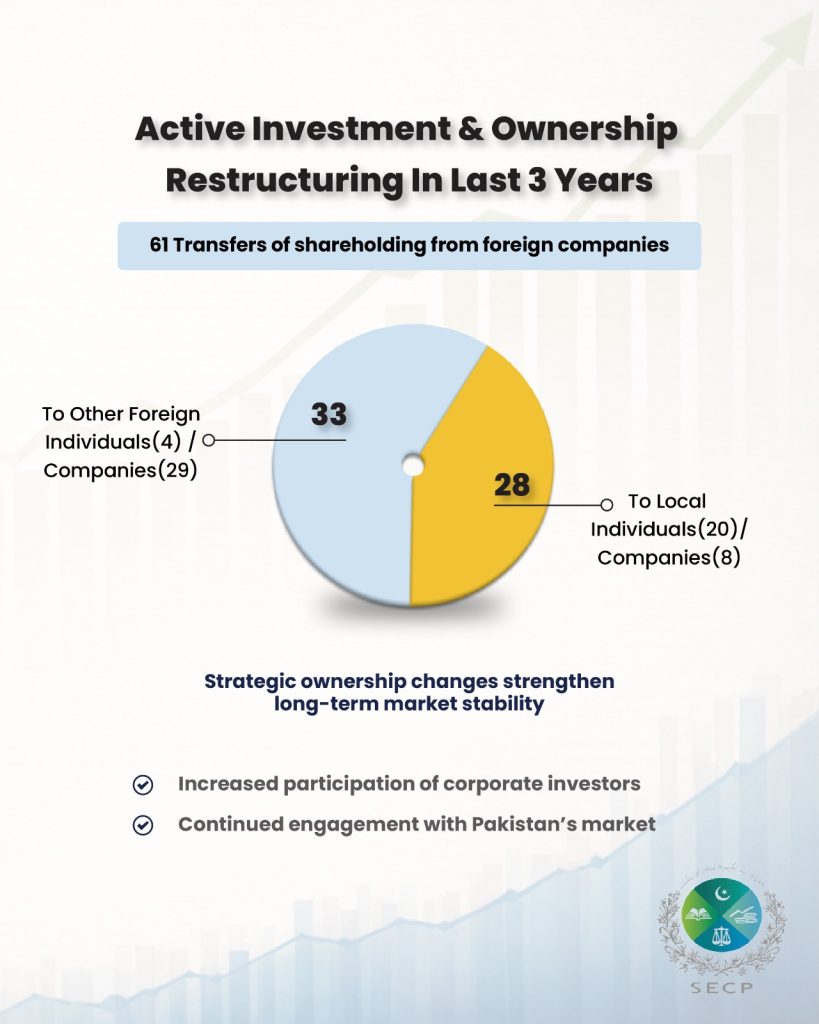
Of those transactions, 29 involved transfers to other foreign companies, four to foreign individual investors, 20 to local individual investors and eight to local corporate entities. Officials stated that many of the changes were linked to global restructuring by multinational corporations rather than market exits.
The energy sector accounted for several high-profile deals. Saudi Arabia’s Wafi Energy acquired Shell Pakistan as part of a global portfolio reorganisation by UK-based Shell plc. Switzerland-headquartered commodity trader Gunvor Group and Total Parco Limited acquired equal stakes in TotalEnergies Pakistan, the local subsidiary of France’s TotalEnergies. Saudi Aramco, the world’s largest oil exporter, purchased a 40 per cent equity stake in Gas & Oil Pakistan Limited, a downstream fuel marketing company.
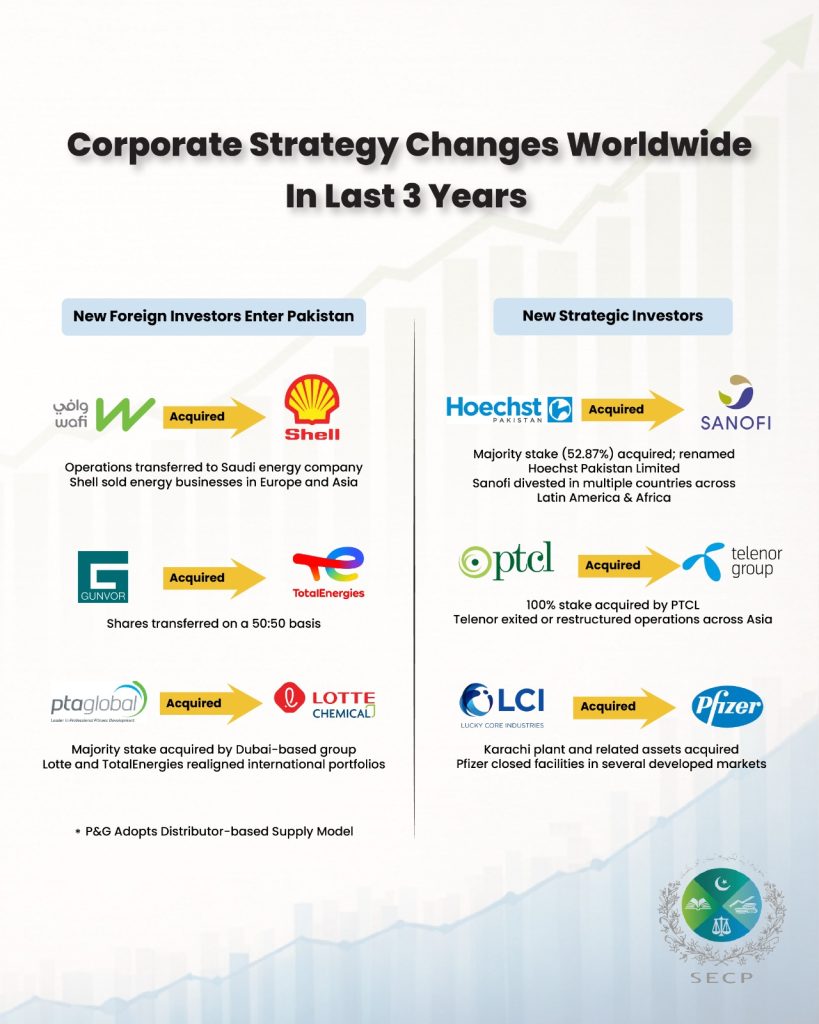
In logistics and infrastructure, Dubai-based DP World entered into a joint venture with Pakistan’s state-owned National Logistics Corporation to expand port-linked and freight operations. In telecommunications, Pakistan Telecommunication Company Limited, partly owned by UAE telecom group e&, acquired Telenor Pakistan as part of a broader regional consolidation in the telecom sector.
The pharmaceutical industry also saw restructuring. US-based Pfizer transferred its Karachi manufacturing plant and related assets to Lucky Core Industries, a Pakistani conglomerate, to maintain domestic production. France’s Sanofi divested its majority stake in its Pakistan business to a local investor consortium, after which the company was renamed Hoechst Pakistan Limited.
Technology and digital services are emerging as growth areas. Bazaar Technologies acquired Wemsol, and Saudi Arabia’s Waqub Data Company secured an 80 per cent stake in Pakistani technology firm Woot Tech. In the electric vehicle segment, China’s BYD and Chery Automobile, along with UAE-based NWTN Motors, have entered the Pakistani market.
ALSO READ: Pakistan Sees Surge in Foreign Investment Returns Amid Rising Investor Confidence
Mining and minerals have drawn renewed foreign interest, particularly in copper and gold projects. Canada’s Barrick Gold and US-based Strategic Metals and Nova Minerals have expanded engagement, reflecting Pakistan’s push to develop its untapped mineral reserves.
Under the second phase of the China-Pakistan Economic Corridor, a flagship infrastructure and industrial cooperation framework between Beijing and Islamabad, authorities reported 24 business-to-business agreements worth more than $1.5 billion. They also reported memoranda of understanding exceeding $7 billion, across agriculture, renewable energy, information technology and industrial relocation.
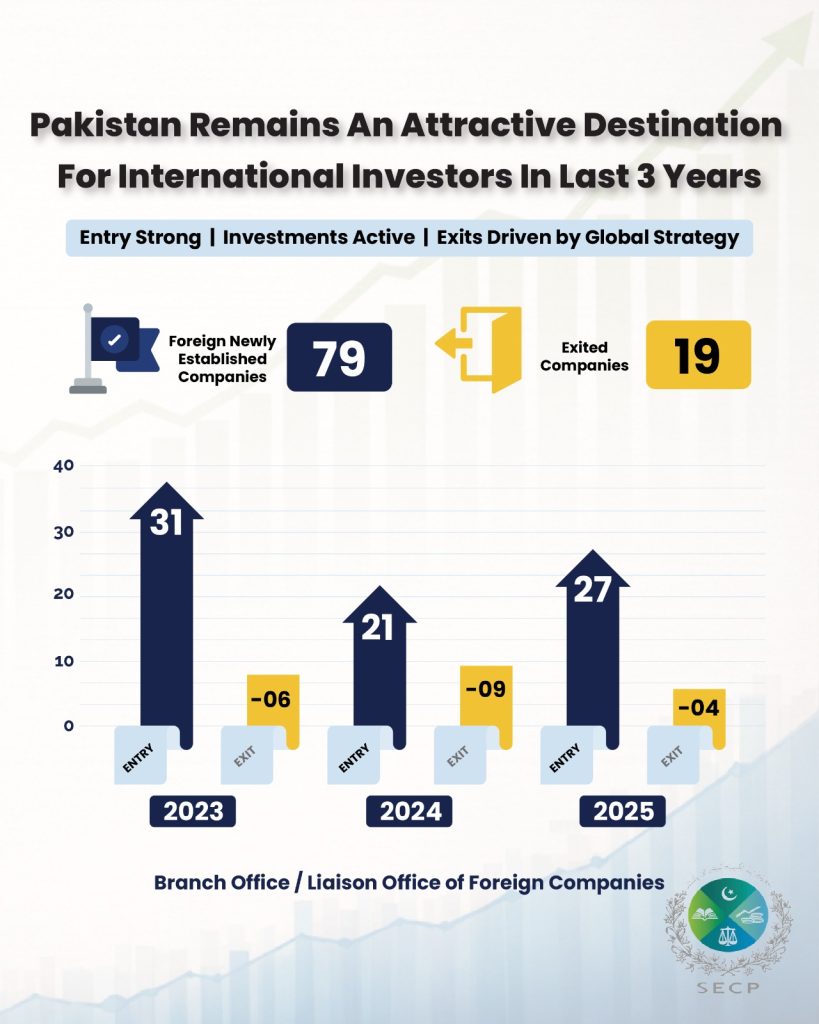
According to the regulator’s data, 1,157 foreign companies are currently registered and operational in Pakistan. Only 19 foreign firms exited the market during the past three years. In 2023, 31 companies entered and six ceased operations. In 2024, 21 entered and nine exited. In 2025, 27 new companies registered, and four closed operations.