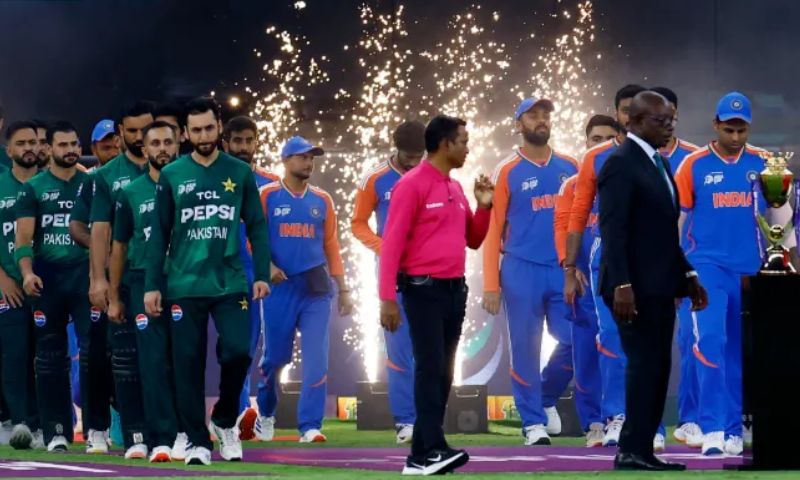
ISLAMABAD: Cricket’s fiercest rivalry returns to the global stage on 15 February, when Pakistan and India meet in the ICC Men’s T20 World Cup in Colombo — a fixture whose significance transcends sport and grips entire nations. What happens on the field may be decided in a few hours, but the impact off it begins long before the first ball is bowled.
In both countries, days before the match, streets will fall eerily quiet as millions tune in to watch what many consider the most anticipated contest in world sport. Shops close early, and households gather around television screens, tablets and phones — not simply to witness a game, but to experience a cultural moment that few others can match.
That anticipation is rooted in cricketing history. Pakistan and India have played some of the most memorable matches in T20 World Cup history, each encounter layered with emotion, drama and razor-thin margins. India’s dominance in past World Cups — with multiple victories over Pakistan — has only heightened the desire on the other side to level the ledger in 2026.
Shockwaves
This year’s fixture carries additional intrigue. The match was confirmed after days of uncertainty, involving behind-the-scenes negotiations between cricket boards and governments. At one point, Pakistan had decided to boycott the clash in solidarity with Bangladesh over separate tournament disputes — an impasse that sent shockwaves through the cricket world and risked undermining billions in broadcast revenue pegged on the fixture’s viewership.
Economics and emotion have collided spectacularly. Following the announcement that the match will go ahead, airfares to Colombo from major Indian cities soared, with some routes fetching prices well above normal levels as fans scramble to secure spots in the neutral venue’s stands. Hotel rooms are similarly in high demand.
But beyond commercial pressures lies a deeper, more visceral connection. In Pakistan’s cricket-mad towns and Indian cities alike, generations have grown up waiting for this moment. Social media feeds are awash with childhood photos in green and blue jerseys, memes revisiting classic “Mauka Mauka” adverts and debates over squad picks and strategies.
Psychological upper hand
For families divided by geography but united by love of the game, the match becomes a shared experience — a rare point of connection in a world of political tensions. In Lahore, Karachi and Islamabad, fans decked out in Pakistan green will gather in homes and cafés, heartbeats rising with every boundary and wicket. In Delhi, Mumbai and beyond, Indian supporters will watch with similar passion as their team seeks to affirm its long-standing edge in head-to-head World Cup battles.
Cricket pundits point to the match’s potential to shape not just tournament fortunes but legacies. A win for Pakistan would interrupt India’s psychological upper hand and invigorate a generation of players and fans. For India, another victory would reinforce a reputation as the benchmark in world cricket.
Yet for many, the real story isn’t just about who wins. It’s about collective experience — the shared anticipation in queues at tea stalls, the crowd’s roar echoing through neighbourhoods, and the emotional rollercoaster played out on screens and in living rooms across South Asia and among the diaspora globally.
On 15 February, when Pakistan and India face off at R. Premadasa Stadium in Colombo, it won’t simply be a match. It will be a cultural event that stops time — a moment when ordinary routines are put on hold and two nations, intertwined by history and rivalry, lock eyes on 20 overs of world-class cricket.