
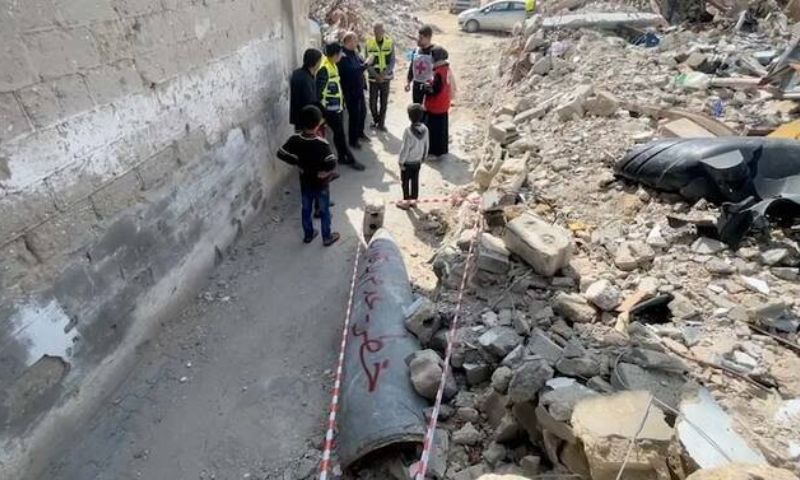
GAZA CITY: Thousands of unexploded bombs and shells buried beneath Gaza’s rubble pose a deadly danger to civilians returning home, Handicap International warned on Wednesday, calling for urgent international demining access and equipment to prevent further loss of life.
“The risks are enormous — an estimated 70,000 tonnes of explosives have been dropped on Gaza since the start of the war,” said Anne-Claire Yaeesh, the organisation’s director for the Palestinian territories, in a statement quoted by international media.
She said the sheer volume of munitions, coupled with widespread destruction, means that thousands of unexploded bombs and shells likely remain buried in rubble, threatening returning families, rescue workers, and humanitarian staff.
The NGO, which has decades of experience in post-conflict demining, said Gaza’s dense urban environment will make clearance operations particularly dangerous and time-consuming. “Every collapsed building and every street may conceal unexploded devices capable of killing or maiming anyone nearby,” the group cautioned.
The UN Mine Action Service (UNMAS) has earlier estimated that up to 10 per cent of munitions fired in conflicts fail to detonate, suggesting that Gaza could face one of the world’s worst contamination crises once the fighting stops.
Aid agencies and residents have reported sightings of unexploded missiles, shells, and submunitions scattered across destroyed neighbourhoods. Relief groups say these remnants are hampering humanitarian access and reconstruction, as debris removal and rebuilding cannot safely proceed without systematic clearance.
Handicap International called for immediate access for demining teams, the import of protective gear and detection equipment, and a coordinated international effort to mark, remove, and destroy explosive remnants of war.
Humanitarian officials warn that unless the contamination is addressed, Gaza will face years of lethal hazards — similar to post-conflict contamination in Iraq, Syria, and Lebanon — with children and returning families at greatest risk.