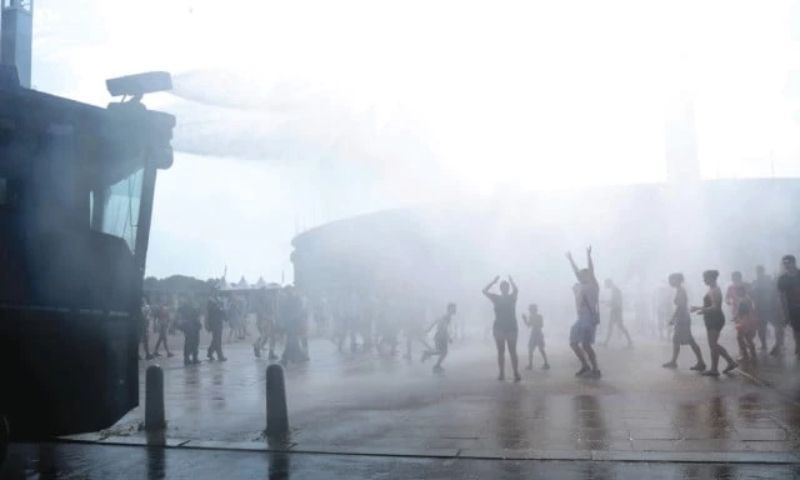
GENEVA/PARIS: A severe heatwave sweeping across Europe has resulted in approximately 1,300 excess deaths within a week, according to the World Health Organization (WHO), with France accounting for the majority of fatalities.
The WHO said the deaths were recorded between 21 and 29 June, during a period of intense and prolonged high temperatures affecting tens of millions of people across the continent.
WHO Director-General Tedros Adhanom Ghebreyesus described heat stress as a “silent killer”, warning that European infrastructure is not adequately designed to cope with such extremes.
Europe is the fastest-warming continent on Earth, heating at twice the global average. Right now 150 million people are living under extreme heat, hundreds have died, schools are shut, grids are buckling.
Driven by climate change and global warming, the phenomenon of the…
— Tedros Adhanom Ghebreyesus (@DrTedros) June 28, 2026
In France alone, public health authorities reported around 1,000 excess deaths since June 24, based on preliminary data comparing current mortality levels with previous averages. Officials cautioned that the final toll may rise as reporting remains incomplete.
Public Health France said the worst-affected regions were those placed under the highest red heat alerts, where temperatures exceeded 40°C for extended periods.
Around 85% of the excess deaths involved people aged 65 and above, highlighting the heightened vulnerability of elderly populations.
Authorities also noted a sharp rise in fatalities occurring at home, particularly in the Île-de-France region, which includes Paris. Elsewhere in Europe, Germany and Italy experienced severe heat conditions, with temperatures in some areas surpassing 40°C.
Germany recorded a preliminary high of 41.3°C near Saarbrücken, close to the French border, while Italy also faced widespread heat stress across several regions. Scandinavia and Central Europe were also affected.
Denmark reported its highest-ever recorded temperature, reaching 36.6°C near Odense, according to the national meteorological institute. Slovakia confirmed its warmest night on record, with temperatures remaining above 26°C. In the United Kingdom, at least six people have died during the recent hot spell, including individuals who got into difficulty while swimming in open water.
Meteorologists attributed the prolonged heatwave to an omega blocking weather pattern, which traps hot air over large areas while preventing cooler systems from moving in. Temperatures across parts of Europe have reached up to 18°C above seasonal averages.
Although conditions have begun to ease in parts of France, authorities warned that pressure on hospitals and emergency services is likely to persist in the coming days. Officials also reported an increase in wildfire incidents compared with the same period last year.