Key points
- Two-thirds of 900,000 returned children remain out of school
- Afghan girls denied education
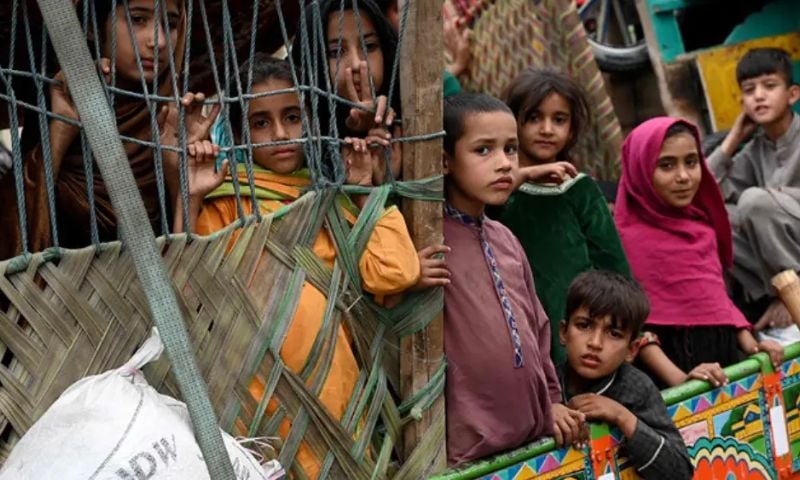
ISLAMABAD: The United Nations said around 0.6 million children who have returned to Afghanistan remain out of school, highlighting the mounting pressure on the country’s education system amid funding shortages and restrictions on girls’ schooling.
UN Secretary-General spokesman Stephane Dujarric, citing the UN Office for the Coordination of Humanitarian Affairs (OCHA), said around two-thirds of the 900,000 children who had returned to Afghanistan remained without access to education.
Dujarric said Afghanistan’s education system was facing multiple challenges. The United Nations and its humanitarian partners were providing support where possible, but persistent funding shortages had reduced their capacity to support children’s education.
Girls face additional barriers. Those beyond the sixth grade remain barred from formal education, leaving millions without access to secondary schooling.
READ ALSO: 2.4 Million Afghan Girls Banned from Schools Since Taliban Return: UNESCO
According to the UN Educational, Scientific and Cultural Organization (UNESCO), around 2.4 million girls in Afghanistan had been denied access to secondary education since the Taliban returned to power in August 2021.
UNESCO said Afghanistan was the only country in the world where girls and women were formally barred from education beyond primary school. UN agency has warned that the restrictions could cause significant long-term damage to the country’s economy and society.
The Taliban had repeatedly said after returning to power that conditions would be created for girls to resume their education.
However, secondary and high schools for girls remained closed in March 2022, and women were subsequently barred from universities in December 2022.
The education crisis has been further complicated by the return of hundreds of thousands of Afghan children from neighbouring countries. The situation has increased pressure on an already strained education system and humanitarian agencies.
Femal children without civil liberties
Beyond education, Afghan women and girls face sweeping restrictions on their participation in public and economic life.
The Taliban authorities have imposed limits on women’s employment, movement and access to public spaces. Women in Afghanistan are largely excluded from many workplaces and required to observe strict rules on dress and travel.
UN agencies have repeatedly warned that these restrictions are deepening women’s economic and social exclusion. Caging women within their homes would limit their ability to access essential services and contribute to Afghanistan’s development.
Afghanistan’s education crisis is part of an overall social deterioration since the Taliban returned to power in August 2021.
The country continues to face severe humanitarian and economic pressures, with widespread poverty, unemployment and food insecurity affecting millions of people.
The loss of livelihoods and reduced access to essential services have left many families increasingly dependent on humanitarian assistance.
Women and girls have been particularly affected. Restrictions on education, employment, movement and participation in public life have sharply reduced their opportunities to earn income.
The exclusion of women from large sections of the workforce has also weakened household incomes and deprived the wider economy of a substantial part of its potential workforce.
The restrictions have extended into healthcare and other essential services. Limits on women working in certain sectors have complicated the delivery of assistance.
International agencies have warned that restrictions on women’s participation can directly undermine humanitarian operations in a country.
Afghanistan’s young population faces particularly serious challenges. Millions of children have experienced disrupted schooling, poverty and limited prospects for employment.
The prolonged exclusion of girls from secondary and higher education risks creating a generation with fewer skills and opportunities.
Afghanistan’s isolation isolation from much of the international financial system has deepened the crisis. A weak private-sector activity and recurring natural disasters are to rub salt in the wounds of the Afghan people.
Droughts, floods and earthquakes have repeatedly destroyed homes and livelihoods, increasing pressure on already vulnerable communities.
The combination of economic hardship, restrictions on women, disrupted education and humanitarian dependence has created a fragile social environment in which Afghanistan’s long-term development prospects remain deeply uncertain.