
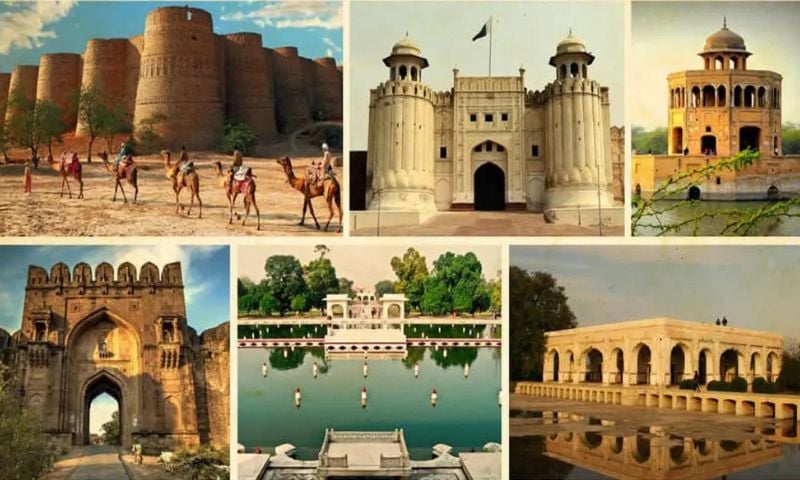



ISLAMABAD: As the world observes World Heritage Day on April 18, the annual celebration of humanity’s collective cultural legacy has taken on an unexpected diplomatic dimension. Pakistan, currently serving as a mediator in the ongoing standoff between the United States and Iran, finds itself at the centre of both heritage preservation and peace efforts, with all three nations collectively serving as custodians of 61 UNESCO World Heritage Sites.
World Heritage Day raises awareness about the importance of cultural heritage to humanity and advocates for its protection for future generations. Cultural heritage represents a civilisational value that reflects the history and diverse identity of peoples. It also highlights the cultural diversity of nations, emphasising the pivotal role that heritage plays in fostering national belonging, shaping societal awareness, and supporting dialogue among civilisations worldwide.
This year’s observance comes at a critical juncture. Since late 2025, tensions between Tehran and Washington have escalated following the collapse of renewed nuclear talks and a series of maritime incidents in the Strait of Hormuz. Pakistan, which shares a 959-kilometer border with Iran and maintains complex security ties with the United States has emerged as a uniquely positioned interlocutor.
But beyond the diplomatic shuttles and closed-door negotiations, there is another story unfolding: the quiet recognition that the ancient stones of Persepolis, the Indus Valley ruins of Mohenjodaro, and the natural wonders of Yellowstone National Park belong not to any single nation but to all humanity.
Pakistan’s six treasures spanning millennia
Pakistan ratified the UNESCO World Heritage Convention on July 23, 1976. Since then, six sites have been inscribed on the World Heritage List, all recognised for their outstanding cultural significance. These span from Sindh to Punjab and Khyber Pakhtunkhwa, representing ancient Indus Valley ruins, Buddhist monasteries, Mughal-era monuments, and a 16th-century fortress.
The Archaeological Ruins at Mohenjodaro (1980)
Located in Larkana district, Sindh, this 4,500-year-old Indus Valley metropolis is believed to be the oldest physical evidence of urban planning. From well-planned streets to baked brick structures and a sophisticated drainage system, the layout proves the occupants were expert planners and civil engineers.
Rediscovered in 1920 after being buried under dust and sand for centuries, the site yielded valuable gold, ivory, and lapis lazuli artifacts. No temples or religious monuments were uncovered, only granaries, baths, and marketplaces. A civilisation that prioritised life over war.
Taxila (1980)
A vast serial site in Punjab that includes a Mesolithic cave and archaeological remains of four early settlement sites, Buddhist monasteries, and a Muslim mosque and madrassa.
Situated strategically on a branch of the Silk Road linking China to the West, Taxila reached its apogee between the 1st and 5th centuries. The Bihr mound is associated with Alexander the Great’s triumphant entry into the city.
Buddhist Ruins of Takht-i-Bahi and Sahr-i-Bahlol (1980)
Dating back to 1 AD, Takht-i-Bahi monastery in Mardan, Khyber Pakhtunkhwa, is one of the most well-preserved Buddhist complexes. Its name means “throne of spring.” Due to its mountainous location, it remained largely unaffected by invaders. The monastery started as a small structure but gradually became an influential complex over 800 years.
Historical Monuments at Makli, Thatta (1981)
One of the largest communal burial sites in the world, dating to the 14th century. Historians believe 500,000 to one million people were buried here between the 14th and 18th centuries. The intricate stone carvings display Hindu, Islamic, Persian, Mughal, Gujarati, and Middle Eastern artwork, proof the necropolis served multiple religions and civilizations.
Fort and Shalamar Gardens in Lahore (1981)
Masterpieces of Mughal architecture and landscape design from Emperor Shah Jahan’s era. The fort contains marble palaces and mosques decorated with mosaics and gilt. The gardens, built on three terraces with lodges, waterfalls, and ornamental ponds, represent Mughal garden design at its apogee. Both complexes were formerly on UNESCO’s List of World Heritage in Danger but have been removed, though ongoing conservation efforts continue.
Rohtas Fort (1997)
Built by Pashtun King Sher Shah Suri in the 16th century near Jhelum, Punjab. UNESCO describes it as an “exceptional example of Muslim military architecture of Central and South Asia.” The fortress is surrounded by four kilometers of fortified walls reinforced with 68 bastion towers and 12 gates. It once held a force of up to 30,000 personnel.
Pakistan also has 26 sites on UNESCO’s tentative list awaiting future nomination.
Iran: A treasure trove of 29 World Heritage Sites
Iran, a land rich in history and culture, boasts 29 UNESCO World Heritage Sites as of July 2025, 27 cultural and 2 natural, placing it among the top 10 countries globally. These span from ancient archaeological ruins to lush natural landscapes, reflecting the country’s diverse heritage.
میراث فرهنگی ما، تنها کالبدی از سنگ و آجر نیست؛ تپش حیات در رگهای تمدن است.
۲۹ فروردین (۱۸ آوریل)، روز جهانی بناها و محوطههای تاریخی با شعار امسال:
«میراث زنده و واکنش اضطراری»
یادآور اینکه حفاظت از ریشهها در بحرانها، انتخاب نیست، یک ضرورت است.
#میراث_فرهنگی #ICOMOS pic.twitter.com/SOU3F1PYCW— ایرانِ باشکوه (@MCTH_ir) April 18, 2026
Persepolis (1979)
One of Iran’s most iconic sites, this was the ceremonial capital of the Achaemenid Empire, founded by Darius the Great in 518 BC. Located near Shiraz, the grand complex showcases massive stone columns, intricate reliefs, and royal palaces. Despite being burned by Alexander the Great in 330 BC, the ruins remain a stunning testament to Persia’s rich history.
Meidan Emam, Isfahan (1979)
Also called Naqsh-e Jahan Square, this huge public square is surrounded by the Shah Mosque, Sheikh Lotfollah Mosque, and Ali Qapu Palace. Built during the Safavid era in the 17th century, it is one of the largest squares in the world.
Pasargadae (2004)
Founded by Cyrus the Great in the 6th century BC, this was the first capital of the Achaemenid Empire. The most famous structure is the Tomb of Cyrus, an elegantly simple stone monument.
Historic City of Yazd (2017)
One of the oldest continuously inhabited cities in the world, renowned for its desert architecture including wind towers (badgirs) and qanats (underground water channels). The city holds significant Zoroastrian heritage.
Bam and its Cultural Landscape (2004)
Famous for Arg-e Bam, the largest adobe structure in the world, dating back to the Achaemenid Empire. It was a major stop on the Silk Road before being heavily damaged in a 2003 earthquake.
Natural Sites
The Lut Desert (2016) is one of the hottest places on Earth, with surface temperatures exceeding 70°C. The Hyrcanian Forests (2019) are 25-million-year-old woodlands along the Caspian Sea, home to the rare Persian leopard.
Other notable Iranian sites include the Armenian Monastic Ensembles (2008), Bisotun (2006), Golestan Palace (2013), Gonbad-e Qabus (2012), Shushtar Historical Hydraulic System (2009), Tabriz Historic Bazaar (2010), and the Prehistoric Sites of the Khorramabad Valley (2025).
United States: 26 natural and cultural wonders
The United States boasts 26 UNESCO World Heritage Sites as of January 2025, ranging from indigenous cliff dwellings to modern architectural masterpieces.
Trump: “We are the inheritors of the most incredible civilization that has ever existed, and our task is to defend it.” pic.twitter.com/z3zuwbXwty
— TheBlaze (@theblaze) April 17, 2026
Mesa Verde National Park, Colorado (1978)
Preserves ancient cliff dwellings of the Ancestral Pueblo people who thrived from AD 600 to 1300.
Yellowstone National Park (1978)
Renowned for geothermal features including the iconic Old Faithful geyser and diverse ecosystems home to grizzly bears, wolves, and bison.
Grand Canyon National Park, Arizona (1979)
A geological marvel carved by the Colorado River over millions of years.
Independence Hall, Pennsylvania (1979)
The birthplace of the United States, where the Declaration of Independence and the Constitution were debated and adopted.
Statue of Liberty, New York (1984)
A universal symbol of freedom and democracy.
Hopewell Ceremonial Earthworks, Ohio (2023)
Eight monumental earthworks constructed by the Hopewell culture between 1 and 400 AD, showcasing astronomical sophistication.
Moravian Church Settlements (2024)
Historic communities established in the 18th century, reflecting unique town planning and architecture.
Other US sites include Everglades National Park, Redwood National Parks, Mammoth Cave, Olympic National Park, Great Smoky Mountains, Cahokia Mounds, La Fortaleza (Puerto Rico), Yosemite, Chaco Culture, Monticello, Hawaii Volcanoes, Taos Pueblo, Carlsbad Caverns, Waterton-Glacier International Peace Park, Papahānaumokuākea, Poverty Point, San Antonio Missions, Frank Lloyd Wright buildings, and the vast Kluane/Wrangell-St. Elias/Glacier Bay/Tatshenshini-Alsek transboundary park.
A shared inheritance
As World Heritage Day 2026 draws to a close, the standoff between Iran and the United States remains unresolved. But those close to the talks say a small window has opened, one framed by ancient stones and shared human achievement.
Pakistan prime minister’s message on International Day for cultural heritage
On the occasion of the International Day for Cultural Heritage, Prime Minister Muhammad Shehbaz Sharif has reaffirmed the government’s commitment to preserving Pakistan’s rich and diverse cultural legacy for future generations.
A legacy of ancient civilisations
In his message, the Prime Minister stated that Pakistan’s homeland carries the legacy of some of the world’s oldest civilisations, reflecting a vibrant tapestry of human creativity and diversity. He noted that the observance of a dedicated day for cultural heritage at the global level underscores its profound importance to humanity.
Prime Minister Muhammad Shehbaz Sharif’s Message on International Day for Cultural Heritage.
Our homeland carries the legacy of some of the world’s oldest civilizations, reflecting a vibrant tapestry of human creativity and diversity. The observance of a dedicated day for… pic.twitter.com/8QdNUmcL6U
— Government of Pakistan (@GovtofPakistan) April 18, 2026
Digital initiatives and cultural diplomacy
Prime Minister announced that the government is investing in digital cultural platforms to document and preserve heritage. These initiatives, he said, will not only safeguard traditions but also promote cultural diplomacy, boost tourism, and strengthen connections with the younger generation. He further reiterated that the government is committed to continuing efforts to get traditional sites included in UNESCO’s heritage lists.
Challenges and collective responsibility
Acknowledging the challenges facing cultural heritage today, including climate change and the erosion of traditional knowledge, Prime Minister called for collective efforts from the government, communities, academic institutions, and civil society to ensure the safe transmission of heritage to future generations.
“Our heritage is the essence of our national identity and unity,” he said. “Let us come together to protect and celebrate this invaluable national asset.”
On World Heritage Day, April 18, 2026, that message resonates from Islamabad to Tehran to Washington. The ancient stones are waiting. The question is whether the living will listen.