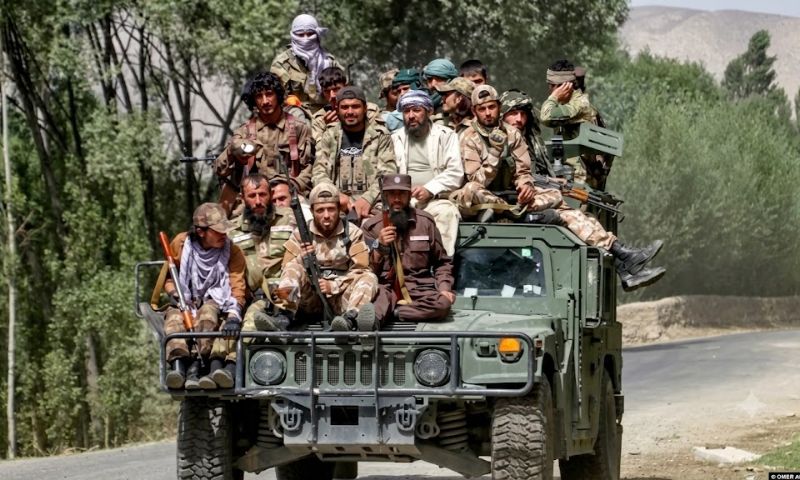
KABUL: Nearly five years after returning to power, Afghanistan’s Taliban government is facing mounting domestic challenges as insurgent attacks, ethnic tensions, disputes over natural resources, and local grievances increasingly test its authority, particularly in the northeastern province of Badakhshan.
Analysts warn that the growing unrest could fuel a prolonged insurgency and undermine the group’s image of stability.
Badakhshan Emerges as a Flashpoint
Badakhshan, a mountainous province bordering Tajikistan, China and Pakistan, has witnessed a surge in attacks in recent weeks.
The latest came on July 28, when Zabihullah Amiri, head of the Taliban’s provincial information and culture department, was shot dead by two gunmen on motorcycles. The Islamic State-Khorasan (IS-K) group claimed responsibility.
Earlier this month, an armed opposition group known as Sipahiyan-e Mihan briefly seized control of Yaftal-e Payeen district, while the National Resistance Front (NRF) and Afghanistan Freedom Front (AFF) have also claimed attacks in several parts of the province.
#Badakhshan, #Afghanistan: Resistance groups claim they repelled a #Taliban operation in the province. The groups stated that anti-Taliban activities will continue, though independent verification of the claims remains unavailable.#Resistance #BreakingNews pic.twitter.com/MX5HMZBhMA
— Ahsan Junaid (@AhsanJunaidAJ) July 30, 2026
Badakhshan has historically been a centre of resistance to Taliban rule and is home to valuable deposits of gold, silver and lapis lazuli. Analysts say disputes over control of these resources, combined with the Taliban’s efforts to centralise mining revenues, have fuelled resentment among local communities.
ALSO READ: Taliban Weaponising and Indoctrinating Afghan Children
Ethnic and Local Grievances
Analysts say the violence reflects deeper tensions than militant attacks alone.
Badakhshan is predominantly populated by ethnic Tajiks, while the Taliban leadership remains largely dominated by ethnic Pashtuns.
Ted Callahan, a former adviser to the US military in Badakhshan, said opposition groups were exploiting local grievances linked to ethnic divisions, competition over natural resources and dissatisfaction with Taliban rule.
“Poppy eradication campaigns, disputes over control of gold and lapis lazuli mines, restrictions over Ismaili communities and the Taliban’s own differences — Pashtun versus Tajik — have created deep resentment among people and the opposition groups have seized the opportunity,” he said.
Resource Control Fuelling Resentment
Badakhshan contains significant deposits of gold, silver and lapis lazuli, making it one of Afghanistan’s richest provinces in mineral resources.
The Taliban has sought to centralise control over mining revenues since returning to power, a move that has fuelled tensions among local communities and even rival Taliban commanders.
The group’s nationwide ban on opium cultivation has further deepened resentment among farming communities that depended on poppy cultivation for their livelihoods.
In 2024, protests over forced poppy eradication in Badakhshan turned violent after Taliban forces opened fire on demonstrators, killing several people and arresting dozens.
Heightened Security Measures
Residents say the Taliban has tightened security across the province following the recent attacks.
“There are checkpoints and searches everywhere,” one resident of Yaftal-e Payeen told Radio Azadi.
“The Taliban inspect people’s phones. There are night patrols. They come and search people’s homes without giving a reason.”