
Key Points
- World Rivers Day is observed on the fourth Sunday of September
- Indus Waters Treaty has governed India-Pakistan water sharing since 1960
- Hague arbitration ruling reaffirmed the treaty remains legally binding
ISLAMABAD: World Rivers Day is being observed today as the Indus River system faces one of its most serious challenges in decades after India’s unilateral and illegal suspension of the Indus Waters Treaty (IWT) and weaponisation of water against Pakistan.
Observed annually on the fourth Sunday of September, World Rivers Day highlights the need to raise public awareness of the importance of rivers and promote their protection and sustainable management.
The UN launched the global observance in 2005 following the United Nations’ Water for Life initiative. (World Rivers Day)
For Pakistan, the day renews particular significance because the Indus River and its tributaries form the backbone of the country’s agriculture, hydropower generation, food security and overall economy.
Rivers of the Indus Water Treaty
The 1960 Indus Waters Treaty, brokered by the World Bank, divided the six major rivers of the Indus basin between India and Pakistan. The eastern rivers — Ravi, Beas and Sutlej — were allocated to India for unrestricted use, while Pakistan received rights over the western rivers — Indus, Jhelum and Chenab — subject to the Treaty’s specific provisions that allow India only limited use.
The treaty survived several wars and prolonged periods of political tension, including wars between the two countries, and became one of the world’s most enduring examples of transboundary water cooperation.
READ ALSO: Indian Indus Water Treaty Violation Becoming an International Concern
The Treaty’s unilateral suspensions created a new dispute. A new phase of water dispute between India and Pakistan started in April 2025, when India announced that it was placing the treaty in abeyance following a deadly attack in Indian Illegally Occupied Jammu and Kashmir IIIOJK).
New Delhi blamed Pakistan, which termed it a false flag and an excuse to suspend the treaty illegally and to weaponise water against Pakistan.
Rejecting India’s position, Pakistan highlighted that the treaty had no provision allowing either party to suspend, amend or terminate it unilaterally.
Pakistan’s stance gained significant legal backing on August 31, 2026, when the Court of Arbitration at The Hague ruled unanimously that the Indus Waters Treaty remains fully in force and that India’s stated grounds did not justify its suspension or termination.
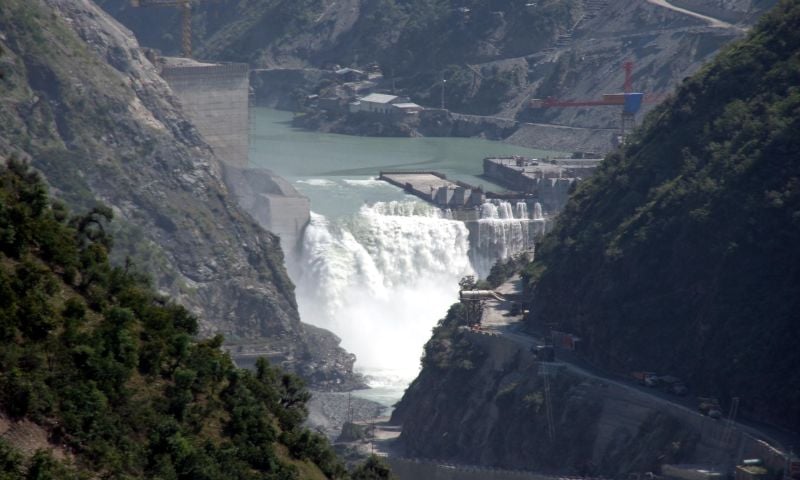
The court also ordered interim restrictions on certain construction activities at India’s Ratle hydropower project on the Chenab River pending a decision by a World Bank-appointed neutral expert, as reported by Courthouse News.
India went to the extent of undermining the Court of Arbitration, and stated it did not recognise the court’s authority. Pakistan, however, welcomed the ruling and said it reaffirmed India’s obligation under the treaty.
India’s unilateral actions and weaponisation of water have also raised critical questions about the future of transboundary rivers.
The crisis has deepened at a time when freshwater resources are already under increasing pressure from climate change, changing rainfall patterns, glacier melt, population growth and rising demand for agriculture and energy.
The United Nations warned this month that abnormal water supplies are becoming increasingly common, with river flows, groundwater and glaciers showing sustained disruption.
The UN has urged countries to prepare for a new water reality driven by changes in the global freshwater cycle.
The Indus basin illustrates the importance of predictable rules for shared waterways. Pakistan argues that any unilateral alteration of flows in the western rivers could have serious consequences for irrigation, food production, hydropower and the downstream livelihoods of millions of people.
World Rivers Day therefore provides a setting for the Indus dispute: rivers cross political borders, but their ecological and human consequences do not.
The future of the Indus system will depend not only on engineering projects and water availability, but also on adherence to international agreements, cooperation between riparian states and responsible management of a shared freshwater resource.