
Key Points
- Bill strengthens Immigration and Customs Enforcement and Border Patrol
- Republican infighting exposed during marathon amendment votes
- House vote expected early next week before presidential approval
ISLAMABAD: The United States Senate has approved a $70 billion funding package backing President Donald Trump’s immigration enforcement agenda, clearing a key legislative milestone for expanded border control and deportation operations.
The measure provides sustained financing for Immigration and Customs Enforcement and United States Border Patrol.
It now proceeds to the House of Representatives, where Republican leaders are seeking swift passage ahead of final approval by the White House.
The vote followed months of political tension and a partial shutdown within the Department of Homeland Security earlier this year.
Disputes over enforcement practices and funding restrictions had triggered the controversial debate.
Democrats had sought limits on immigration operations in sensitive locations and officer identification protocols.
At the same time, Republicans rejected those conditions and advanced funding through the budget reconciliation process to bypass opposition.
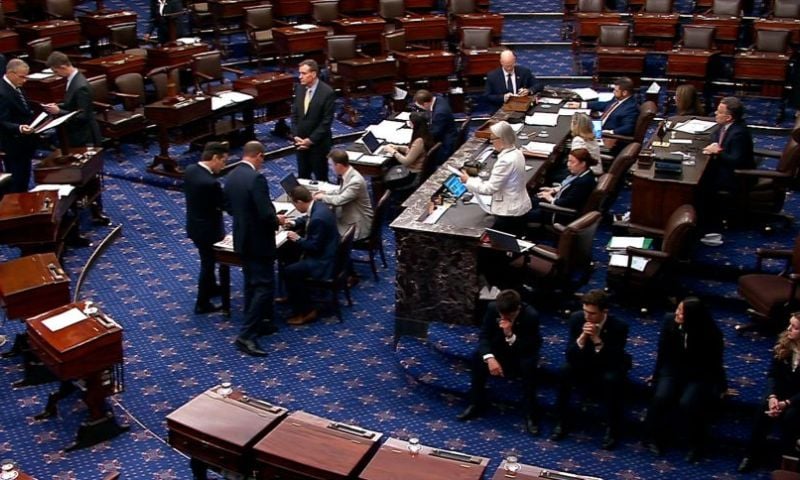
The Senate session concluded after an extended “vote-a-rama,” during which lawmakers forced repeated votes on contested amendments.
The process exposed divisions within the Republican Party over several politically sensitive proposals under Trump’s overall policy agenda.
Trump’s hardline policies include a proposed $1.8 billion compensation mechanism for individuals alleging federal “weaponisation” and other disputed spending priorities.
Those debates intensified earlier concerns about executive-linked funding proposals, including a separate allocation once tied to security arrangements for a planned White House facility.
Although that item was later removed, it continued to shape internal negotiations and raised questions among some Republicans about political messaging ahead of upcoming elections.
The immigration package faced delays after controversy surrounding the proposed compensation fund, which critics argued could be interpreted too broadly.
Acting Attorney General Todd Blanche said the administration would not proceed with the initiative. However, uncertainty remained after Trump described it in positive terms and suggested its legal status was unresolved.
Several Republican senators pushed to formally eliminate the proposal in legislation, citing political and fiscal risks.
Despite internal dissent, the bill ultimately passed with limited defections.
However, amendment votes revealed fractures within Republican ranks on issues ranging from executive authority to foreign policy provisions, including efforts related to sanctions on Russia and financial assistance to Ukraine.
Democrats used the process to propose reallocating portions of immigration funding toward housing and cost-of-living relief, arguing that enforcement priorities were overshadowing economic pressures facing households.
For migrants and immigrant communities globally, the decision signals a continued tightening of US border policy.
The expanded enforcement capacity, they said, would shape asylum processing, detention practices, and deportation pathways.
Analysts expect ripple effects across migration routes in Latin America, South Asia, and other regions where US immigration policy strongly influences movement decisions.
The outcome delivers a major legislative win for Trump’s administration.
It also underscores ongoing challenges for Republican leadership, which continues to manage internal disagreements over the political and humanitarian implications of aggressive immigration enforcement.