
Key Points
- Japan proposes replacing up to 14 ageing nuclear reactors by the 2050s under a new energy planning framework
- Up to 5 reactors targeted for replacement by the 2040s as electricity demand rises from AI and industry
- Nuclear share projected at around 20 per cent of power mix, up from just under 10 per cent currently
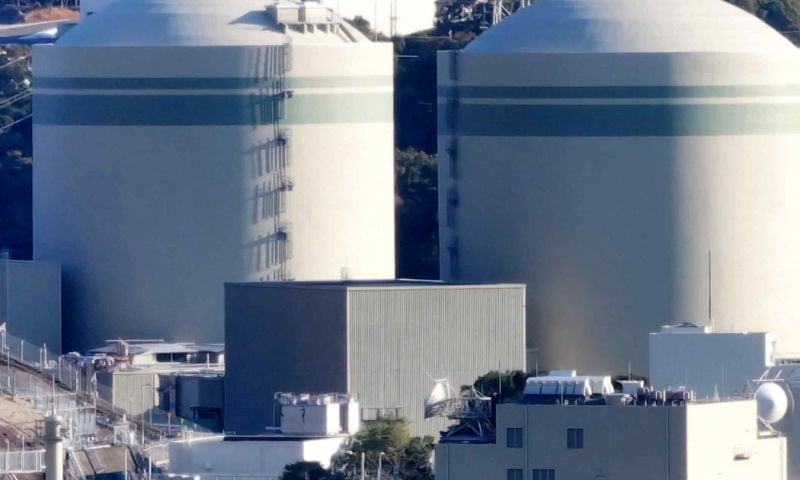
ISLAMABAD: Japan’s industry ministry has proposed replacing up to 14 ageing nuclear reactors by the 2050s, as the country accelerates efforts to secure stable electricity supply amid rising demand from artificial intelligence.
The AI-related data centres and advanced manufacturing sectors are reporting increased electricity demand worldwide, especially in Japan, which positions itself as a global technology leader.
According to the Ministry of Economy, Trade and Industry (METI) of Japan, the draft energy plan outlined at a panel of experts sets a scenario in which Japan would replace between two and five reactors by the 2040s, and a total of around 11 to 14 reactors by the 2050s.
The proposal marks a significant shift in Japan’s long-term energy strategy as the world’s third-largest economy seeks to rebuild nuclear capacity more than a decade after the 2011 Fukushima Daiichi disaster, which led to the shutdown of most of its reactor fleet.
Japan currently relies on nuclear power for just under 10 per cent of its electricity generation.
However, the new framework assumes this share could rise to around 20 per cent in the coming decades as part of efforts to balance energy security, decarbonisation and industrial demand growth.
Officials say the planned replacement programme would ensure stable baseload power at a time when electricity consumption is expected to rise sharply, particularly from AI-driven data infrastructure and semiconductor manufacturing clusters.
Japan’s power system faces an emerging supply gap in the 2040s as several existing reactors approach or exceed their operational lifespans.
Industry estimates cited in local reports suggest a shortfall equivalent to several gigawatts of capacity if ageing units are not replaced or extended.
The proposal also reflects Tokyo’s broader climate commitment to achieve carbon neutrality by 2050, with nuclear energy positioned alongside renewables as a key low-emission source in the national energy mix.
Before the Fukushima accident, nuclear power accounted for roughly one-third of Japan’s electricity supply, underscoring the scale of the long-term shift in the country’s energy structure.
The draft plan is expected to undergo further review by relevant ministers and advisory panels before being incorporated into Japan’s updated national energy strategy.