Key Points
- Nomination papers can be submitted from 9 to 19 June, followed by scrutiny and appeals process.
- Election Commission imposes ban on transfers, postings and new development schemes ahead of polls.
- Voter rolls show electorate has increased to over 3.8 million across 45 constituencies.
MUZAFFARABAD, Pakistan: The Election Commission of Azad Jammu and Kashmir (AJK) on Friday announced that general elections for the region’s Legislative Assembly will be held on July 27, 2026, formally launching the electoral process for the region’s next democratic transition.
Under the election schedule issued by the commission, aspiring candidates may submit nomination papers to returning officers from 9 June until 4:00pm on 19 June. Scrutiny of nomination papers will begin on 20 June, while lists of eligible candidates will also be released the same day.
Candidates seeking to challenge the acceptance or rejection of nomination papers may file appeals between 21 and 24 June. These appeals will be heard on 26 and 27 June, with final decisions scheduled between 28 and 29 June. Candidates will have until 2:00pm on 30 June to withdraw from the race.
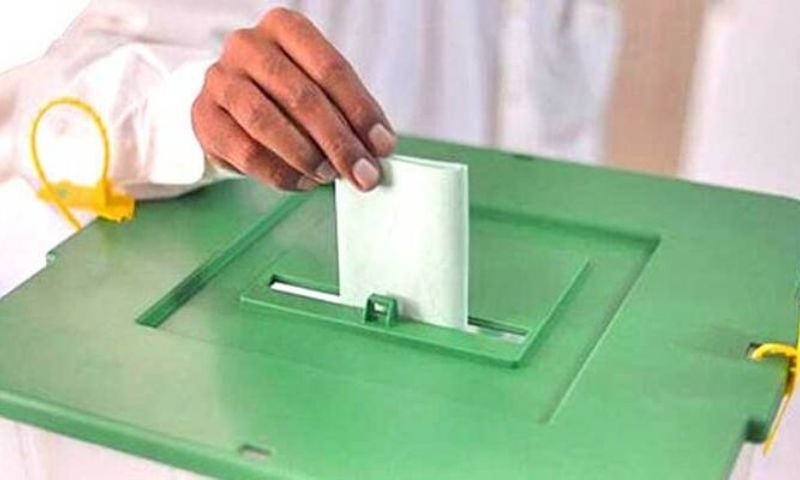
The final list of candidates contesting the elections will be published on 1 July, followed by the allocation of election symbols on 2 July. Polling will take place on 27 July, with voting stations opening at 8:00am and closing at 5:00pm.
Announcing the schedule at a press conference in Muzaffarabad, AJK Chief Election Commissioner retired Justice Ghulam Mustafa Mughal said the elections would be conducted under the supervision of the army, paramilitary forces and civil armed forces to ensure security and public confidence in the electoral process.
“We are committed to conducting free, fair and transparent elections and will make every effort to ensure that voters are able to exercise their democratic right without any pressure or interference,” Justice Mughal said.
Addressing concerns expressed by some political circles regarding the commission’s preparedness, he stressed that the institution had remained ready from the outset to fulfil its constitutional responsibilities.
“Holding elections is a constitutional obligation, and the commission has been fully prepared to discharge this responsibility in both letter and spirit,” he said.
The chief election commissioner underscored the importance of reliable electoral rolls, describing them as the foundation of credible elections. He acknowledged that the introduction of a computerised voter registration system had initially generated complaints, including instances where voters were assigned to incorrect constituencies.
According to Justice Mughal, collaborative efforts involving election authorities, local administration and Pakistan’s National Database and Registration Authority (NADRA) helped address most of the identified discrepancies.
“Although errors in preliminary electoral rolls cannot be entirely ruled out, extensive verification and correction measures have significantly improved their accuracy,” he said.
He added that approximately 99 per cent of the electoral rolls are now transparent and free of errors, providing a strong basis for a credible electoral contest.
As part of measures aimed at maintaining neutrality during the campaign period, the Election Commission imposed an immediate ban on transfers, postings and the creation of new government positions. Any unavoidable administrative changes will require prior approval from the commission.
The commission has also prohibited the approval of new development schemes and the distribution of public resources such as electricity poles and water supply infrastructure, practices that are often criticised as attempts to influence voters before elections. However, development projects already included in the Annual Development Programme will continue without interruption.
Justice Mughal also addressed arrangements for the 12 legislative seats reserved for Kashmiri refugees residing in Pakistan. He explained that while elections for these constituencies had previously been conducted under judicial supervision, the responsibility will now be undertaken by officials of Pakistan’s Election Commission following the judiciary’s withdrawal from the process.
Drawing on his previous experience as chief election commissioner between 2016 and 2019, Justice Mughal expressed confidence that the forthcoming polls would be conducted peacefully and transparently, similar to the elections held in 2016.
Responding to questions regarding ongoing demonstrations organised by the Jammu Kashmir Joint Awami Action Committee (JAAC), he acknowledged that prolonged protests could potentially affect election-related activities.
“If protests or sit-ins continue for an extended period, they may have an impact on the electoral process. In such circumstances, the Election Commission has the authority to make necessary adjustments to the election schedule,” he said.
He added that elections would proceed when conditions remained conducive to ensuring a smooth and orderly democratic process. The upcoming vote will be the first regional election since July 2021, when the previous AJK Legislative Assembly elections were held.
Meanwhile, newly released electoral rolls indicate a significant increase in voter registration over the past five years. According to figures issued by the Election Commission, the total electorate across AJK’s 45 constituencies now stands at 3,804,385 voters, compared with 3,220,546 voters during the 2021 elections—an increase of 583,839 registered voters.
Of the total electorate, 3,365,839 voters are registered within the territory’s 33 constituencies, while 438,546 voters are registered in the 12 refugee constituencies located across Pakistan. The voter base consists of 2,001,730 male voters and 1,802,655 female voters, reflecting a broad and diverse electorate ahead of the July polls.
Among the territorial constituencies, LA-7 Bhimber-III has the largest electorate with 129,994 registered voters, followed by LA-31 Muzaffarabad-V with 128,177 voters and LA-12 Kotli-V with 126,332 voters. The smallest constituency is LA-30 Muzaffarabad-IV, which has 68,228 registered voters.
The election announcement marks the beginning of a closely watched political contest in Pakistan’s Kashmir, where political parties will now intensify campaign efforts to secure support from a growing electorate ahead of polling day in late July.