ISLAMABAD: The killing of an Afghan terrorist linked to the banned Tehrik-i-Taliban Pakistan (TTP) terrorist group during a Pakistan security forces operation in Bajaur district of northwestern Khyber Pakhtunkhwa province has further exposed the nexus between Afghanistan’s Taliban regime and terrorist groups operating against Pakistan.
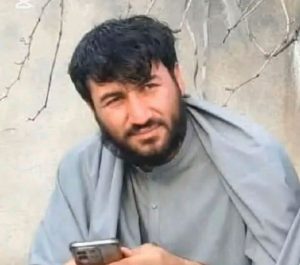
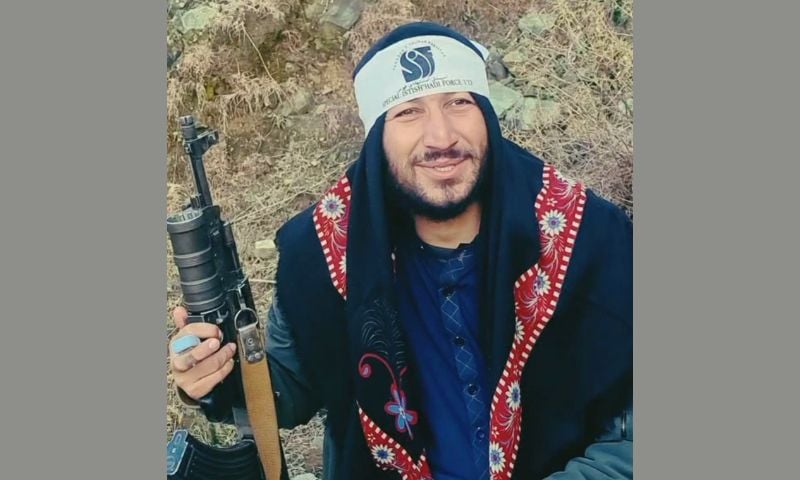
The Afghan terrorist, identified as Osama Haider, son of Gul Haider and a resident of Koz Kakrak village in Sorkhurd district of Nangarhar province, was killed during a Pakistani security forces counterterrorism operation in Bajaur on July 11. A condolence gathering was later held in his native village on July 14.
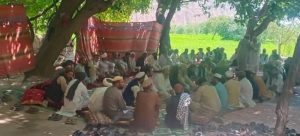
The incident exposed an enduring nexus between the Taliban regime and terrorist groups operating against Pakistan and acts as evidence of Afghan nationals participating in terrorist activities inside Pakistan.
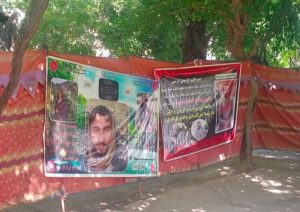
Pakistan has so far identified over 300 Afghan nationals killed while fighting alongside terrorist groups inside Pakistan, with documented identities, photographs and family and residential details from Afghanistan.
Taliban regime’s support for terrorist groups
Pakistan has repeatedly urged the Taliban regime to take verifiable action against terrorist groups using Afghan territory to plan and execute terrorist attacks inside Pakistan. However, the Taliban regime failed to take any action against the terrorist groups on Afghan soil. Instead, the Taliban regime provided safe sanctuaries to terrorist groups, risking regional security and peace.
A former deputy chief of the Afghan National Army, Lieutenant General Sayed Sami Sadat, has also confirmed that the Afghan Taliban regime is supporting terrorist groups carrying out attacks inside Pakistan.
Lieutenant General Sadat, who served as Deputy Chief of the Afghan Army in 2021 under the former Afghan government, made the remarks in a video comment.
“It is absolutely true that any group carrying out attacks against Pakistan is being supported by the Afghan Taliban. They are providing these groups with assistance and backing,” Sadat said.
“It is also true that the Afghan Taliban maintain close relations with India and receive financial support from it. These funds are then provided to groups such as the Tehreek-e-Taliban Pakistan (TTP) and the Balochistan Liberation Army (BLA) to facilitate attacks inside Pakistan,” he added.
TTP continues to enjoy sanctuary in Afghanistan
Security analyst Michael Kugelman acknowledged that the banned TTP terrorist group continues to enjoy sanctuary in Afghanistan, citing its longstanding ties with the Afghan Taliban as the Taliban regime is reluctant to act against allied terrorist groups.
Director of the South Asia Institute at the Wilson Centre, in his remarks, noted that despite repeated Pakistan and Taliban regime engagements, including Chinese mediation, no meaningful progress has been achieved, underscoring that the banned TTP terrorist group threat remains a persistent regional security challenge with no immediate resolution in sight.
Pakistan witnessed a surge in terror activities, particularly in its Khyber Pakhtunkhwa and Balochistan provinces, since 2021, when the Afghan Taliban came into power.
Despite several rounds of talks, both countries have been unable to reach an agreement, largely due to the Afghan Taliban regime’s reluctance to take action against terrorist outfits based on Afghanistan’s territory.
Terrorists enjoying sanctuary in Kabul
Last month, a photograph showcasing the top tier of the banned Hafiz Gul Bahadur Group lounging at the luxury hotel in Kabul had provided undeniable, concrete proof of Pakistan’s longstanding stance that anti-Pakistan terrorist groups are not only operating from Afghan soil but are enjoying premium, high-level sanctuary under the current Afghan Taliban regime.
The photograph, which captured the senior leadership of the terrorist group that operates in close coordination with the banned TTP terrorist group, depicted senior Gul Bahadur Group commander and head Abu Sufyan Karavan, Sadr Hayat, Alias Abu Sufyan, alongside key figures Commander Jalali, Commander Rehbar Waziristani, and Commander Ghazi.
However, Kabul has consistently denied providing sanctuary to these terrorist elements, but this new photographic evidence completely dismantles those denials, laying bare the open luxury and official impunity granted to designated terrorists responsible for major attacks on Pakistani security forces and civilians.
Al-Qaeda has links with Taliban and present in Afghanistan: UN
A senior United Nations counterterrorism official has said Al-Qaeda continues to maintain a presence in Afghanistan and retains links with the Taliban.
The UN official’s remarks have raised fresh concerns about the country’s role as a base for terrorist groups despite commitments made under the 2020 Doha Agreement.
Acting United Nations Under-Secretary-General for Counter-Terrorism Alexandre Zouev, in remarks reported by Russia’s TASS news agency, said Al-Qaeda remains active in Afghanistan.
The UN official also identified Islamic State Khorasan Province (ISKP) and TTP among the most active terrorist organisations operating from Afghan territory.
He warned that the continued activities of these groups pose a threat to regional and international security.
The remarks add to a series of United Nations assessments that have questioned the Taliban’s ability or willingness to sever ties with militant organisations and prevent Afghan soil from being used for terrorism.
However, international monitoring bodies and several governments have continued to express concern over the activities of Al-Qaeda, ISKP and TTP in Afghanistan since the Taliban returned to power in August 2021.