ISLAMABAD: Pakistan on Saturday called for a comprehensive overhaul of the UN counter-terrorism architecture, warning that the threat has evolved significantly since the 9/11 attacks and that the existing Security Council sanctions regime is no longer sufficient to address emerging forms of terrorism.
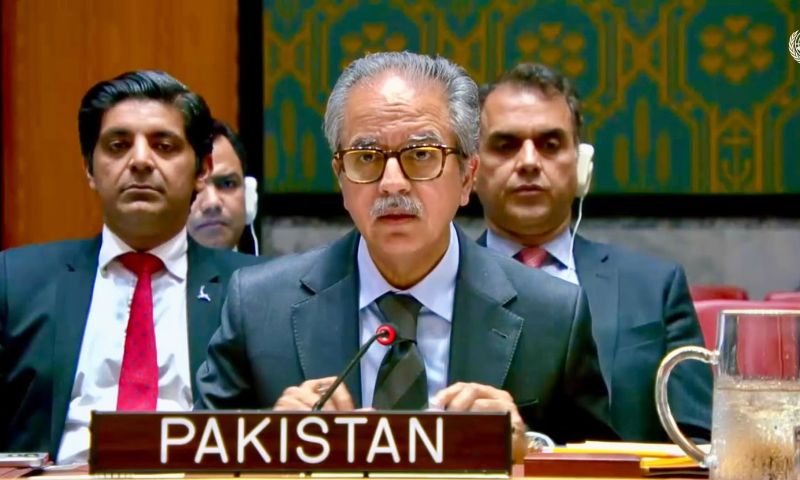
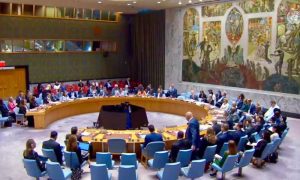
Speaking at a UN Security Council briefing in New York, marking the 25th anniversary of the September 11 attacks, Pakistan’s Permanent Representative to the United Nations, Ambassador Asim Iftikhar Ahmad, said the Security Council must address gaps in its counter-terrorism mechanisms with the same urgency, unity and resolve demonstrated after 9/11.
Ambassador Asim Iftikhar expressed Pakistan’s solidarity with the United States and the families of those killed in the 9/11 attacks, recalling that seven Pakistanis were among the victims. He also paid tribute to first responders and remembered victims of terrorism worldwide.
The Pakistani envoy said the 9/11 attacks had led to swift action by the Security Council, including the adoption of Resolution 1373, which established a normative framework that continues to shape international counter-terrorism efforts.
Pakistan, Asim Iftikhar Ahmad said, had played a key role as a frontline state in the global counter-terrorism campaign, with its intelligence sharing, security cooperation and counter-terrorism efforts significantly degrading Al-Qaida’s capabilities.
Pakistan Calls for Renewed and Comprehensive Global Action Against Terrorism 25 Years After 9/11
– Our Press Release pic.twitter.com/UBKLVoUrDA
— Permanent Mission of Pakistan to the UN (@PakistanUN_NY) September 12, 2026
Pakistan’s sacrifices in fight against terrorism
However, Ambassador Asim Iftikhar stressed that Pakistan had paid an immense price, with more than 90,000 Pakistanis, including security and law-enforcement personnel and civilians, losing their lives since the turn of the century, alongside sustained economic losses caused by terrorist violence.
The Pakistani envoy warned that the terrorism landscape had since “evolved and mutated”, with new threats emerging across different regions and through new technologies.
He said the UN Security Council’s existing sanctions regimes were proving insufficient to combat terrorism in all its dimensions and called for the gaps to be addressed effectively.
Ambassador Asim Iftikhar identified the rise of far-right extremist movements worldwide as a major concern, saying such groups had been responsible for some of the most heinous terrorist attacks in recent years and targeted communities on the basis of xenophobia, racism, intolerance and religion or belief.
Terrorism emanating from Afghanistan
Turning to Pakistan’s immediate security concerns, Ambassador Asim Iftikhar said terrorism emanating from Afghanistan remained deeply worrying.
“More than 4,700 innocent Pakistanis have lost their lives to terrorism emanating from Afghanistan over the last three years,” he said, accusing the banned TTP, BLA and its Majeed Brigade of continuing to operate from sanctuaries in Afghanistan with significant external support.
He said the BLA was operating freely in the absence of restrictive measures and sanctions by the Security Council, despite Pakistan’s efforts to secure its designation under the Council’s sanctions regime.
Also Read: Afghanistan-Based ISKP is Serious Threat to Regional Security: Russian UN Envoy
The Pakistani envoy also called for effective action against other terrorist organisations, including ETIM and ISKP.
He warned that terrorists were increasingly exploiting modern information and communication technologies for propaganda, disinformation, hate speech, online radicalisation and recruitment, while dark-web networks, virtual assets and cryptocurrencies were also being used for terrorist financing.
“Absent regulation, this threat will definitely multiply,” he cautioned.
Need for a comprehensive approach to counter-terrorism
Ambassador Asim Iftikhar stressed that the international community needed to adopt a comprehensive approach to counter-terrorism, arguing that excessive focus on one dimension while ignoring others would not achieve the common objective of eliminating terrorism.
He called for balanced implementation of all four pillars of the UN Global Counter-Terrorism Strategy, including greater attention to the root causes and conditions conducive to terrorism.
The Pakistani envoy also urged the Security Council not to overlook what he described as “state terrorism” in situations of foreign occupation.
He said the Security Council must ensure that occupying powers were held accountable and not allowed to operate with impunity in suppressing legitimate struggles of people exercising their right to self-determination.
“As we commemorate the 25th anniversary of 9/11, we must reflect on the contemporary needs and challenges in the CT domain,” he said, calling for gaps in the counter-terrorism architecture, the Global Counter-Terrorism Strategy and sanctions regimes to be addressed comprehensively.
He urged the Security Council to shoulder its responsibility and ensure that perpetrators of terrorism were brought to justice.
“Active and effective international cooperation and regional synergies” would ultimately be required to establish a united and collective front against the global terrorist threat, he added.