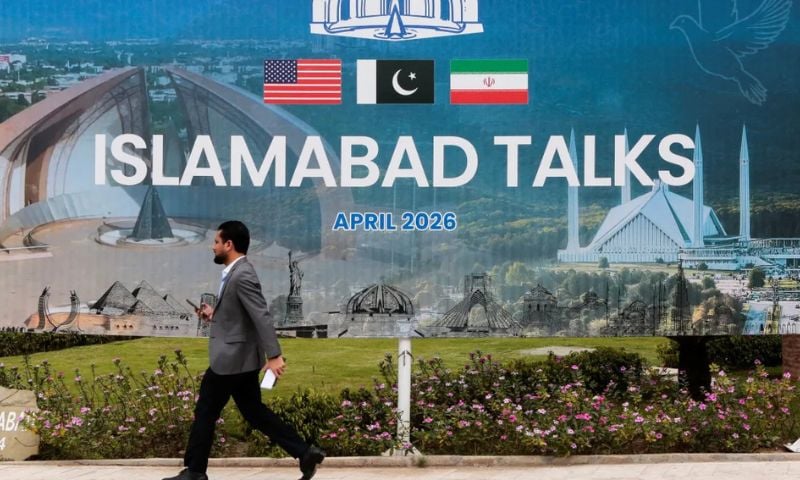



WASHINGTON: The United States and Iran are planning a second round of high-stakes talks in Islamabad this week, as Vice President JD Vance is expected to arrive in Pakistan with a delegation of negotiators.
Meanwhile, Pakistan has intensified diplomatic efforts to sustain dialogue and end the US-Iran conflict through dialogue and diplomacy.
While Tehran has not publicly confirmed its participation, it has informed regional mediators that it will send a delegation for the talks, The Wall Street Journal reported, citing people familiar with the matter.
Meanwhile, The New York Times reported that several Iranian officials indicated their team could travel to Islamabad on Tuesday, coinciding with Vance’s arrival in Pakistan.
Iranian delegation to arrive in Islamabad Tuesday
Despite sending mixed signals in recent days, both the United States and Iran gave clearer indications on Monday that they were planning to send negotiators to peace talks in Pakistan this week, The New York Times reported.
Vice President JD Vance is expected to leave Washington for Islamabad on Tuesday, according to two US officials, and two Iranian officials said that Mohammad Bagher Ghalibaf, the influential political and military figure who attended the last round of talks, would attend if Mr. Vance also did, according to The New York Times.
The new round of talks had been in doubt as the countries traded threats over the weekend, and as their two-week cease-fire neared its expiration.
Willingness for talks in Washington and Tehran
Both sides have maintained firm public positions. US President Donald Trump stated in a social media post that Iran could have a prosperous future under new leadership.
Meanwhile, Iranian President Masoud Pezeshkian stated that continued conflict benefits no one, though he emphasised lingering “deep historical mistrust” ahead of the talks.
These mixed signals mirror the lead-up to earlier negotiations, when Iran initially cast doubt on participation before ultimately sending a delegation, though no final agreement was reached but paved the way for further talks.
The Pakistan-brokered two-week truce, which began on April 8, is also being tested in the Strait of Hormuz, a critical route for global oil and gas shipments.
Rising tensions there have intensified after a US Navy destroyer fired on an Iranian cargo vessel that reportedly defied a US blockade, with American forces later seizing the ship, the New York Times reported.
Iran’s military condemned the incident as “piracy” and warned of possible retaliation, according to Iranian media reports.
US delegation to land in Islamabad for Iran talks
Earlier today, Trump said that US Vice President JD Vance and a high-level American delegation are en route to Pakistan and are expected to land in Islamabad within hours for the next round of talks with Iran.
Pakistan is set to host a second round of high-stakes talks between the US and Iran this week.
The talks, scheduled in Islamabad, follow an initial round that kept diplomatic channels open amid ongoing tensions.
“They’re heading over now,” Trump told the New York Post in an interview shortly after 9 a.m. EST. “They’ll be there tonight, [Islamabad] time.”
Trump confirmed that the delegation includes Vice President Vance, special envoy Steve Witkoff and advisor Jared Kushner.
Trump open to direct meeting with Iranian leaders
President Donald Trump has also indicated he was open to a direct meeting with Iranian leaders if progress is made.
“I have no problem meeting them,” he said. “If they want to meet, and we have some very capable people, but I have no problem meeting them.”
The US President said the main objective of the negotiations remained Iran’s nuclear programme, reiterating Washington’s demand that Tehran abandon any pursuit of nuclear weapons.
Pakistan emerges as ‘honest’ mediator
Pakistan, which brokered the initial 14-day truce earlier this month, continues to position itself as an “honest mediator”, facilitating communication between Washington and Tehran.
The first round of talks helped establish rare direct channels between Washington and Tehran, laying the groundwork for continued engagement despite ongoing tensions.
Security analysts said progress so far, combined with intensified diplomatic outreach, offers a realistic opportunity to sustain dialogue and prevent escalation.
Pakistan’s Prime Minister Shehbaz Sharif has also remained actively engaged, holding discussions with regional leaders and Iranian President Masoud Pezeshkian to build support for the peace process.
Pakistan’s Deputy Prime Minister and Foreign Minister Ishaq Dar on Monday held a telephone conversation with Iranian Foreign Minister Abbas Araghchi and emphasised the importance of continued dialogue and early engagement to promote regional peace and stability.
Deputy PM Dar stressed that sustained diplomatic engagement was essential to promote regional peace and stability, the Foreign Office said in a statement.
Earlier, Ishaq Dar has emphasised that Pakistan’s objective goes beyond a temporary truce, aiming instead for a lasting and comprehensive resolution.
Meanwhile, Iran’s parliament speaker, Mohammad Bagher Ghalibaf, said Tehran remained engaged in dialogue.