ISLAMABAD: The United States and Iran are moving closer to a potential agreement, officials said on Thursday, as Pakistan steps up efforts to host a second round of talks, with both sides expressing optimism about a deal to stabilise the Middle East.
The White House has indicated that a second round of US-Iran talks is “very likely” to take place in Islamabad, underscoring Pakistan’s growing role as a central diplomatic channel between Washington and Tehran.
White House Press Secretary Karoline Leavitt said discussions were ongoing and expressed confidence in the prospects of a deal, while praising Pakistan’s role in facilitating dialogue.
PRESS SEC on U.S.-Iran negotiations: The Pakistanis have been incredible mediators and we really appreciate their friendship and efforts to bring this deal to a close.
The President feels it’s important to continue to streamline this communication through the Pakistanis. pic.twitter.com/3iIeF0oUpn
— Department of State (@StateDept) April 15, 2026
“The Pakistanis have been incredible mediators throughout this process,” she said, adding that Washington intends to streamline communication through Islamabad.
US officials also confirmed that negotiations remain “productive and ongoing”, with backchannel contacts continuing through Pakistani intermediaries.
Sharif Engages Saudi Leadership
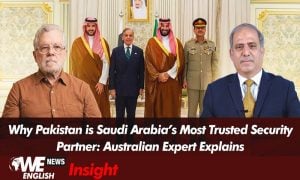
Amid these developments, Pakistan’s Prime Minister Shehbaz Sharif met Saudi Crown Prince Mohammed bin Salman in Jeddah, where the two leaders reaffirmed close bilateral ties and reviewed efforts to support dialogue between the United States and Iran.
According to Pakistan’s Prime Minister’s Office, the nearly two-hour meeting focused on economic cooperation, defence collaboration, and regional security.
I had the pleasure and honour of meeting my dear brother, His Royal Highness Crown Prince Mohammed bin Salman, in Jeddah today.
During the course of which, I conveyed Pakistan’s unwavering solidarity with the Kingdom and expressed my deep appreciation of its patience and… pic.twitter.com/C6fIobxM58
— Shehbaz Sharif (@CMShehbaz) April 15, 2026
Sharif described the engagement as an “honour” and reiterated Pakistan’s “unwavering solidarity” with Saudi Arabia, while praising the Kingdom’s restraint during ongoing tensions.
He also highlighted Pakistan’s role in facilitating the US-Iran ceasefire and initial peace talks in Islamabad, reaffirming Islamabad’s commitment to advancing dialogue for “lasting peace and stability”.
Saudi leadership, in turn, appreciated Pakistan’s constructive role in the peace process.
Military and Diplomatic Channels Activated
Pakistan’s mediation efforts are being reinforced through high-level engagements, including a visit to Tehran by a delegation led by Army Chief Field Marshal Syed Asim Munir.
Delighted to welcome Field Marshal Munir to Iran.
Expressed gratitude for Pakistan’s gracious hosting of dialogue, emphasizing that it reflects our deep and great bilateral relationship. Our commitment to promoting peace and stability in the region remains strong—and shared. pic.twitter.com/e74lm6hL8r
— Seyed Abbas Araghchi (@araghchi) April 15, 2026
The delegation carried a fresh message from Washington and discussed prospects for resuming negotiations, signalling Islamabad’s active role in both diplomatic and security channels.
Officials say Pakistan is leveraging its longstanding relationships with both the US and Iran to maintain communication and prevent further escalation.
Ceasefire Holds, Talks Advance
The diplomatic push follows a two-week ceasefire after more than a month of war involving the United States, Israel, and Iran.
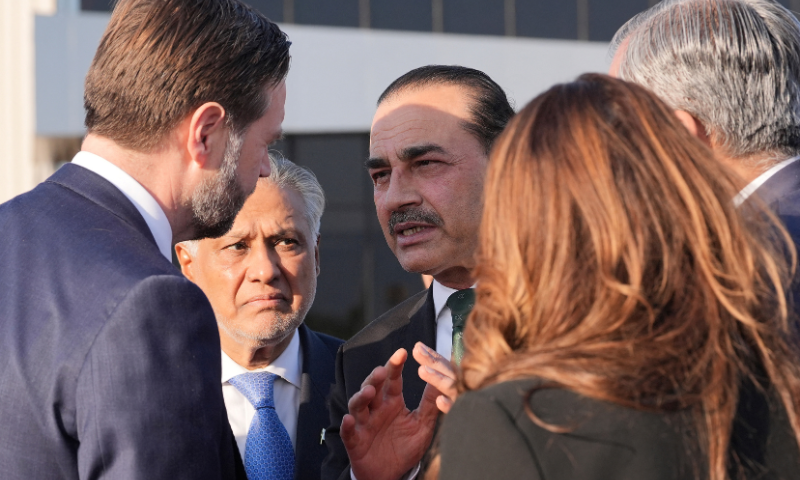
US Vice President JD Vance, who led initial talks, has described the negotiations as part of a potential “grand bargain” aimed at ending hostilities and addressing Iran’s nuclear programme.
Vice President JD Vance gives an update in Pakistan:
“The simple fact is that we need to see an affirmative commitment that they will not seek a nuclear weapon, and they will not seek the tools that would enable them to quickly achieve a nuclear weapon.” pic.twitter.com/il4THN5DwV
— The White House (@WhiteHouse) April 12, 2026
While Washington has proposed a long-term suspension of uranium enrichment, Tehran maintains its right to civilian nuclear activity, highlighting key challenges ahead.
Strait of Hormuz and Global Stakes
At the centre of the crisis is the Strait of Hormuz, a critical global energy corridor through which nearly one-fifth of the world’s oil supply passes.
US President Donald Trump announced a major diplomatic breakthrough, stating the waterway would remain permanently open under a broader strategic understanding that includes China.
“China is very happy that I am permanently opening the Strait of Hormuz. I am doing it for them, also – And the World. This situation will never happen again. They have agreed not to send weapons to Iran…” – President Donald J. Trump pic.twitter.com/g2LbmMJS5a
— The White House (@WhiteHouse) April 15, 2026
Tensions in the Strait had previously disrupted global oil flows, raising concerns over energy security and economic stability.
Economic and Global Impact
The conflict has had far-reaching economic implications, with the International Monetary Fund warning of “tough times ahead” if tensions persist and oil prices remain elevated.
However, optimism surrounding a potential US-Iran agreement has buoyed global markets, with stock indices rising and crude prices easing.
Regional Diplomacy Expands
Beyond US-Iran talks, broader regional diplomacy is also gaining momentum. Israel and Lebanon have initiated direct negotiations, while Washington is pushing for de-escalation across multiple fronts.
Pakistan’s diplomatic outreach extends to Saudi Arabia, Qatar, and Turkiye, with Sharif expected to participate in the Antalya Diplomacy Forum and engage with global leaders, including President Recep Tayyip Erdoğan.
Pakistan’s Strategic Positioning
Analysts say Pakistan’s role as a mediator reflects its strategic positioning as a trusted interlocutor capable of engaging multiple sides in a highly polarised environment.
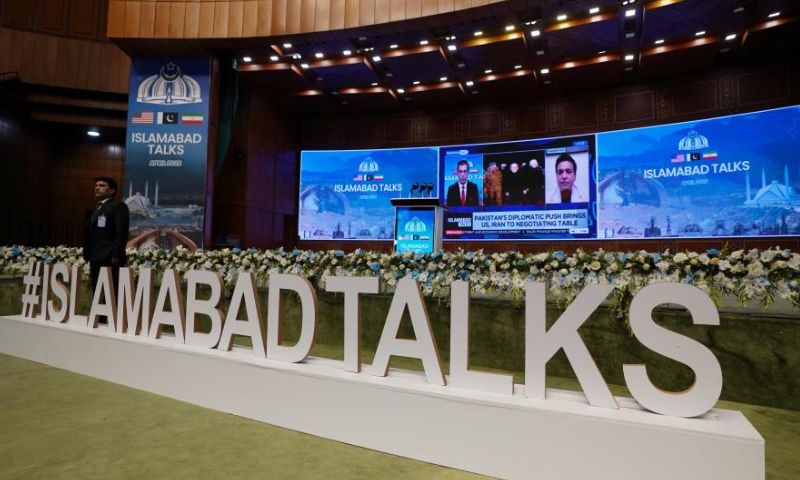
By facilitating dialogue and maintaining open channels, Islamabad is seeking to project itself as a stabilising force committed to the peaceful resolution of conflicts.
With negotiations gaining traction, Pakistan’s continued engagement could prove critical in shaping the next phase of diplomacy in the Middle East.