
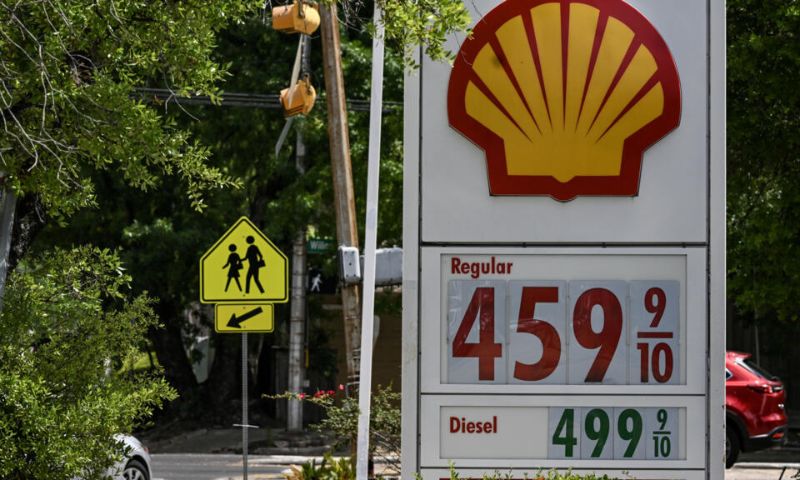
WASHINGTON: Inflation in the United States accelerated significantly in March, driven by soaring energy costs linked to the ongoing conflict in the Middle East, according to official data released on Friday.
Figures from the US Bureau of Labor Statistics showed that the annual inflation rate climbed to 3.3 per cent, up from 2.4 per cent in February, marking a sharp increase in consumer prices.
A major factor behind the rise was a steep jump in fuel costs, with petrol prices surging by 21.2 per cent between February and March — the largest monthly increase since records began in 1967. The spike followed disruptions to global oil supplies after tensions in the region escalated and shipping through the Strait of Hormuz was affected.
Despite being a leading oil producer, the United States has felt the impact, with average petrol prices rising to around $4.15 per gallon, compared to roughly $3 before the conflict began.
The surge in inflation adds pressure on US President Donald Trump, whose administration has initiated peace talks with Iran ahead of upcoming mid-term elections. Officials, however, maintain that the economic effects of the conflict will be temporary, with the White House stating that the economy remains on a stable path.
Inflationary pressures
Some government advisers pointed to declines in certain goods, such as food items and entertainment costs, as signs of resilience. Meanwhile, Vice President JD Vance expressed optimism about diplomatic efforts as he travelled to Pakistan for talks with Iranian counterparts.
Economists, however, warn that further price increases are likely, particularly affecting lower and middle-income households. Rising costs in food, travel and shipping are expected to intensify inflationary pressures in the coming months.
Analysts also noted that limited traffic through the Strait of Hormuz continues to weigh on energy markets. Consumer confidence has already declined, with surveys indicating a notable drop in sentiment.
The Federal Reserve has previously warned that geopolitical tensions could delay efforts to bring inflation back to its two per cent target, prolonging economic challenges for households.