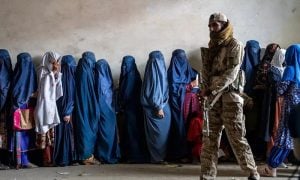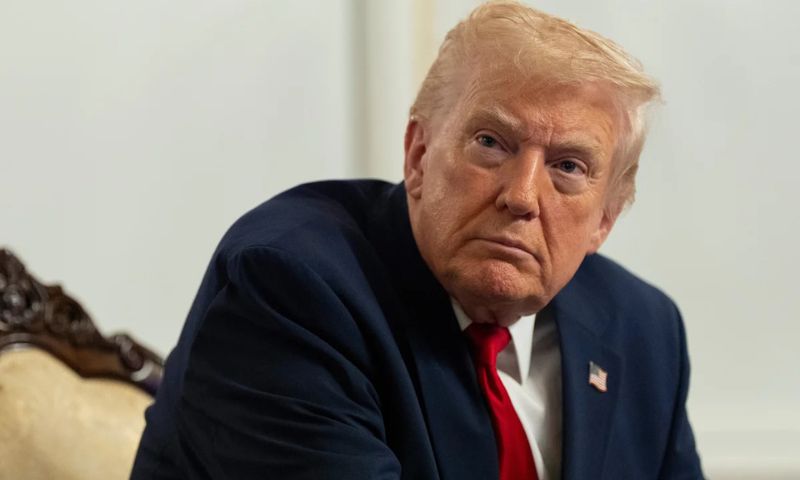
WASHINGTON: The Trump administration has suspended all asylum decisions from every country after an Afghan national was charged with shooting two National Guard members near the White House, killing one of them.
Officials say the suspension is part of an intensified crackdown on legal migration in the United States.
US Citizenship and Immigration Services (USCIS) Director Joseph Edlow confirmed the move. He said the pause would remain in effect “until we can ensure that every foreign national is fully and thoroughly vetted.”
The decision follows Wednesday’s attack in Washington, D.C., in which a 20-year-old National Guard member, Sarah Beckstrom, was killed and another soldier critically wounded.
Authorities have charged Rahmanullah Lakanwal, a 29-year-old Afghan national, with first-degree murder.
Lakanwal reportedly served in a CIA-backed Afghan “partner force” before entering the US under a resettlement programme after the 2021 American withdrawal from Afghanistan.
USCIS records show he was granted asylum in April 2025, during Trump’s current term. Officials have blamed what they called lax vetting by former president Joe Biden’s administration for his earlier admission to US soil during the Afghan evacuation.
Suspension of asylum decisions
US media outlet, CBS News, reported that the Department of Homeland Security (DHS) has instructed USCIS not to approve, deny or close any asylum applications from any nationality.
Initial measures after the shooting targeted Afghan nationals. But subsequent directives have applied to all applicants.
Lakanwal’s case also prompted a temporary halt to visas for Afghans and a full suspension of Afghan immigration applications pending review.
Trump signals long-term restrictions
US President Donald Trump has said the pause on asylum decisions will remain in place “for a long time”.
When asked for a timeline, he said he had “no time limit” in mind. He linked the measure to a list of 19 countries already facing US travel restrictions since June. These include Afghanistan, Cuba, Haiti, Iran, Somalia, Venezuela and Myanmar.
“We don’t want those people,” Trump said. “Many have been no good, and they shouldn’t be in our country.”
He also claimed that refugees had caused “social disruption” in the US, and pledged to deport “anyone who does not prove to be an asset to America.”
Trump further announced that all federal benefits and subsidies for non-citizens would be terminated.
Green card reviews
On Thursday, USCIS said it would re-examine green cards issued to individuals from the 19 restricted countries. No details have been provided on how the review will be conducted.
The administration has also tightened broader migration policies in Trump’s second term. These include mass deportations of undocumented migrants, reduced annual refugee admissions, and the end of automatic birthright citizenship for many children born in the US.
The United Nations has urged the US to uphold global refugee conventions. Jeremy McKinney, former president of the American Immigration Lawyers Association, told the BBC that Trump’s response amounted to “scapegoating refugees.”
Trump wrote after the attack that he planned to “permanently pause migration from all Third World countries to allow the US system to fully recover.”