Key Points
- General Randy George was appointed in 2023 and was expected to serve until 2027
- Vice Chief Gen Christopher LaNeve steps in as acting Army chief
- Hegseth also removed two additional senior Army officials in wider shake-up
- Move is part of a wider purge of senior US military leadership
- Hegseth has already removed several top Navy and Air Force officials
- Decision comes amid rising tensions linked to the US-Israel-Iran conflict
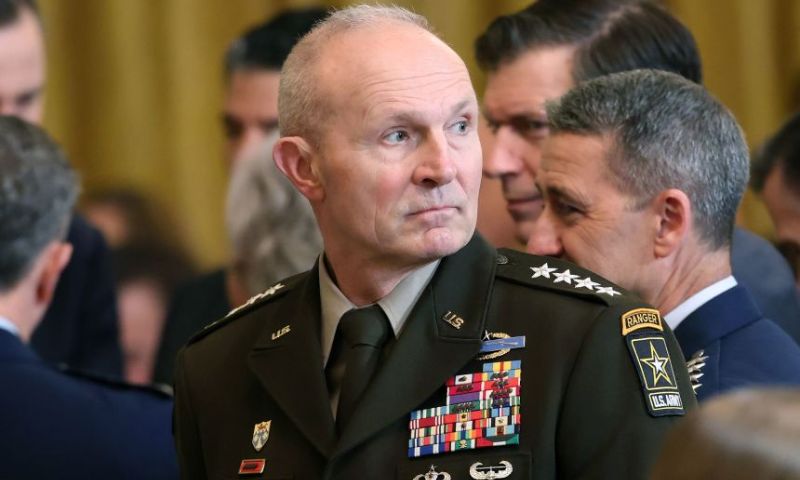
WASHINGTON, DC: US Defence Secretary Pete Hegseth on Thursday asked Army Chief of Staff General Randy George to step down and retire with immediate effect, marking the latest move in a broader reshuffle of senior military leadership at the Pentagon.
According to Military Times quoting a Pentagon official, Hegseth also removed Gen. David Horne, a former Army Ranger who had been overseeing the Army’s Transformation and Training Command, and Maj. Gen. William Green, the Army chief of chaplains.
General George, who had been serving as the Army’s 41st Chief of Staff since 2023, was asked to step down before completing his expected four-year term. His tenure, which was due to run until 2027, has now ended abruptly with little official explanation provided.
In a brief statement, Pentagon spokesperson Sean Parnell confirmed the decision, saying the Department of War was “grateful for General George’s decades of service” and wished him well in retirement. A senior defence official indicated that the move reflected a broader desire for “a leadership change in the Army”.
According to BBC, General George, a veteran infantry officer and West Point graduate, has had a long and distinguished military career. He served in the Gulf War and later in Iraq and Afghanistan, commanding key combat units including the 173rd Airborne Brigade and the 4th Infantry Division.
During his time as Army chief, he oversaw significant structural reforms aimed at modernising the force, including investments in drone technology, long-range weapons systems and efforts to streamline command structures.
Despite these efforts, his departure comes amid mounting speculation that he had been under scrutiny for some time. US officials had reportedly suggested he might be removed as part of broader leadership changes initiated by Hegseth.
The shake-up extends beyond the Army. Since assuming office, Hegseth has removed or sidelined more than a dozen senior military figures, including top naval and air force leaders, signalling a decisive shift in the Pentagon’s strategic direction.
General Christopher LaNeve, the Army’s Vice Chief of Staff, will assume the role of acting chief. His appointment follows established military protocol, where the deputy steps in during transitions or unexpected departures.
The leadership change also comes against a tense geopolitical backdrop. President Donald Trump recently indicated that the ongoing conflict involving the United States, Israel and Iran could conclude “very shortly”, suggesting a potentially pivotal moment for US military strategy.
While no direct link has been confirmed between the global situation and General George’s removal, the timing underscores the administration’s broader efforts to reshape military leadership during a period of heightened international uncertainty.