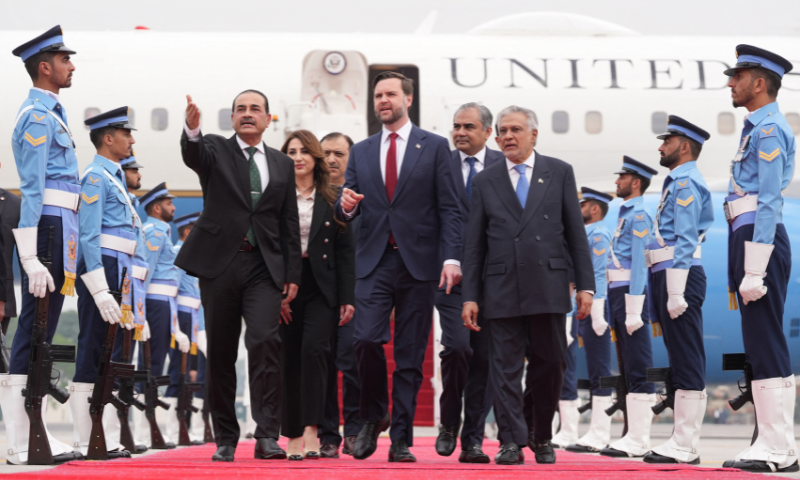
ISLAMABAD: A United States delegation led by Vice President JD Vance arrived in Islamabad on Saturday to participate in high-stakes peace talks with Iran, as Pakistan hosts negotiations aimed at reinforcing a ceasefire and working towards a permanent truce.
The US delegation, which includes Donald Trump’s son-in-law, Jared Kushner, and special envoy Steve Witkoff, reached the Pakistani capital under tight security arrangements ahead of the talks.
Pakistan’s Ministry of Foreign Affairs said the high-powered United States delegation arrived in Islamabad on Saturday to participate in the Islamabad Talks.
🔊PR No.9️⃣9️⃣/2️⃣0️⃣2️⃣6️⃣
Arrival of the US Delegation for Islamabad Talks
🔗⬇️ pic.twitter.com/MO9hkpnpf0— Ministry of Foreign Affairs – Pakistan (@ForeignOfficePk) April 11, 2026
The delegation was received by Deputy Prime Minister/Foreign Minister Senator Mohammad Ishaq Dar, Chief of Defence Forces and Chief of Army Staff Field Marshal Syed Asim Munir, and Minister for Interior Syed Mohsin Raza Naqvi upon arrival.
Welcoming the US Vice President, Dar commended the US commitment to achieving lasting regional and global peace and stability.
He expressed hope that the parties would engage constructively and reiterated Pakistan’s willingness to continue facilitating efforts towards a lasting and durable resolution to the conflict.
Their arrival follows that of the Iranian delegation, headed by Parliament Speaker Mohammad Bagher Ghalibaf, which had already arrived in Islamabad.
US Delegation Led by JD Vance Arrives in Islamabad pic.twitter.com/nL3JrUVRQC
— Sajjad Tarakzai (@SajjadTarakzai) April 11, 2026
JD Vance could become the most senior American official to engage Iran’s leadership since the 1979 Islamic Revolution, with the last such high-level contact dating back to before the revolution, when Jimmy Carter visited the Shah in Iran in 1977.
Other senior Iranian officials in the delegation include Foreign Minister Abbas Araghchi, Secretary of the Supreme National Security Council Ali Akbar Ahmadian, Central Bank Governor Abdolnaser Hemmati, and former IRGC commander Mohammad Bagher Zolghadr.
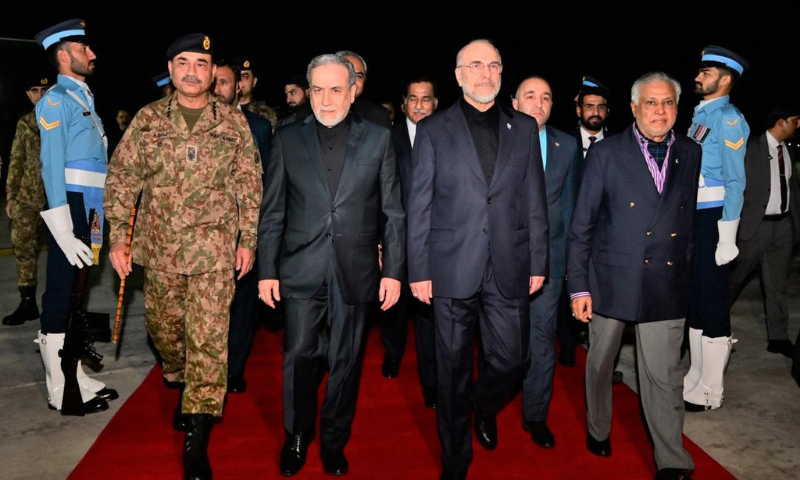
The talks come at a critical juncture, with Iran insisting on a truce in Lebanon and the unfreezing of its assets as preconditions for negotiations — neither of which has materialised so far.
Ahead of the talks, Vance signalled Washington’s conditional openness to dialogue, saying the United States was prepared to engage if Iran negotiates in good faith.
“As POTUS said, if the Iranians are willing to negotiate in good faith, we’re certainly willing to extend the open hand. If they’re going to try to play us, then they’re going to find that the negotiating team is not that receptive.”
Pakistan, which played a key mediating role in securing the temporary truce, has cautioned that the negotiations will be difficult.
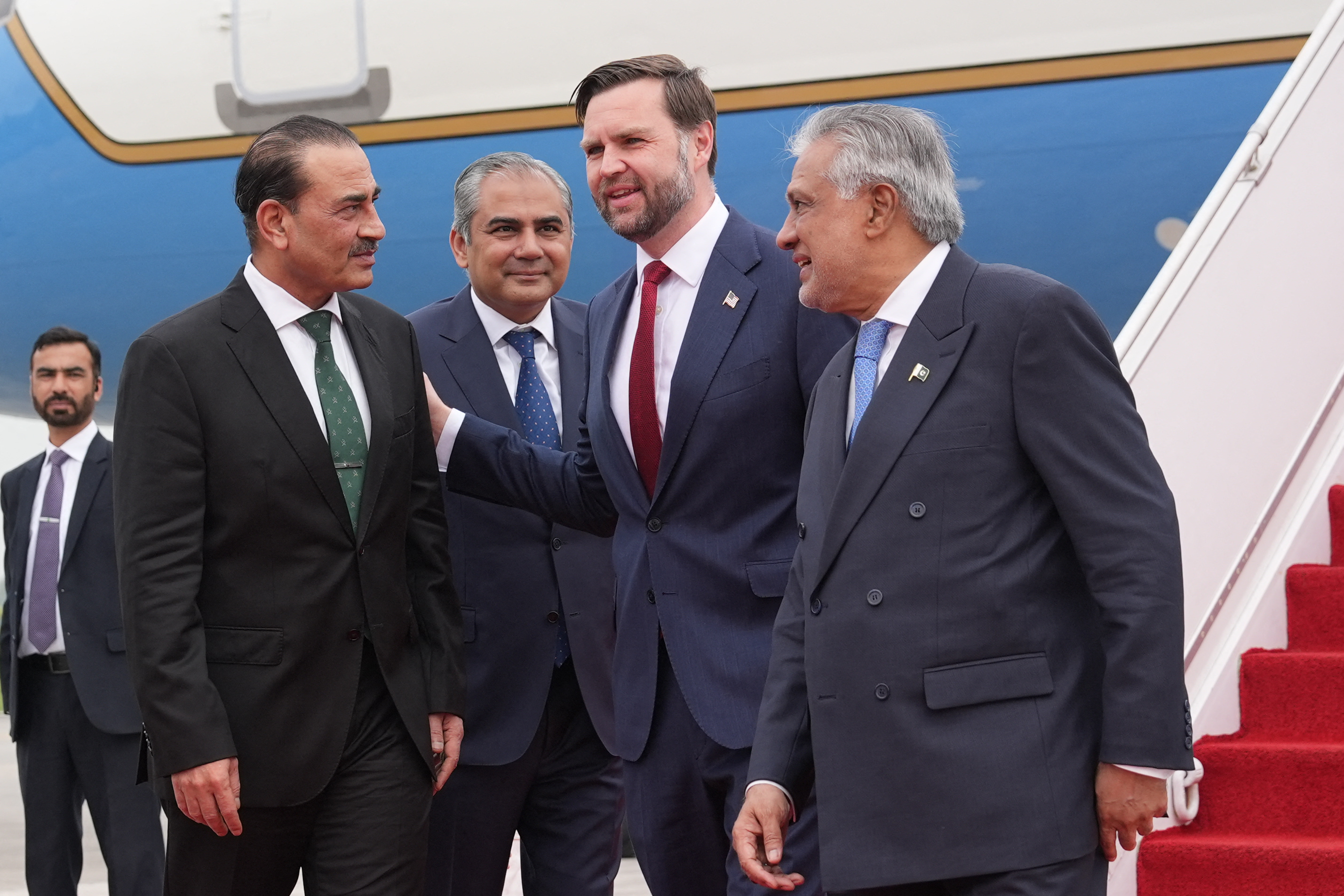
“A temporary ceasefire has been announced, but now an even more difficult stage lies ahead: the stage of achieving a lasting ceasefire, of resolving complicated issues through negotiations,” Prime Minister Shehbaz Sharif said.
“This is that stage which, in English, is called the equivalent of ‘make or break.’”
Sharif said leaders from both countries were attending at Pakistan’s invitation and pledged that his government would “make every possible effort to make these talks successful”.
“In response to my sincere invitation, the leaders of both countries are coming to Islamabad. There, negotiations will be held for the establishment of peace,” he said in an address to the nation.
In Washington, President Donald Trump expressed optimism about the outcome of the talks, telling NBC News he was “very optimistic” about a peace deal following the Pakistan-brokered ceasefire.
He said Iran’s leadership appeared “much more reasonable” in private, but warned that failure to reach an agreement would have serious consequences. “If they don’t make a deal, it’s going to be very painful,” he said.
Trump has also linked the continuation of the ceasefire to the reopening of the Strait of Hormuz, a strategic waterway through which roughly one-fifth of the world’s crude oil passes. While the ceasefire has made the Islamabad talks possible, the Strait has yet to reopen to normal traffic.
Trump said on Friday he would ensure the waterway is reopened soon “with or without” Iran’s cooperation.
He added that his primary objective at the Islamabad talks was to prevent Iran from acquiring nuclear weapons. “No nuclear weapon. That’s 99 percent of it,” he said.
The negotiations mark a pivotal moment in efforts to de-escalate tensions that had threatened to engulf the wider Middle East, placing Pakistan at the centre of global diplomacy.
In Islamabad, extraordinary security arrangements have been put in place ahead of the talks. Authorities have effectively sealed off the Red Zone, with key routes including D-Chowk, Constitution Avenue, and roads leading to the Serena Hotel — the expected venue — either closed or heavily restricted.
All routes leading to the hotel have been blocked, with only authorised vehicles allowed entry. Thousands of security personnel have been deployed across sensitive areas, while large banners and digital displays across the capital are marking the “Islamabad Talks”.
Pakistan has also introduced exceptional facilitation measures for international participants, allowing travellers to board flights without visas and receive visas on arrival.
As both delegations are now on the ground in Islamabad, the talks are widely seen as a “make or break” opportunity to turn a temporary ceasefire into a lasting agreement and address a complex set of disputes shaping the region.