ISLAMABAD: Analysts, diplomats and political observers have described the recent Pakistan-facilitated talks between the United States and Iran in Islamabad as an important first step in a longer diplomatic process, despite the absence of a breakthrough.
The negotiations, which ran for more than 20 hours, ended without an agreement, but highlighted optimism and the continuation of dialogue after months of heightened tensions.
Vali Nasr, an Iranian-American academic, said the talks faltered primarily due to a lack of trust between the two sides.
In a post on X, he stated that Iran is seeking guarantees that any agreement would be implemented and not abandoned by Washington, while the United States is pushing for immediate concessions.
“Iran wants to make sure a deal will be implemented and the US will not walk away from it,” he wrote, adding that Washington expects Tehran to act quickly on issues such as enriched uranium and reopening the Strait of Hormuz.
Nasr said both sides are likely to reassess their positions in their respective capitals, leaving room for further negotiations. “The two sides will reassess back in their capitals and there could be another bite at the apple.”
Islamabad talks did not get to a deal over issue of trust. Iran wants to make sure a deal will implemented and U.S. will not walk away from it after Iran hands over its enriched Uranium and opens the Strait. U.S. wants both right away Iran wants first war to be definitively over…
— Vali Nasr (@vali_nasr) April 12, 2026
Diplomacy intact
Maleeha Lodhi, Pakistan’s former permanent representative to the United Nations, said it was unrealistic to expect a breakthrough in a single round of talks.
“The opening bid in US-Iran talks did not yield a deal. But it was unrealistic to expect one in just hours of talks when the two sides’ positions were so far apart,” she said on X
The diplomat said that the wide gap in positions meant neither side was likely to shift quickly.
However, she stressed that “the diplomatic option remains open,” underscoring the significance of continued engagement.
The opening bid in US-Iran talks did not yield a deal. But it was unrealistic to expect one in just hours of talks when the two sides' positions were so far apart. Neither side budged from these positions which again was not surprising. But the diplomatic option remains open
— Maleeha Lodhi (@LodhiMaleeha) April 12, 2026
Significant diplomatic achievement
Indian journalist Nayanima Basu, in a post on X, said the Islamabad talks should not be viewed as a failure despite the absence of an agreement.
Quoting Samuel Beckett, she said bringing the United States and Iran together after more than four decades of strained relations was itself a significant diplomatic achievement.
She added that those unfamiliar with the history of tensions between the two countries should “read up” before dismissing the process.
“Ever tried. Ever failed. No matter. Try again. Fail again. Fail better" – Samuel Beckett
To bring the United States and Iran, which share over 4 decades of bitter history replete with tension, under one roof is not a failure. Read up on the history. If you cannot, keep quiet. pic.twitter.com/2ObQH8uoLV
— Nayanima Basu (@NayanimaBasu) April 12, 2026
Peace talks after weeks of war
Senior Pakistani journalist Syed Talat Hussain described the talks as a critical turning point in restoring communication channels.
“Diplomacy is a marathon, not a sprint,” he wrote, adding that although differences remain wide, the key takeaway is that dialogue, which had stalled earlier this year, has now resumed in Pakistan.
He noted that historical precedents suggest such agreements often take years rather than days.
“Though the gap between the US and Iran remains wide, the critical takeaway is that the dialogue broken on Feb 28 has officially resumed in Pakistan. History shows these deals take years, not days,” Hussain stated.
Here is what Pakistan's insiders are saying:
Diplomacy is a marathon, not a sprint. Though the gap between the US and Iran remains wide, the critical takeaway is that the dialogue broken on Feb 28 has officially resumed in Pakistan. History shows these deals take years, not…
— Syed Talat Hussain (@TalatHussain12) April 12, 2026
Global support for Pakistan’s mediation
Senior journalist, Nasim Zehra, highlighted Pakistan’s growing diplomatic role, saying its mediation could prove “indispensable” to any eventual US-Iran agreement.
She said Pakistan’s efforts in securing the ceasefire and facilitating the negotiations have enhanced its strategic standing as a “sovereign and influential middle power”.
Pakistan’s impactful mediation will remain indispensable to any Iran-US agreement. By helping secure the ceasefire, facilitating the process, and itself participating in part of the 33-hour-long negotiations, Pakistan as a sovereign and influential Middle Power has acquired a…
— Nasim Zehra (@NasimZehra) April 12, 2026
Process, not an event
Dr Sharmila Faruqui, a Pakistani politician, emphasised that the absence of an agreement should not overshadow the broader progress made.
“No agreement yet, but the ceasefire holds, and talks have taken place. That matters,” she said, describing the development as the beginning of a process after decades of hostility between Washington and Tehran.
“No one expected an overnight breakthrough. What we are seeing is the start of a process, difficult issues discussed, channels open, and space for diplomacy,” Faruqui said.
She added that difficult issues are now on the table and diplomatic channels remain open, offering space for further engagement. “Pakistan will continue to play its role in the days ahead. There is hope.”
No agreement yet, but the ceasefire holds, and talks have taken place. That matters.
After decades of hostility since 1979, no one expected an overnight breakthrough. What we are seeing is the start of a process, difficult issues discussed, channels open, and space for…
— Dr. Sharmila Sahibah Faruqui (Phd) s.i (@sharmilafaruqi) April 12, 2026
Signs of progress
Energy market analyst Amena Bakr pointed to indications of progress during the Islamabad Talks.
“21 hours of talks, 10-point proposal. Seven agreed on and three not,” she wrote, adding that Pakistan continues to urge both sides to maintain the ceasefire and carry forward the dialogue.
21 hours of talks, 10 point proposal. 7 agreed on and 3 not. Pakistan is urging the talks to continue and the ceasefire to hold #Iran #US #war
— Amena Bakr (@Amena__Bakr) April 12, 2026
Momentum for continued dialogue
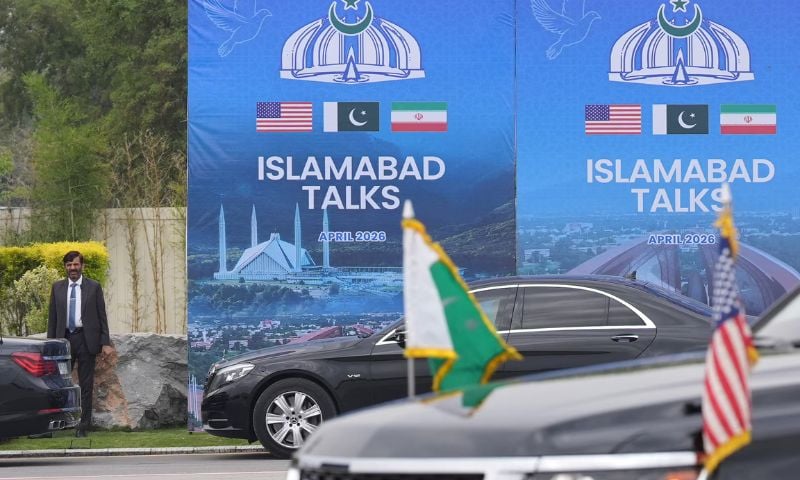
The Islamabad talks, held during the two-week ceasefire, were facilitated by Pakistan as part of broader efforts to de-escalate tensions in the region.
All sides are signalling that diplomatic engagement will continue.
US Vice President JD Vance said the discussions were substantive but fell short of a breakthrough, while indicating that Washington has put forward what it described as a final proposal.
“We’ve made very clear what our red lines are, what things we’re willing to accommodate them on, and what things we’re not willing to accommodate them on… and they have chosen not to accept our terms.”
Vance signalled that diplomacy was still in motion, confirming that a proposal had been left on the table for Tehran to consider.
“We leave here with a very simple proposal — a method of understanding that is our final and best offer. We’ll see if the Iranians accept it.”
A SECOND ROUND OF TALKS IS EXPECTED SOON: LISTEN TO REMARKS AT THE END pic.twitter.com/voeO4TkDk5
— Sajjad Tarakzai (@SajjadTarakzai) April 12, 2026
Pakistan pushes for continuity of dialogue
Pakistan, which hosted and facilitated the talks, struck a forward-looking tone, emphasising the need to sustain engagement and preserve the ceasefire.
Foreign Minister and Deputy Prime Minister Ishaq Dar said the absence of an agreement should not derail the diplomatic process.
“We hope that the two sides continue with a positive spirit to achieve durable peace and prosperity for the entire region and beyond.”
He underscored the importance of maintaining stability on the ground.
“It is imperative that the parties continue to uphold their commitment to ceasefire.”
LIVE: Pakistan’s Deputy Prime Minister and Foreign Minister Ishaq Dar’s statement on Islamabad Talks https://t.co/zOYXDntEUA
— Pakistan TV Digital (@PakistanTVcom) April 12, 2026
Reaffirming Islamabad’s role, Dar said Pakistan would remain engaged in facilitating future negotiations.
“Pakistan has been and will continue to play its role to facilitate engagement and dialogue between the Islamic Republic of Iran and the United States of America in the days to come.”
He also thanked both sides for accepting Pakistan’s invitation and acknowledged their appreciation of Islamabad’s mediating efforts.