


MANILA: The United States and its allies have commenced one of their most extensive annual military exercises in the Philippines, underscoring strengthened defence cooperation in the Indo-Pacific region even as Washington remains heavily engaged in the Middle East.
The joint drills, known as the Balikatan exercises—a Tagalog term meaning “shoulder-to-shoulder”—officially began on Monday at Camp Aguinaldo in Quezon City.
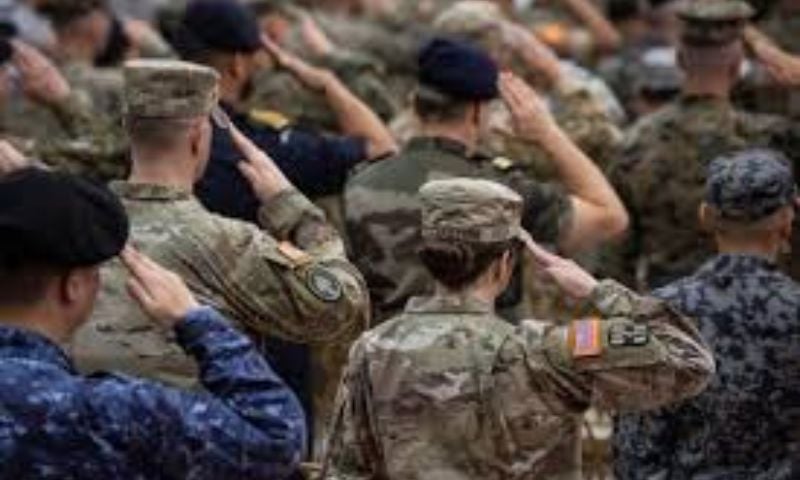
The opening ceremony featured personnel from both nations standing in formation as military cooperation was reaffirmed in the presence of senior commanders.
This year’s exercise involves more than 17,000 troops from the United States and the Philippines, with nearly 10,000 American service members deployed. The scale of participation marks one of the largest iterations of the drills to date, reflecting what officials describe as an ongoing commitment to regional deterrence and interoperability.
The exercise has also expanded to include allied contingents from Japan, France, and Canada, all of whom maintain visiting forces agreements with Manila. Their participation highlights growing multinational coordination in response to evolving security challenges in the Indo-Pacific.
According to AP, quoting the Philippine military, the drills will run for nearly three weeks and will feature a wide range of combat simulations, including live-fire exercises, amphibious operations, and coordinated battlefield scenarios.
Training activities will be conducted across multiple locations, including provinces facing the disputed South China Sea and areas near the Taiwan Strait, both of which remain sensitive geopolitical flashpoints.
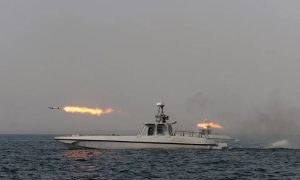
Military officials confirmed that Japan will take part in missile firing exercises from the northern Philippine province of Ilocos Norte. The drills will simulate the targeting and sinking of a mock hostile vessel positioned approximately 40 kilometres offshore in waters linked to the South China Sea region. In addition, United States forces are expected to deploy an explosive-laden marine drone as part of the scenario-based naval engagement.
Philippine Armed Forces Chief of Staff General Romeo Brawner stated that the exercises are designed to strengthen deterrence capabilities and enhance collective resilience. While he did not explicitly name any state, he has previously criticised China’s increasingly assertive maritime activities in contested waters.
Beijing has repeatedly objected to the Balikatan exercises, claiming they are intended to contain its rise. However, Philippine defence officials maintain that the drills are defensive in nature and do not target any specific country. They also emphasise that the exercises serve a dual purpose, including disaster response preparedness in a country frequently affected by natural calamities.
The United States has consistently reaffirmed its security commitment to the Philippines, its oldest treaty ally in Asia. Washington has warned that it would be obliged to defend the Philippines under mutual defence agreements in the event of armed attacks on its forces in the South China Sea.
Marine Lieutenant General Christian Wortman reiterated this stance during the opening ceremony, stating that the United States remains firmly focused on the Indo-Pacific despite global conflicts elsewhere.
“Regardless of the challenges elsewhere in the world, the United States’ focus on the Indo-Pacific and our ironclad commitment to the Philippines remains unwavering,” he said. General Brawner echoed the importance of international cooperation, stating that the participating nations remain guided by a shared commitment to international law, sovereignty, and regional stability.
He added that the objective is to ensure a free and open Indo-Pacific where nations can operate without coercion or intimidation. The drills come amid continuing territorial disputes in the South China Sea, where the Philippines, Vietnam, Malaysia, Brunei, Taiwan, and China maintain overlapping claims over resource-rich waters that are also a critical global shipping route. In recent years, tensions between Chinese and Philippine forces have intensified, particularly involving coast guard and naval encounters.
Last year, visiting US Defence Secretary Pete Hegseth reiterated Washington’s commitment to its regional allies during a visit to Manila, stressing the importance of collective deterrence and freedom of navigation. He described allied unity as essential to preventing conflict and maintaining open sea lanes across the region.