
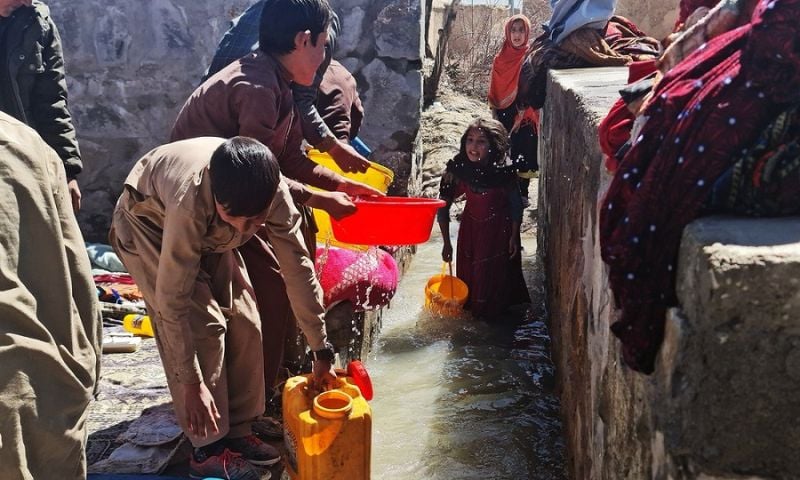



KABUL: United Nations Development Programme (UNDP) has warned that Afghanistan’s water crisis intensified sharply in 2025, as worsening drought conditions placed growing pressure on millions of people dependent on agriculture and already struggling with poverty and food insecurity.
In a report released this week, the UNDP said access to water deteriorated significantly across the country, with drought emerging as the main environmental challenge affecting nearly all regions.
According to the report, drought prevalence rose to 64 per cent in 2025 compared to 34 per cent the previous year, highlighting a major worsening of climate-related stress in the country.
The report said Afghanistan’s western regions and the northeastern province of Badakhshan were among the worst-affected areas, with around 92 per cent of households reporting the impact of drought conditions.
Continued environmental pressures
Afghanistan’s economy remains heavily reliant on agriculture, with much of the population depending on farming and livestock for survival. Water shortages are therefore having serious consequences for food production, livelihoods and local economies.
The UNDP warned that continued environmental pressures could further deepen humanitarian challenges in the country, where millions are already facing economic hardship and limited access to essential services.
Climate experts and aid agencies have repeatedly warned that Afghanistan is highly vulnerable to climate shocks, including droughts, floods and extreme weather, despite contributing very little to global greenhouse gas emissions.