ISLAMABAD: The World Meteorological Organisation (WMO), the United Nations’ authoritative voice on weather, climate, and water has issued a stark warning: there is now an 80-percent chance that the warming El Niño phenomenon will develop between June and August 2026, raising the risk of record-breaking extreme weather events worldwide and a dual climate disaster in Pakistan in 2026.
There is an 80% chance the warming El Niño phenomenon will develop between June and August, the WMO announced today. pic.twitter.com/DXWK10LWlh
— Pakistan TV Digital (@PakistanTVcom) June 2, 2026
“Fuelled by unusually warm ocean waters in the tropical Pacific, El Niño conditions are developing and are set to influence global temperature and rainfall patterns,” the Geneva-based agency said in its quarterly update.
Forecasts from the WMO’s global network indicate a pronounced shift, with probabilities reaching 80 percent for June-August and nearing or exceeding 90 percent by November. Most models suggest this event will be “at least moderate, and possibly strong.”
El Niño is a natural climate phenomenon that warms surface temperatures in the central and eastern equatorial Pacific Ocean, bringing worldwide changes in winds, pressure and rainfall patterns.
It typically occurs every two to seven years and lasts around nine to twelve months. The last major El Niño contributed to making 2023 the second-hottest year on record and 2024 the all-time high at approximately 1.55°C above the 1850-1900 pre-industrial average.
We just issued our latest El Niño/La Niña Update. The signal is clear.
There’s an 80% chance El Niño develops during June to August, rising to 90% or above through November. Most models point to at least a moderate event. Possibly strong.
What’s driving it: subsurface… pic.twitter.com/RviwPXNK0u
— Dr. Abdulla Al Mandous (@DrAAlMandous) June 2, 2026
WMO chief Celeste Saulo urged global preparedness, warning that El Niño will “exacerbate drought and heavy rainfall and increase the risk of heatwaves both on land and in the ocean.” She noted that even a moderate El Niño makes some weather and climate extremes more likely.
UN Secretary-General António Guterres echoed the alarm in a video message: “El Niño is arriving on our doorstep. The world must treat it as the urgent climate warning it is. El Niño conditions will pour fuel on the fire of a warming world.”
The WMO said there is no evidence that climate change increases the frequency or intensity of El Niño events. However, it can amplify the associated impacts because a warmer ocean and atmosphere increase the availability of energy and moisture for extreme weather events such as heatwaves and heavy rainfall.
We are likely to experience a new warmest year on record in the next 5 years.
New @WMO & @metoffice report shows that annual global mean near-surface temperatures from 2026–2030 are likely to range between 1.3°C – 1.9°C above the 1850-1900 average.https://t.co/axX4aIrB5C pic.twitter.com/eRD7EscTcf
— World Meteorological Organization (@WMO) May 31, 2026
Pakistan’s dual climate disaster for 2026
According to the Pakistan Meteorological Department (PMD) and the National Disaster Management Authority (NDMA), the impact of the developing El Niño on Pakistan is expected to be dual-phased and severe.
While the phenomenon typically suppresses the overall summer monsoon across South Asia, its intensity, potentially reaching “Super El Niño” status by August or September 2026, is paradoxically expected to create two distinct and dangerous phases.
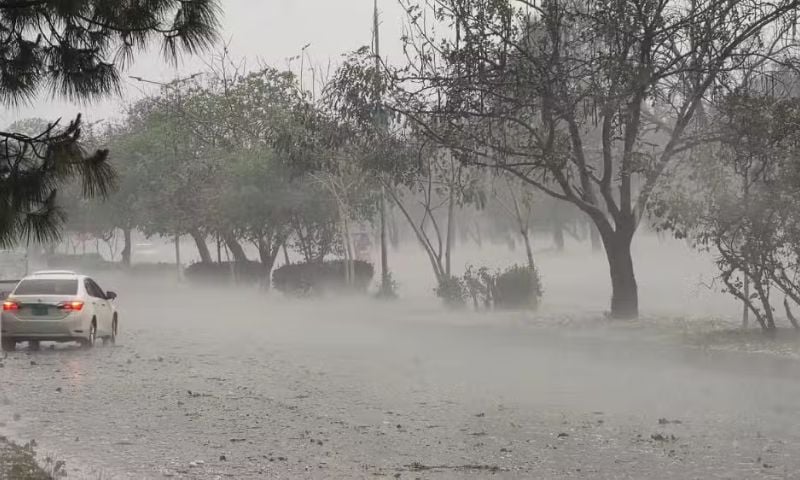
⛈️ Pakistan Weather Update: Rain, Dust Storms, and Hailstorm Alert Followed by Intense Heatwaves! Welcome back to our daily weather channel. In this video, we bring you the latest official meteorological report detailing the weather conditions over the past 24 hours and a ۔۔۔ pic.twitter.com/iZvawYS5hH
— Pak Met Department محکمہ موسمیات (@pmdgov) June 2, 2026
Phase 1: Extreme heat and drought (Pre-monsoon & early summer)
Before the monsoon arrives, El Niño conditions are already forecast to deliver brutal summer conditions.
The PMD has issued heatwave alerts warning that southern Pakistan could see mercury levels reach 52°C, coupled with a 61% probability of El Niño developing between May and July 2026. Forecasters predict below-normal rainfall, weaker winds, and potential drought-like conditions.
Agriculture, which contributes over 23% to Pakistan’s GDP, is highly vulnerable, a weak monsoon could devastate crops like cotton, which dropped 30% during the last El Niño, leading to food insecurity and inflation. Experts warn economic losses could reach trillions of rupees.
The intense, prolonged heat also poses immediate public health risks, including heatstroke and dehydration, with nighttime temperatures remaining 3-5°C higher than normal, preventing natural recovery and putting laborers, children, and the elderly at critical risk.
Phase 2: The paradox of flash floods (Monsoon season)
While overall rainfall is suppressed, the “Super El Niño” status can destabilize the atmosphere, leading to brief but torrential downpours that cause flash floods.
NDMA officials warn that specific regions face a heightened risk, including Khyber Pakhtunkhwa, Azad Kashmir, Gilgit-Baltistan, the Pothohar Plateau, and Balochistan.
Mountainous terrain in KP and Kashmir could see dangerous surges of water, while cities face drainage system overloads.
This paradox, reduced total rainy days but increased intensity of rain when it falls, means long dry spells bake the earth, followed by a few days of extreme rainfall that dry, hard soil cannot absorb, leading to flash floods even as the overall monsoon remains below average.
Why the conflicting forecasts? (Drought vs. Floods)
One may notice a contradiction: reduced rain vs. flood warnings. This is typical for a “Super El Niño” in South Asia.
- The Short Answer: It is a reduction in the total number of rainy days but an increase in the intensity of rain when it falls.
- The Result: Long dry spells (heat/drought) followed by a few days of extremely heavy rain, which the dry, hard soil cannot absorb, leading to flash floods.
🏔️ Important Weather Advisory for Tourists Planning to Visit Northern Areas of Pakistan! Before you pack your bags, make sure to watch this latest official weather forecast for major tourist destinations across Pakistan. A mix of dry weather, sudden rainstorms, and ۔۔۔ pic.twitter.com/07TNl39ZxO
— Pak Met Department محکمہ موسمیات (@pmdgov) June 2, 2026
Global Impacts and Preparedness
The WMO said that for June to August, forecasts project “a nearly universal dominance of above normal temperatures in nearly all parts of the globe.”
Regional climate centres predict below-normal rainfall during the critical June-September rainy season in the northern Greater Horn of Africa; below-average monsoon rainfall in South Asia; and drier, warmer summer conditions in Central America.
During the northern hemisphere summer, warm waters associated with El Niño can fuel hurricanes in the central and eastern Pacific while hindering their development in the Atlantic Ocean.
The WMO hopes advance warning will guide preparedness, especially in climate-sensitive sectors like agriculture, water management, energy and health. However, reports from Pakistan indicate a gap between warnings and action.
In provinces like Sindh, where temperatures are already extreme, there is a lack of basic public cooling shelters, shaded bus stops, or drinking water facilities for labourers, raising serious concerns about the capacity to handle a crisis of this magnitude.
“The only effective response is climate action equal to the crisis,” said UN chief Guterres “ending the addiction to fossil fuels, accelerating the shift to renewables, protecting the most vulnerable, and delivering early warning systems for all.”