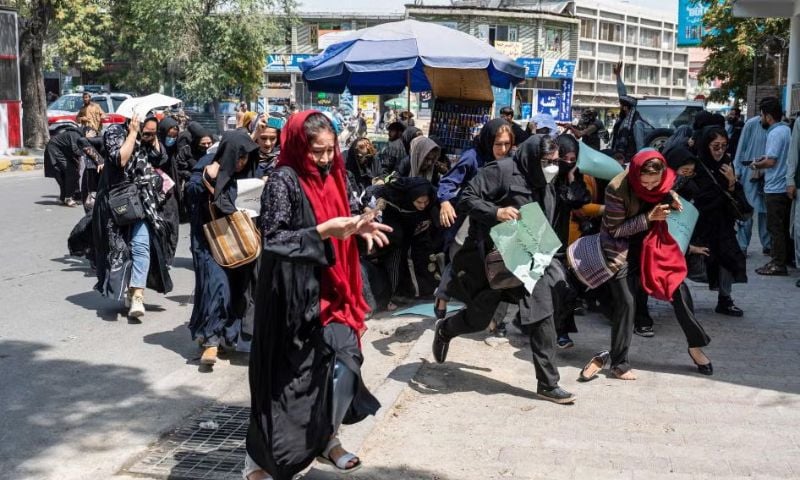
Key Points
- UN warns detentions in Herat raise human rights concerns
- Local reports say at least 21 women and girls may have been held
- Taliban has not responded to requests for comment
ISLAMABAD: The United Nations Assistance Mission in Afghanistan has urged the Taliban authorities to halt reported arrests and detentions of women in western Afghanistan over alleged violations of dress requirements.
The mission has called for equal treatment without gender discrimination.
UNAMA said it was concerned by reports of multiple detentions in Herat province linked to compliance with newly enforced dress rules.
Local media have reported that at least 21 women and girls were detained last week, though the figures have not been independently confirmed.
The UN mission said it had not received official details from the authorities regarding the arrests. The Taliban government did not respond to a request for comment from the media.
In a statement posted on social media platform X, UNAMA said all people are entitled to freedom of movement and equality before the law.
It urged the “de facto” authorities to ensure non-discriminatory treatment regardless of gender.
The reported detentions come after local media accounts of a recent directive issued in Herat requiring women to observe what authorities described as a “proper hijab” in public.
The directive reportedly warned of punitive measures for those who appear without compliance, including not covering the face or wearing makeup.
Since returning to power in 2021, the Taliban have imposed sweeping restrictions on women and girls, including limits on education, employment, and public participation, drawing sustained international criticism.
A UNICEF report released earlier warned that Afghanistan risks losing more than 25,000 female teachers and health workers by 2030 if restrictions on women’s education and employment continue.
The Taliban say they respect women’s rights in line with their interpretation of Islamic law.