ISLAMABAD: The United Kingdom and Pakistan have agreed to expand bilateral cooperation in trade, economic growth, education, regional security and counter-terrorism following the first visit to Pakistan by UK Minister of State Stephen Doughty.
Doughty, who oversees the UK’s relations with the Middle East, North Africa, Afghanistan and Pakistan, held talks with Deputy Prime Minister and Foreign Minister Ishaq Dar, Interior Minister Mohsin Naqvi and Law, Justice and Human Rights Minister Azam Nazeer Tarar during his visit.
The discussions also covered stability in Afghanistan and efforts to reduce the risk of escalation in the region.
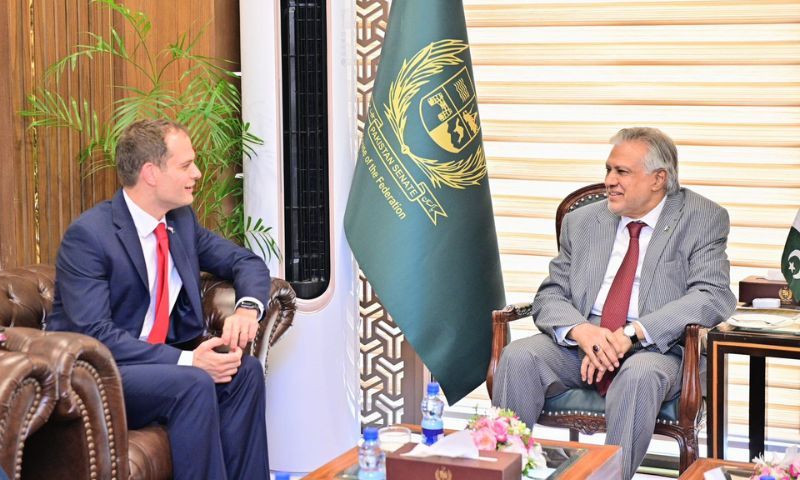
DPM/FM Senator Mohammad Ishaq Dar @MIshaqDar50 received Mr. Hamish Falconer MP @HFalconerMP Parliamentary Under-Secretary of State at the FCDO.
Mr Falconer conveyed deep appreciation for Pakistan’s constructive diplomatic role in facilitating the US–Iran agreement.
The two sides reviewed Pakistan–UK relations and exchanged views on regional and international developments.
DPM/FM reaffirmed Pakistan’s commitment to dialogue and diplomacy for durable regional peace and stability.
Both sides reiterated their shared resolve to further strengthen Pakistan–UK bilateral cooperation.
@FCDOGovUK
— Ministry of Foreign Affairs – Pakistan (@ForeignOfficePk) June 15, 2026
No new bilateral agreement or funding package was announced during the visit, but both sides identified areas for deeper cooperation and outlined follow-up initiatives, particularly in education.
Education Ties
Doughty met officials from Pakistan’s Higher Education Commission, university leaders and the British Council to discuss expanding transnational education and institutional links between the two countries.
The discussions covered university partnerships, access to UK qualifications and cooperation in science, technology, engineering and mathematics, healthcare and technology.
According to the UK government, more than 15,000 Pakistani students studied for UK qualifications in Pakistan through transnational education during 2024-25, an 83% increase over the past decade.
Pakistan is now the fourth-largest host country globally for UK transnational education, while UK institutions account for about 65% of Pakistan’s TNE market.
The British Council plans to bring a delegation of UK universities to Pakistan next March to explore further partnerships.
The two sides have an ambition to see more than 100 British universities working with Pakistani institutions by the end of the decade.
Trade And Security
Economic growth and trade were also central to Doughty’s discussions with Pakistani officials.
The UK and Pakistan are seeking to strengthen commercial ties, with bilateral trade currently worth about £5.5 billion annually, according to the UK government.
The talks also covered regional security, Afghanistan and counter-terrorism cooperation, as well as efforts to prevent further escalation in the region.
Doughty also met civil society representatives and politicians from across Pakistan’s political spectrum, where he reaffirmed Britain’s commitment to human rights and democratic freedoms.
Wider Partnership
“The UK and Pakistan share deep and historic ties, built on the connections between our people, businesses and institutions,” Doughty said.
He said his first visit had focused on strengthening cooperation “from growth and trade to education, security and regional stability”.
Doughty also highlighted the potential for greater cooperation in education, particularly through partnerships between British and Pakistani universities to help young people develop skills for the future.
The visit concluded without a major new bilateral agreement, but established several areas for continued engagement, including expanded university partnerships, trade and investment, security cooperation and regional stability.
The UK and Pakistan maintain extensive people-to-people links, with around 1.7 million people of Pakistani heritage living in Britain.