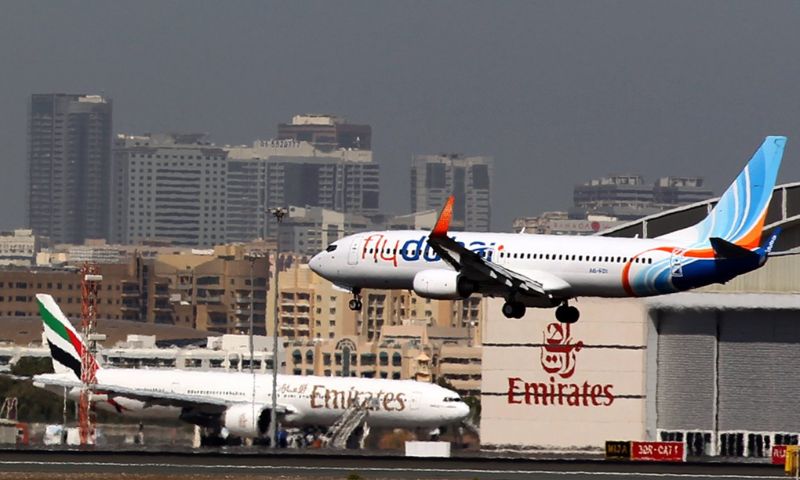
DUBAI: Iranian nationals have been barred from entering or transiting through the United Arab Emirates, according to updated travel information issued by leading UAE carriers, Emirates and Flydubai, on Wednesday.
Dubai-based Emirates confirmed on its official website that passengers holding Iranian nationality are currently not permitted to enter or pass through the UAE. The restriction applies broadly and affects travellers using the country as a transit hub as well as those seeking direct entry.
Dubai-based carrier Emirates says Iranian nationals are not permitted to enter or transit through the UAE, except for those holding a Golden Visa, as well as UAE residents who are spouses of Emirati nationals, children of Emirati mothers, or fall into categories such as athletes,… pic.twitter.com/wDT2OTWCX2
— Al Arabiya English (@AlArabiya_Eng) March 31, 2026
Meanwhile, Flydubai clarified that certain exemptions remain in place. Iranian nationals who hold a valid UAE “Golden Visa” are still allowed to enter and transit through the country, reflecting a more targeted approach to the restrictions.
According to Arab News, the measures come at a time of heightened tensions between Iran and several Gulf states.
Airlines often update travel policies in line with government directives, particularly in response to evolving security or diplomatic developments.
But the site says something else
NO IRANIAN IS ALLOWED WITH ANY KIND OF VISA OR RESIDENCY based on emirates airline— Adam Moradi (@adam_moradi) March 31, 2026
The latest move is likely to affect travel plans for a significant number of passengers, given the UAE’s role as a major international transit hub connecting Asia, Europe, and the Middle East.
Travellers have been advised to check the latest entry requirements and airline guidelines before departure to avoid disruption.
The UAE maintains a strict visa and entry policy framework that can be adjusted in response to regional developments.
Analysts suggest that such restrictions may reflect broader diplomatic sensitivities and could influence airline operations, passenger traffic, and bilateral relations if maintained over an extended period.