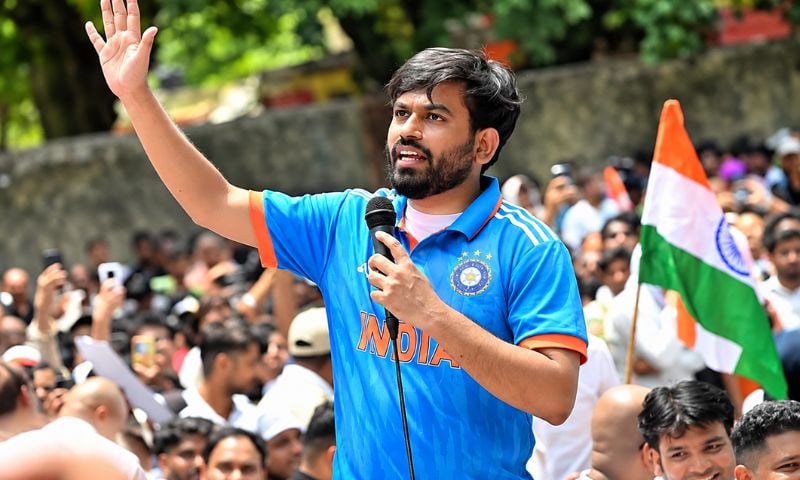
NEW DELHI: In less than three months, Abhijeet Dipke has gone from an unknown student in the United States to the public face of a protest movement that has challenged India’s government and helped force a senior minister to resign.
The 30-year-old founder of the Cockroach Janta Party (CJP) rose to prominence after a social media post responding to a controversial remark by India’s Chief Justice Surya Kant, who compared jobless young people to cockroaches.
Kant later said his comments had been misinterpreted and were directed at young people using fake degrees, rather than the country’s youth more broadly.
The CJP is “struggling for their own survival”, says Abhijeet Dipke in this BBC interview.
With “limited politics or democracy”, they aim for a cultural transformation where people hold the government accountable. pic.twitter.com/NUrIa3J0Fa
— VIZHPUNEET (@vizhpuneet) September 12, 2026
Dipke’s response on X on 16 May was brief: “What if all cockroaches come together?”
The post prompted thousands of responses and helped inspire a satirical political movement whose name also echoes Prime Minister Narendra Modi’s Bharatiya Janata Party (BJP).
“It’s been a rollercoaster ride. Two-three months ago, nobody knew me,” Dipke told the BBC.
From Post To Protest
Dipke, who recently completed a master’s degree in public relations at Boston University, had previously worked for three years with the opposition Aam Aadmi Party (AAP).
He returned to India after his campaign’s website and X account were briefly blocked. Dipke said a notice cited Section 69A of India’s Information Technology Act, which allows online information to be blocked on specified grounds, including national security.
Am I dreaming or what? pic.twitter.com/NAA7ZdVPjz
— Abhijeet Dipke (@abhijeet_dipke) October 2, 2026
The government did not respond to the BBC’s questions. Indian media reported that officials had cited national security concerns.
Dipke said he returned to demonstrate he was not a threat to his country, despite fearing possible detention or reprisals.
“I won’t lie. I was afraid,” he said, describing concerns shared by his family and a lawyer he consulted.
Anger Over Education
The movement gained momentum amid widespread concerns about unemployment, educational standards and alleged irregularities in competitive examinations.
A government report cited in the BBC’s account found that just over 8% of graduates secured jobs aligned with their skills, while graduate unemployment stood at 29.1%.
मशहूर संगीतकार और गायक विशाल ददलानी मुंबई के शिवाजी पार्क में आयोजित CJP के विरोध प्रदर्शन में हुए शामिल.
CJP Protest | Abhijeet Dipke | Vishal Dadlani | Shivaji Park | #CJPProtest pic.twitter.com/QvPWbWGpFZ
— News Pinch (@TheNewspinch) October 2, 2026
A national medical entrance examination was also scrapped following a question-paper leak, intensifying frustration among students and middle-class families.
Dipke said the issue emerged organically through conversations with supporters.
“I was speaking to at least a hundred followers every day, and most of them were complaining about the paper leak,” he said.
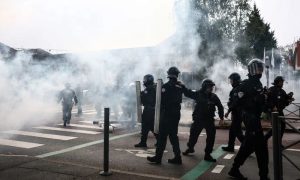
The CJP initially attracted hundreds of people at a protest in Delhi on 6 June. Support grew after demonstrations spread and images emerged of security forces using tear gas, batons and pellet guns to disperse protesters attempting to march towards parliament on 20 July.
The government said police personnel were also injured during the clashes.
Minister Resigns
The protests intensified pressure on the government, with Modi releasing videos addressing young people and promising action against those involved in examination leaks.
However, protesters continued to demand the resignation of Education Minister Dharmendra Pradhan.
On 25 July, Pradhan stepped down, saying the decision was intended to prevent “anti-national elements” from exploiting the situation.
Dipke, who was addressing demonstrators when the news arrived, described the moment as a breakthrough.
🚨 Abhijeet Dipke to Amit Shah:
This time, don’t give orders for a lathi charge.
You have already made one mistake on July 20. If you make the same mistake again, you will be the next one to resign.
If you want to behave like a goon, become one, but don’t be the country’s Home… pic.twitter.com/fMh70wg6YN
— TEJASH 🚩 (@Tejashyy) October 2, 2026
“We have done it,” he shouted, according to the BBC report.
The rapid political fallout gave the movement national visibility, although its longer-term influence remains uncertain.
A Wider Mission
The CJP has since turned its attention to government schools in rural India, where Dipke says inadequate facilities are denying children a dignified education.
During visits to schools in Maharashtra, he encountered buildings with damaged floors, walls and ceilings, as well as a school without a toilet for female students.
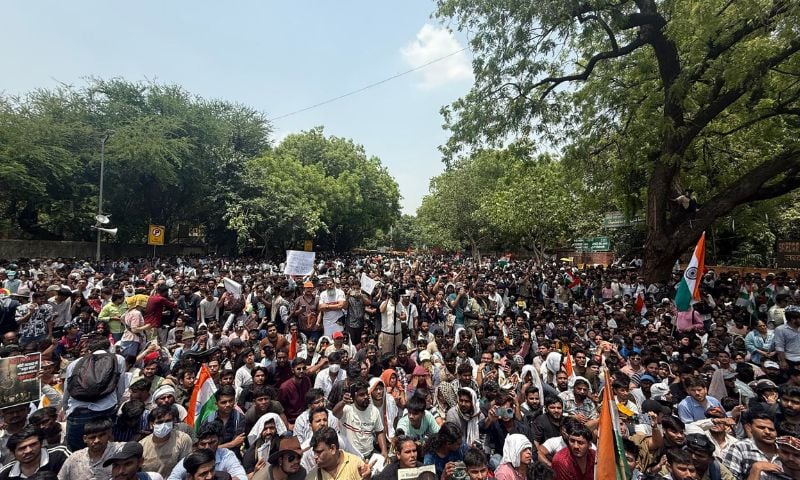
The campaign has also raised questions about whether the movement can develop beyond a loose pressure group into a sustained national organisation.
Dipke says the movement seeks to unite people across religious and caste lines and encourage citizens to hold governments accountable, regardless of which party is in power.
“What we are here for is a cultural transformation where people understand their rights, their duties, and how to hold the government accountable,” he said.
The challenge now is to turn a sudden wave of public anger into lasting political and social change.