
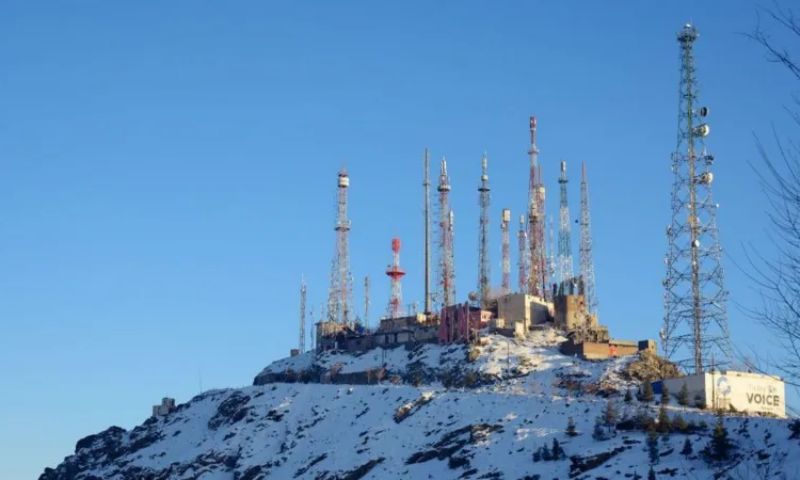
KABUL: The Afghan Taliban Regime has suspended British Broadcasting Corporation (BBC) broadcasts from FM radio sites across Afghanistan, with the regime’s interim information ministry confirming the move hours after the broadcaster announced the suspension.
Khubaib Ghufran, a spokesperson for the Afghan regime’s Ministry of Information and Culture, accused the BBC of committing “repeated violations” but did not elaborate on the allegations.
The BBC has remained the only international news organisation broadcasting from inside Afghanistan since two US media outlets were banned from operating in the country in 2022.
BBC FM radio transmissions suspended in Afghanistan https://t.co/nskNoh0WtJ
— BBC News (World) (@BBCWorld) October 13, 2026
“Millions of people across Afghanistan rely on the BBC for accurate news and information, and we are working with the authorities to address the situation,” the broadcaster said in a statement.
The BBC said it would continue to deliver impartial and independent reporting in Pashto, Dari and English to audiences in Afghanistan through shortwave and medium-wave radio, online platforms and satellite broadcasts.
The broadcaster reaches more than 20% of Afghanistan’s adult population each week with news and other content, including educational programmes for girls who have been barred from attending secondary school.
Afghanistan’s Taliban regime has imposed restrictions on media outlets since returning to power in 2021.
Meanwhile, the Taliban regime has arrested, detained and threatened Afghan women and girls over alleged violations of strict dress code rules, highlighting growing concerns over women’s rights as Afghanistan struggles to absorb record numbers of returning refugees. The United Nations has warned the regime over actions against women and girls.
The UN Assistance Mission in Afghanistan (UNAMA) verified that at least 52 women and one girl were arrested or detained in Kabul and Herat between July and September.
ALSO READ: Taliban Arrest Afghan Women over Dress Code as UN Reports Widespread Abuses
The mission said the actual number could be considerably higher, as fear and social stigma prevent many victims from reporting such incidents.
Since seizing power in 2021, the Taliban have imposed sweeping restrictions on women and girls, barring them from secondary education and many employment opportunities while curtailing their freedom of movement and participation in public life.
According to UNAMA, recent arrests were linked to alleged violations of the authorities’ dress code requirements. Women were detained for not wearing a chador, having visible hair, wearing colourful scarves or make-up, or appearing in public without a mahram, or male guardian.