










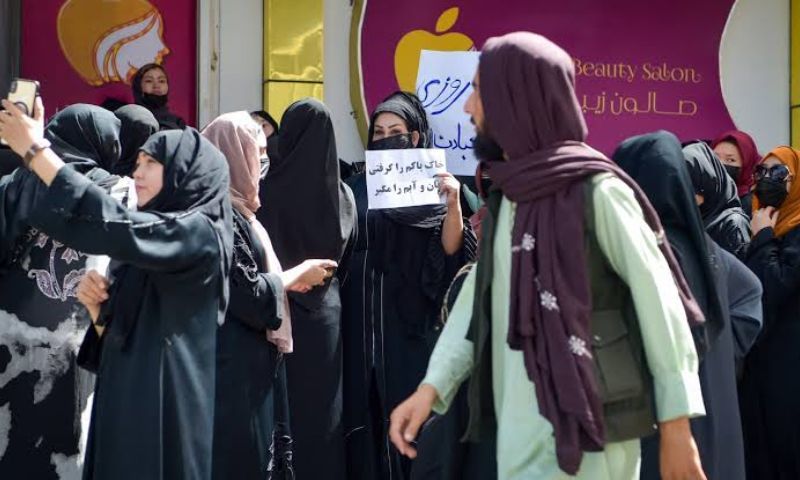
KABUL: Taliban authorities have arrested, detained and threatened Afghan women and girls over alleged violations of strict dress code rules, the United Nations has warned, highlighting growing concerns over women’s rights as Afghanistan struggles to absorb record numbers of returning refugees.
The UN Assistance Mission in Afghanistan (UNAMA) verified that at least 52 women and one girl were arrested or detained in Kabul and Herat between July and September.
The mission said the actual number could be considerably higher, as fear and social stigma prevent many victims from reporting such incidents.
Since seizing power in 2021, the Taliban have imposed sweeping restrictions on women and girls, barring them from secondary education and many employment opportunities while curtailing their freedom of movement and participation in public life.
According to UNAMA, recent arrests were linked to alleged violations of the authorities’ dress code requirements. Women were detained for not wearing a chador, having visible hair, wearing colourful scarves or make-up, or appearing in public without a mahram, or male guardian.
READ ALSO: Taliban Detain More Women in Afghanistan’s Helmand over Dress Code
The mission reported that the women were released after spending several hours in detention. UNAMA also expressed concern over incidents involving verbal abuse, beatings and threats against women, including female shopkeepers. It said such practices violated women’s and girls’ rights to freedom of movement, freedom of expression and personal autonomy.
The mission warned that arrests and detention exposed women and girls to social stigma and further marginalisation. It urged the Taliban authorities to end discriminatory enforcement practices, respect the human rights and dignity of all Afghans, and fulfil Afghanistan’s obligations under international human rights law.
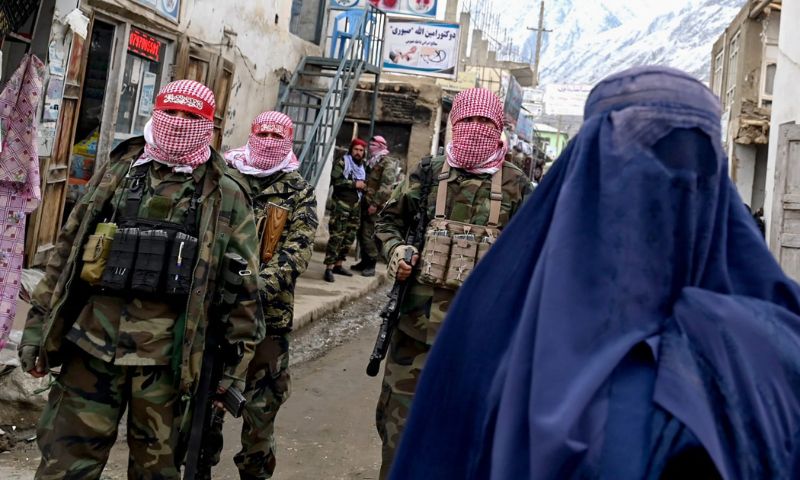
Millions of returnees face hardship
Meanwhile, the International Organization for Migration (IOM) has highlighted the mounting challenges facing nearly 6.5 million Afghans who have returned from Iran and Pakistan since 2023.
In its Returnee Resilience Overview, the UN migration agency examined the needs and reintegration barriers faced by undocumented returnee households and individuals who had spent at least eight months in Afghanistan following their arrival.
“Afghanistan is receiving returnees at a scale and pace that requires sustained support beyond the point of arrival,” said Mihyung Park, IOM’s chief of mission in Afghanistan.
She said many returnees intended to remain in the country and rebuild their lives, but their prospects depended on access to livelihoods, safe shelter, documentation and essential services, alongside support for host communities.
The report found that 53 per cent of returnees aged 14 and above had not completed any level of education, half lacked specialised experience, and 69 per cent had not been employed in the 30 days preceding their interviews.
It also found that 82 per cent had returned as households, with an average household size of 6.1 members, while 58 per cent of returnees were under 18. Housing conditions remained difficult, with 77 per cent living in transitional shelters and 51 per cent lacking sufficient living space.
Only 21 per cent of household respondents said all members of their households possessed documentation, while 43 per cent reported lacking the documents required to access relevant services.
The IOM called for sustained investment in long-term solutions, including improved livelihood opportunities, adequate shelter, documentation assistance and access to essential services.
It also urged authorities and humanitarian partners to adopt community-based reintegration measures to support both returnees and host communities.
The findings underline the scale of Afghanistan’s humanitarian and social challenges, as restrictions imposed by the Taliban continue to undermine women’s rights while millions of returnees struggle to secure basic necessities and rebuild their lives.













