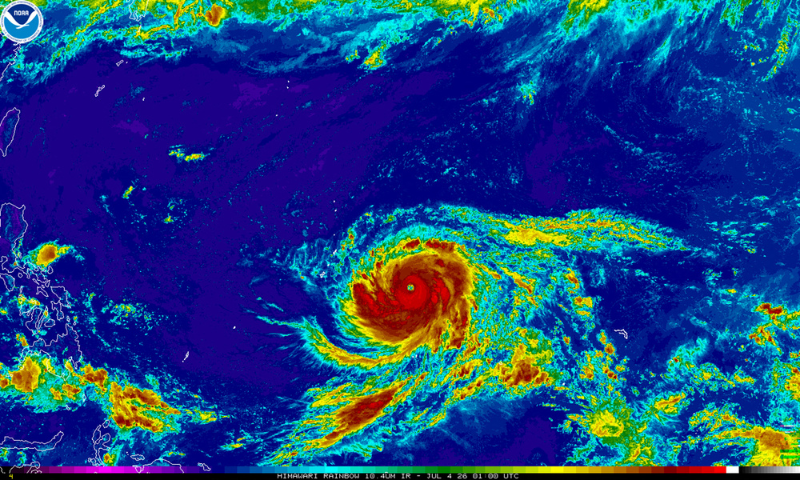
SAIPAN, Northern Mariana Islands: Residents of Guam and the Northern Mariana Islands rushed to complete storm preparations on Saturday as Super Typhoon Bavi approached the US Pacific territories, bringing winds equivalent to a Category 5 hurricane and prompting emergency declarations.
The Joint Typhoon Warning Centre (JTWC) said Bavi was several hundred kilometres east of the Mariana Islands early Saturday, packing sustained winds of 259km/h (161mph) and gusts of up to 314km/h (195mph).
The US National Weather Service warned that the storm posed a serious threat to the region.
Super Typhoon Bavi may already be completing her eyewall replacement cycle. What was just a few hours ago a ragged, imperfect CDO is suddenly circularizing into a symmetrical ring of pure convective ice, forcing renewed subsidence down through the eye. Core temperatures have… pic.twitter.com/Q1GKLuw20M
— Backpirch Weather (@BackpirchCrew) July 4, 2026
“Current forecast tracks continue to indicate a grim outlook for the Marianas,” it said, urging residents of Guam and the Northern Mariana Islands to prepare for at least tropical storm conditions.
Residents Rush to Prepare
The approaching storm has disrupted Independence Day celebrations marking the United States’ 250th anniversary, with authorities declaring states of emergency across both territories.
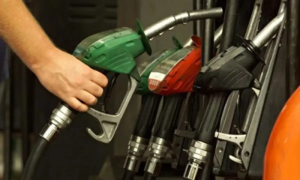
Residents queued at petrol stations and crowded supermarkets and hardware stores to stock up on food, bottled water, batteries, plywood and other emergency supplies.
“We bought basic needs like water, candles, batteries and canned goods,” said Jeff Garcia, a resident of Kagman Village in the Northern Mariana Islands.
“As a community, our greatest defence is our unity, our preparation and our discipline.”
At the Pacific Islands Club resort in Saipan, staff boarded up windows, secured outdoor furniture, checked emergency systems and prepared first-aid supplies ahead of the typhoon.
“We’re all working together to reduce damage and make sure we’re ready to respond once the storm passes,” said Reymark Castro, the resort’s sports, entertainment and activities manager.
Communities Still Recovering
The Northern Mariana Islands, home to around 40,000 people, and neighbouring Guam, with a population of about 170,000, are still recovering from Super Typhoon Sinlaku, which struck in April.
That storm caused widespread power outages, damaged homes and infrastructure, uprooted trees and capsized a cargo ship, leaving several crew members dead or missing.
The American Red Cross said some families were still living in temporary shelters or under damaged roofs as disaster response teams prepared for Bavi’s arrival.
“The thought of going through it all again without electricity and water is really sad,” said Em Marilla, a resident of As Lito village.
“The application process for assistance takes far too long, and having to keep spending out of pocket for our daily needs is truly draining.”
Another resident, Lherie Galvan, said repeated storms were taking a psychological toll on families.
“I’m tired of preparing, planning and fixing our roof,” she said. “Children already have trauma but at a young age, they know how to prepare and pack their things for emergencies.”
Warming Oceans Fuel Stronger Storms
Scientists say rising ocean temperatures are contributing to more intense tropical cyclones.
The European Union’s Copernicus Marine Service said the world’s oceans recorded their warmest June on record, while the World Meteorological Organization said El Niño conditions had already developed in the tropical Pacific and were likely to strengthen.
Warmer sea surface temperatures provide more energy for tropical storms, increasing the likelihood of stronger winds and heavier rainfall.