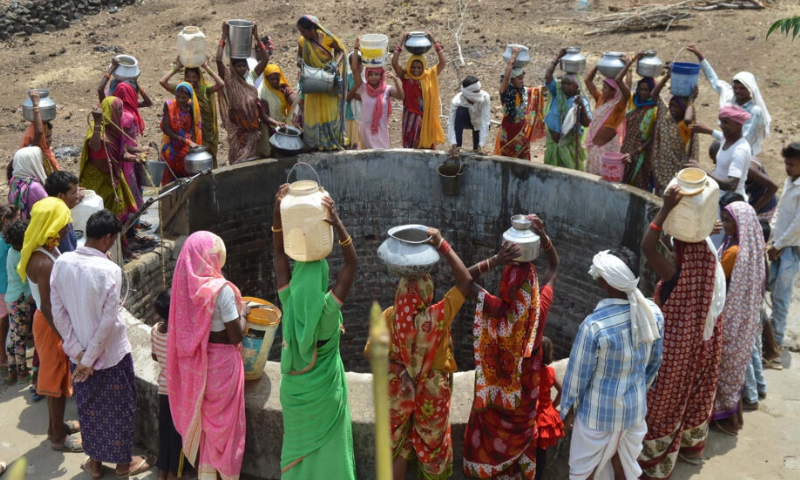
NEW DELHI, India: A concerning report from the United Nations reveals that South Asia is grappling with a severe water crisis, significantly impacting children in the region.
Approximately 347 million children under 18 face high or extremely-high water scarcity, surpassing all other global regions. Climate change, disrupting weather patterns and rainfall, exacerbates the situation.
This eight-nation region, including Afghanistan, Bangladesh, Bhutan, India, Nepal, Maldives, Pakistan, and Sri Lanka, houses over a quarter of the world’s children. Factors such as poor water quality, inadequate water supply, and mismanagement, such as over-pumping aquifers, contribute to the crisis.
UNICEF emphasizes the ripple effects, affecting homes, health centres, and schools when village wells run dry. The unpredictable climate exacerbates water scarcity, making the situation increasingly challenging for South Asian children.
At the upcoming UN COP28 climate conference in Dubai, UNICEF plans to advocate for global leaders to ensure a sustainable future, emphasizing the fundamental human right to safe water.
Sanjay Wijesekera, UNICEF Chief for South Asia, underscores that millions of children in the region face water inadequacy amid climate-related challenges like floods and droughts.
Despite ongoing efforts to improve water services, urgent action is crucial to alleviate the plight of children facing unprecedented water scarcity in South Asia.