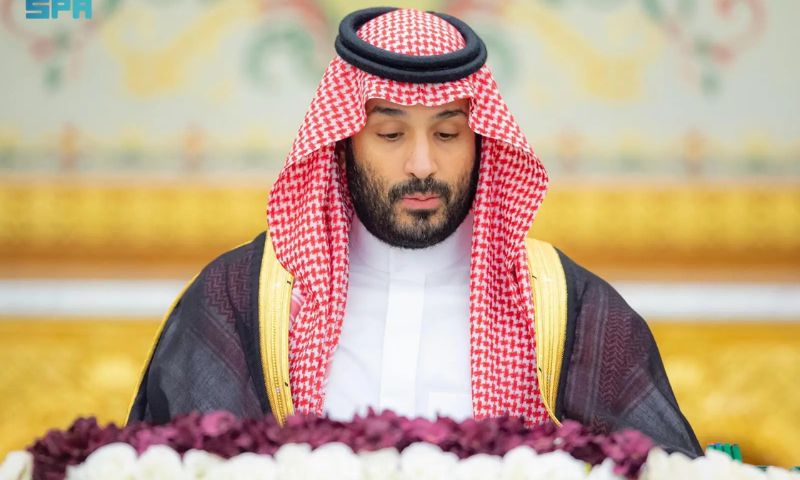
JEDDAH: Saudi Arabia’s Crown Prince and Prime Minister Prince Mohammed bin Salman on Tuesday chaired the GCC Consultative Summit in Jeddah, bringing together leaders and delegation heads from member states of the Gulf Cooperation Council (GCC).
The summit focused on key regional and international developments, along with efforts to enhance coordination among member states, the Saudi Press Agency (SPA) reported.
The summit was attended by Minister of Foreign Affairs Prince Faisal bin Farhan bin Abdullah.
Earlier in the day, the Crown Prince received GCC leaders ahead of the meeting. He welcomed Kuwait’s Crown Prince Sabah Al-Khalid Al-Sabah upon his arrival at King Abdulaziz International Airport.
📹 | HRH the Crown Prince welcomes the Kuwaiti Crown Prince upon his arrival in Jeddah to participate in the Gulf Consultative Summit. pic.twitter.com/wphn0bvHiE
— Foreign Ministry 🇸🇦 (@KSAmofaEN) April 28, 2026
He later received Bahrain’s King Hamad bin Isa Al Khalifa and Qatar’s Emir Tamim bin Hamad Al Thani as they arrived for the summit.
📹 | HRH the Crown Prince welcomes the King of Bahrain upon his arrival in Jeddah to participate in the Gulf Consultative Summit. pic.twitter.com/tBKAVvIEV0
— Foreign Ministry 🇸🇦 (@KSAmofaEN) April 28, 2026
📹 | HRH the Crown Prince welcomes Amir of the State of Qatar upon his arrival in Jeddah to participate in the Gulf Consultative Summit. pic.twitter.com/WLf17wMGF9
— Foreign Ministry 🇸🇦 (@KSAmofaEN) April 28, 2026
The UAE Deputy Prime Minister and Foreign Minister Sheikh Abdullah bin Zayed Al-Nahyan was received by Saudi Foreign Minister Prince Faisal bin Farhan.
#Jeddah | Foreign Minister HH Prince @FaisalbinFarhan welcomes UAE Deputy Prime Minister and Foreign Minister HH Sheikh Abdullah bin Zayed Al Nahyan upon his arrival at King Abdulaziz International Airport to participate in the Gulf Consultative Summit. pic.twitter.com/qKow95AoFR
— Foreign Ministry 🇸🇦 (@KSAmofaEN) April 28, 2026
The Gulf Cooperation Council (GCC) is a regional bloc formed in 1981 that brings together six Gulf countries—Saudi Arabia, United Arab Emirates, Qatar, Kuwait, Bahrain, and Oman—to promote cooperation on economic, political, and security matters.
It has helped improve coordination in areas like trade, infrastructure, and regional stability, while also serving as a platform for joint responses to shared challenges.