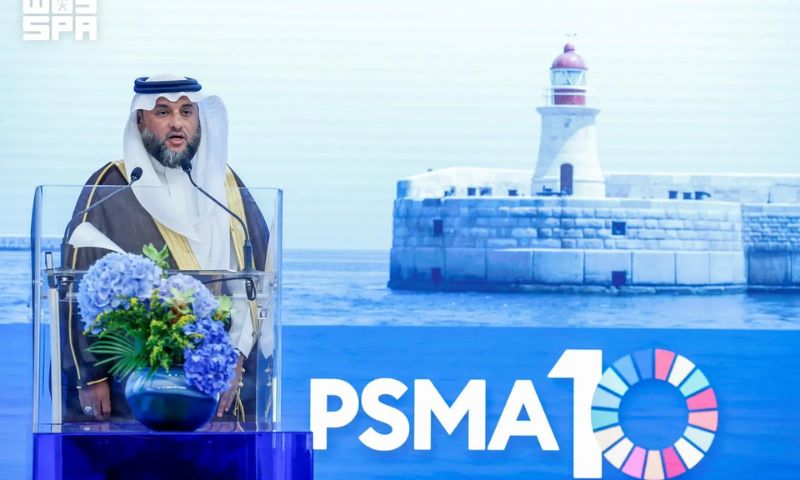
ROME: Saudi Arabia has reaffirmed its commitment to international and regional efforts to promote sustainable marine resources, combat illegal, unreported, and unregulated (IUU) fishing, and strengthen fisheries governance to support global food security and protect marine ecosystems.
Saudi Arabia highlights global cooperation
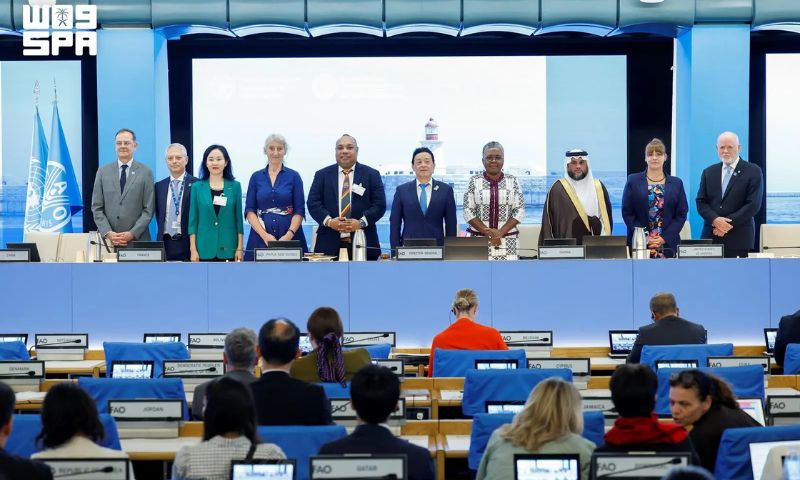
The Kingdom made the commitment during its participation in the 37th Session of the Committee on Fisheries (COFI37) and a high-level event marking the 10th anniversary of the Agreement on Port State Measures, both held at the headquarters of the Food and Agriculture Organization (FAO) in Rome, the Saudi Press Agency (SPA) reported on Wednesday.
The Saudi delegation was led by Assistant Deputy Minister for Livestock and Fisheries at the Ministry of Environment, Water and Agriculture, Dr Ali Alshaikhi.
المملكة تؤكد التزامها بدعم الجهود الدولية والإقليمية لاستدامة الموارد البحرية ومكافحة الصيد غير القانوني.https://t.co/YhH7KvITA5#واس pic.twitter.com/DODjIDP4Ap
— واس العام (@SPAregions) September 9, 2026
Addressing the high-level event, Dr Alshaikhi said the Kingdom regards oceans and seas as a shared global heritage and a vital foundation for food security, sustainable development and prosperity.
He stressed that the challenges facing marine resources extend beyond national borders and therefore require a coordinated global response based on cooperation, transparency, innovation and effective action.
Fisheries governance under Vision 2030
Dr Alshaikhi said that, in line with Saudi Vision 2030, the Kingdom continues to strengthen its national fisheries management system.
These efforts include improving governance and compliance frameworks, enhancing inspection efficiency, raising the quality of fisheries data and deploying modern tracking and monitoring technologies.
He said these measures aim to promote sustainable management of marine resources, strengthen supply-chain transparency and support the development of the Kingdom’s blue economy.
Focus on Red Sea sustainability
Dr Alshaikhi also highlighted the strategic importance of the Red Sea to Saudi Arabia’s sustainability agenda, citing its exceptional biodiversity and ecologically and economically important marine ecosystems.
He emphasised the need for stronger regional partnerships among Red Sea coastal states, alongside expanded data-sharing mechanisms, to protect marine resources and preserve them for future generations.
The Kingdom’s participation comes as part of the 37th session of the Committee on Fisheries (COFI), taking place from September 7–11, 2026, to address key global issues in fisheries and aquaculture.
Saudi Arabia reaffirmed its commitment to working closely with the FAO, member states and international partners to strengthen fisheries governance, combat illegal, unreported and unregulated fishing, enhance global food security and translate international commitments into sustainable, long-term action.