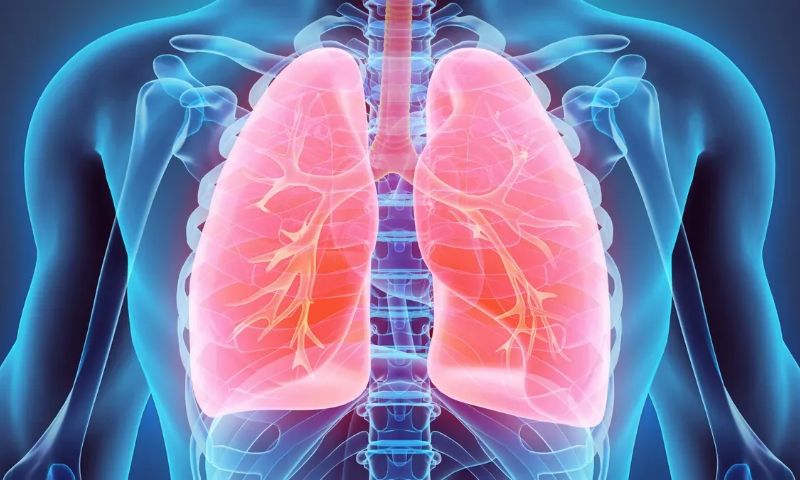
RIYADH: The Saudi Food and Drug Authority (SFDA) has approved the registration of Jascayd (nerandomilast) for treating adults with idiopathic pulmonary fibrosis (IPF), a rare and progressive lung disease that causes the formation of scar tissue in the lungs.
The medicine had previously received Orphan Drug designation under the SFDA’s Orphan Drug Programme, the Saudi Press Agency (SPA) reported on Saturday.
IPF causes healthy lung tissue to be replaced by fibrous scar tissue, resulting in severe breathlessness and a persistent cough. Jascayd is a phosphodiesterase 4 (PDE4) inhibitor that preferentially targets the PDE4B subtype, an enzyme found in the lungs that is involved in fibrosis and inflammation.
#SFDA has approved the registration of Jascayd (nerandomilast) for the treatment of adult patients with idiopathic pulmonary fibrosis (IPF).https://t.co/N95EfC5ifT pic.twitter.com/3PZwzB9nma
— Saudi Food & Drug Authority (@Saudi_fda_en) October 3, 2026
By inhibiting PDE4B, the medicine increases intracellular cyclic adenosine monophosphate (cAMP) levels and reduces the expression of pro-fibrotic growth factors and inflammatory cytokines associated with IPF.
The SFDA approved the medicine following a comprehensive assessment of its efficacy, safety, and quality. In the Phase 3 FIBRONEER-IPF trial, 1,177 patients were randomly assigned to receive Jascayd 9 mg twice daily, Jascayd 18 mg twice daily or a placebo for 52 weeks.
The decline in forced vital capacity (FVC) was 115 millilitres among patients receiving the 18 mg dose and 139 millilitres among those receiving the 9 mg dose, compared with 184 millilitres in the placebo group.
The estimated treatment differences compared with placebo were 69 millilitres and 45 millilitres, respectively, with both doses showing a statistically significant reduction in FVC decline.
ALSO READ: Sudan Praises Saudi Arabia’s Support for Health Sector
The findings were supported by an earlier Phase 2 study involving 147 patients with IPF, in which the 18 mg twice-daily dose showed a favourable effect on FVC compared with placebo after 12 weeks.
The SFDA said the most commonly reported adverse reactions included diarrhoea, nausea, weight loss, reduced appetite and back pain. The treatment should be used under medical supervision and in accordance with the approved product information.
The approval reflects the SFDA’s efforts to support medical innovation and expand access to advanced treatments, in line with the goals of the Health Sector Transformation Programme, one of the key initiatives under Saudi Vision 2030.