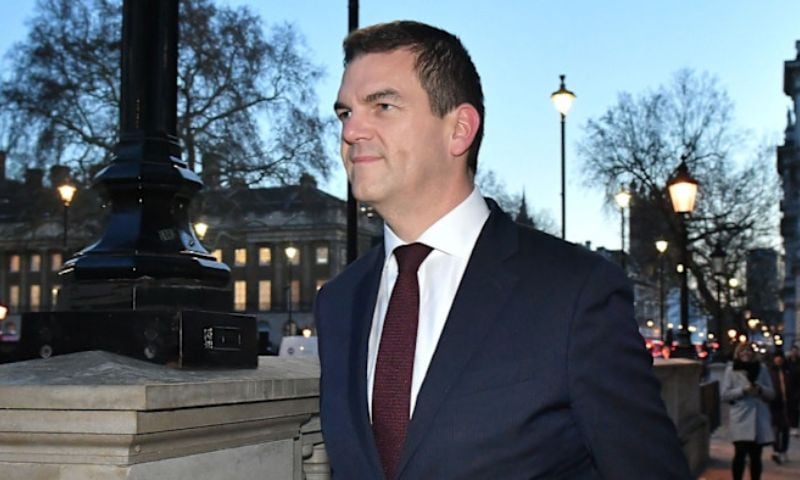
LONDON: A senior British civil servant dismissed last week has alleged that he faced sustained political pressure to approve Peter Mandelson’s appointment as the United Kingdom’s ambassador to Washington, despite unresolved security concerns.
Olly Robbins, the former head of the Foreign Office, told the House of Commons Foreign Affairs Committee on Tuesday that the process surrounding Mandelson’s appointment was marked by what he described as “an atmosphere of pressure.” His remarks have intensified an already growing political controversy surrounding the vetting procedures for one of Britain’s most sensitive diplomatic posts.
Robbins, who was removed from his position by Prime Minister Keir Starmer last week, said there had been a “very, very strong expectation” within government circles that Mandelson needed to assume his role in the United States with urgency. According to his testimony, this expectation translated into pressure to accelerate the approval process, even as security-related issues remained under consideration.
According to AP, the role of British ambassador to Washington is widely regarded as one of the most strategically important postings in the UK’s diplomatic network, given the depth of political, economic and security ties between London and Washington. As such, appointments typically undergo rigorous scrutiny, including detailed security vetting.
Robbins’ claims suggest that these established procedures may have been compromised or expedited under political direction. While he stopped short of alleging direct interference, his characterisation of the environment has raised questions about whether due diligence was adequately observed.
The controversy has placed Prime Minister Starmer under mounting political pressure, with opposition figures and some members of Parliament calling for greater transparency over the appointment process. Critics argue that bypassing or rushing security protocols could have serious implications for national security and the integrity of the civil service.
Downing Street has yet to issue a detailed response to Robbins’ testimony, though officials have previously defended Mandelson’s appointment as being in the national interest. Supporters of the government maintain that the decision was necessary to ensure strong diplomatic representation in Washington at a critical time for transatlantic relations.
However, the issue has quickly evolved into a broader debate about political influence over civil service processes. Observers note that Robbins’ dismissal shortly before his testimony may further complicate the government’s position, fuelling speculation about internal disagreements over the handling of the appointment.
The Foreign Affairs Committee is expected to continue its inquiry, with further witnesses likely to be called in the coming days. The outcome of the probe could have significant political ramifications, particularly if evidence emerges that standard vetting procedures were side-lined.
As scrutiny deepens, the episode risks becoming a defining test for Starmer’s leadership, especially regarding his government’s commitment to transparency, accountability and the independence of the civil service.