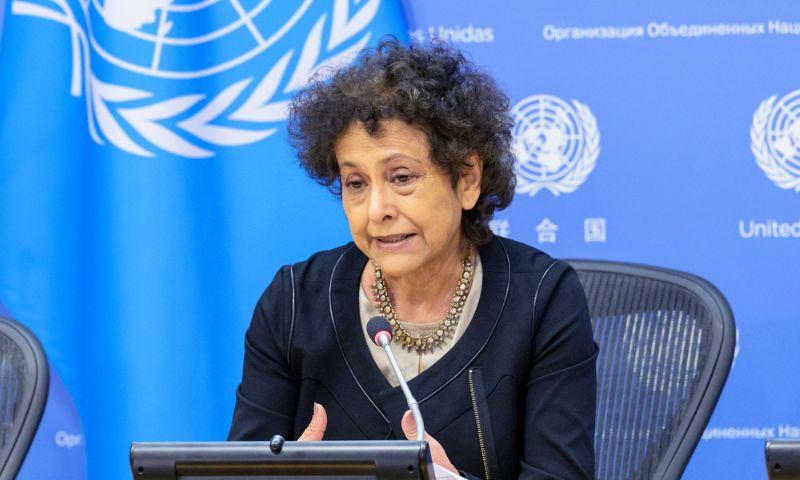
UNITED NATIONS: The UN Special Rapporteur on promoting and protecting the right to freedom of opinion and expression, Irene Khan, has called upon governments to intensify their efforts in bridging the “digital divide” and eliminating all obstacles to the right to access information.
Irene Khan’s message, marking the International Day for Universal Access to Information, emphasizes the online space’s significance this year.
She noted that the availability and accessibility of the Internet are not equal, which exacerbates existing disparities and generates new inequities based on factors like gender, geography, ethnicity, income, and digital literacy. These disparities make the most marginalized members of society even more vulnerable.
Khan described the right to information as fundamental, stating that it is essential for democracy and development. Access to information, whether online or offline, equips individuals with the knowledge to participate in decision-making processes, enhancing the quality and sustainability of development outcomes. Moreover, it empowers citizens, civil society, and the media to hold governments and corporations accountable, thereby improving the meaningfulness of democracy.
In her latest report published in April, Khan revealed that many countries have adopted laws related to access to information, with some recognizing Internet access as a legal right.
However, she highlighted the concerning fact that these laws are often not effectively implemented. Various tactics are employed to restrict or deny access to information, affecting investigative journalists, human rights defenders, and civil society representatives online and offline.
Khan also reported that over the past five years, governments in more than 74 countries have either shut down, significantly slowed down the Internet, or blocked mobile communications for varying durations. These measures impede access to information and disrupt essential services such as healthcare and education.
Irene Khan emphasized that online and offline information, freedom of expression, and active participation are crucial for addressing global challenges like climate change and pandemics and combating long-standing patterns of discrimination, exclusion, and violence.
She stressed that universal and affordable Internet access and access to information are clear targets of the Sustainable Development Goals (SDGs), which serve as a blueprint for a more just and equitable world.
During the recent High-Level Week of the UN General Assembly, world leaders convened in New York and participated in the SDG Summit, aimed at reaffirming their commitment to achieving the SDGs by 2030. Khan urged states to translate the promises made at the Summit into concrete actions. —APP