Key Points
- The 21-hour marathon negotiations covered Iran’s nuclear programme, sanctions relief, frozen assets and regional security issues in detail.
- US Vice President JD Vance publicly credited Pakistan for its “amazing job” in facilitating and bridging gaps between the two sides.
- American journalist Ione Wells said Pakistan helped transform scepticism about talks into a functioning diplomatic process.
- Analysts say Pakistan has shifted from a facilitator role to an active mediator with greater influence over the dialogue process.
- Experts highlighted Pakistan’s strategic balancing between the US, Iran, China, and Gulf states as central to its diplomatic leverage.
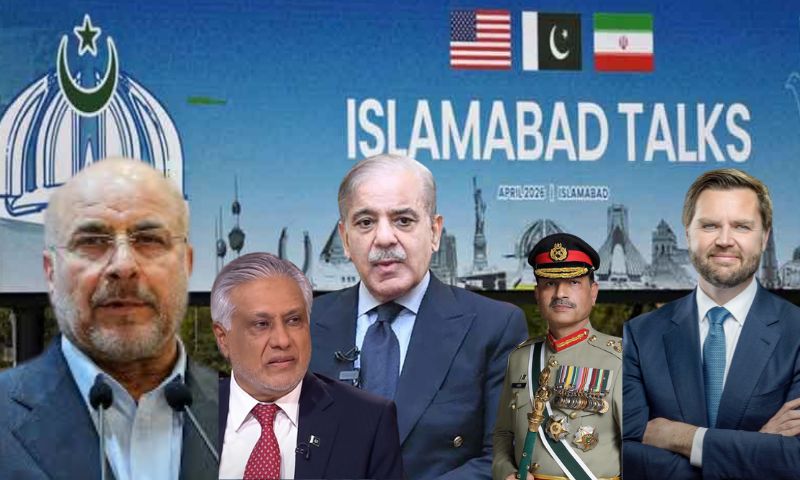
ISLAMABAD: Pakistan’s role in facilitating high-level US–Iran negotiations held in Islamabad has drawn widespread appreciation from American scholars and analysts, who say the country is emerging as an important diplomatic bridge in one of the world’s most sensitive geopolitical disputes, despite the talks ending without a formal agreement.
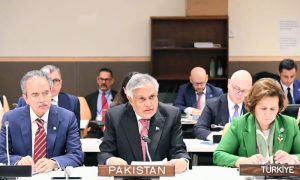
The 21-hour negotiations between senior delegations from the United States and Iran in Islamabad focused on complex issues including Iran’s nuclear programme, sanctions relief, frozen assets, and broader regional security concerns. Although no final deal was reached, the discussions were described as structured, intensive, and unusually comprehensive.
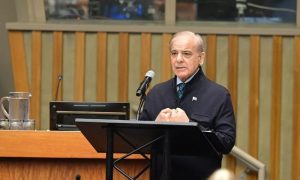
US Vice President JD Vance acknowledged Pakistan’s constructive role, praising the host nation for making an “amazing job” in helping bridge differences between Washington and Tehran and sustaining dialogue throughout the process.
Observers also highlighted Pakistan’s broader diplomatic contribution beyond traditional facilitation. BBC journalist Ione Wells noted that Pakistan helped shift perceptions from scepticism to meaningful engagement, particularly at a time of heightened global tensions.
US-based analysts, including Michael Kugelman of the Atlantic Council, have described Pakistan’s role as evolving significantly. He said Islamabad appeared to have moved “from facilitator and go-between to direct mediator”, suggesting it was now “in the driver’s seat” of efforts to guide both sides towards a possible diplomatic off-ramp.
Pakistan’s role has shifted from facilitator and go-between to direct mediator and peace negotiator (amid reports of 3-way talks taking place in Islamabad). For now at least, Pakistan’s in the driver’s seat in the difficult & delicate effort to guide the US & Iran to an off ramp.
— Michael Kugelman (@MichaelKugelman) April 11, 2026
Kugelman added that the current engagement between Washington and Tehran represents a far more complex diplomatic challenge than previous mediation efforts involving Pakistan, given the depth of mistrust between the two states.
Similarly, Elizabeth Threlkeld of the Stimson Centre highlighted Pakistan’s strategic geopolitical positioning, noting its relations with the United States, Iran, China, and Gulf countries. She described Islamabad’s role as a “very difficult tightrope walk” that balances competing regional interests while enabling dialogue.
Pakistan’s ties with Washington, Tehran and key regional powers have helped position it as a mediator in US-Iran ceasefire, said Elizabeth Threlkeld, director of the South Asia Program, ahead of Islamabad Talks. pic.twitter.com/q4GZsoM96C
— Pakistan TV Digital (@PakistanTVcom) April 10, 2026
Another analyst, Daniel Markey, linked the development to broader shifts in US South Asia policy, observing that regional diplomatic dynamics have changed rapidly over the past year.
Taken together, these assessments indicate a growing recognition within US strategic circles that Pakistan is no longer merely hosting diplomatic engagement but is increasingly playing a shaping role in high-stakes international negotiations between Washington and Tehran.
While the talks did not result in an agreement, analysts agree that Pakistan’s proactive diplomatic engagement helped sustain dialogue at a critical moment of regional uncertainty. Its facilitation has been viewed as a notable diplomatic achievement, reinforcing Islamabad’s image as an emerging intermediary in complex global crises.