
Key points
- Floods displace 1.1 million in Punjab
- Monsoon rains, India dams trigger floods
- Pakistan using AI, drones for monitoring
ISLAMABAD: Pakistan’s Climate Change Minister, Musadik Malik, issued a stern warning on Friday to wealthy business tycoons, vowing legal action against resorts, hotels, and housing developments constructed on riverbeds, as widespread flooding continues to wreak havoc in the northern and eastern regions of the country.
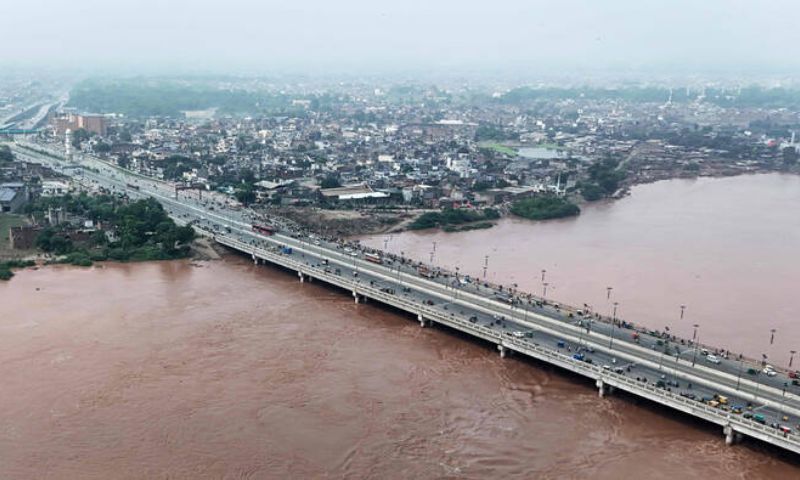
As reported by Arab News, overflowing rivers in Punjab — Pakistan’s most populous province — have submerged over 1,600 villages and displaced more than 1.1 million people.
According to the National Disaster Management Authority (NDMA), around 40 fatalities have been recorded in the region since 15 August.
The floods were triggered by unusually intense monsoon rains and the release of water from India’s overflowing dams, which resulted in flash floods across low-lying border districts. Media footage showed floodwaters from the Ravi River inundating a luxury private housing scheme in Lahore, prompting police to urge immediate evacuations.
Declaration of war
“This monsoon is our declaration of war. We will not stop now and will remove every obstacle from the river’s path,” Malik declared during a televised press briefing in Karachi.
“The prime minister has said no one is stronger than the state and this year you will see it,” he continued. “Now we will see who is stronger — the state or a handful of tycoons.”
He called on Pakistan’s wealthy elite to “have some fear” when developing housing societies along riverbanks.
“These are the very places where we should have been preserving water and where rivers should have been allowed to spread and be stored,” Malik stressed.
He went on to recommend that each district establish designated wetland zones and protected areas to better manage environmental risks.
The minister also advocated for the planting of mangroves, forests, and wetlands to help absorb carbon dioxide and combat climate change.
Riverbank properties
Malik condemned the construction of riverbank properties by the affluent, saying they had turned into death traps for the poor.
“When the mansions and illegal complexes of the wealthy collapse, their concrete and timber turn into missiles,” he said.
“Huge boulders, flying like pebbles, come crashing down with the water hitting poor settlements and destroying everything in their way.”
Describing such settlements as an “agent of destruction” for vulnerable communities, Malik urged the elite to rethink their priorities and cease construction along riverbanks.
Utilising state-of-the-art technologies
He further revealed that Pakistan was utilising state-of-the-art technologies — including satellites, drones, and artificial intelligence — to predict and manage flood risks.
“Drones are hovering over the mountains, satellites are sending images, and AI is mapping every possible route water could take next year.”
Since the start of the monsoon season on 26 June, approximately 842 people have lost their lives, with Khyber Pakhtunkhwa province suffering the highest number of casualties.
Officials warn the current weather pattern may persist until at least 10 September and could rival the devastating 2022 floods, which killed over 1,700 people and caused more than $30 billion in damage.