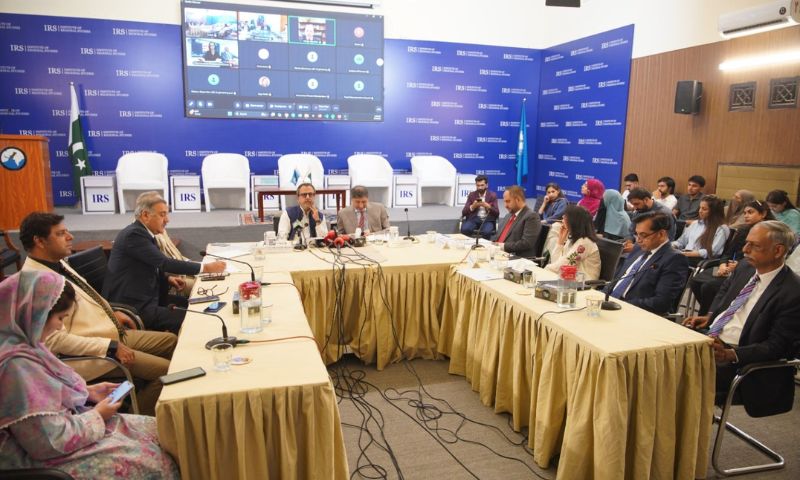
ISLAMABAD: Reflecting the growing momentum in Pakistan-Russia relations, senior policymakers, diplomats, business leaders, and academics from both countries underscored the need to translate expanding political goodwill into concrete economic and institutional partnerships.
They were speaking at a webinar titled Pakistan-Russia: Strengthening Trade, Education & Energy Collaboration, organised by the Institute of Regional Studies (IRS), Islamabad, in collaboration with the University of World Civilisations (UWCM), Moscow, on Thursday.
Held via UWCM in Moscow and the IRS in Islamabad, the webinar brought together senior policymakers, diplomats, business leaders, and academics from both countries to examine practical opportunities for expanding bilateral engagement in trade, industrial development, energy, education, and regional connectivity.
Building on the momentum of the inaugural webinar held in June 2026, the second session shifted the focus from broad geopolitical discussions to actionable geoeconomic priorities. Participants stressed that sustained collaboration among governments, academic institutions, businesses, and policy communities is critical to unlocking the full potential of Pakistan-Russia relations and fostering a more dynamic partnership in the evolving Eurasian landscape.
Energy cooperation at forefront
Delivering the keynote address, Minister for Energy Sardar Awais Ahmed Khan Leghari reaffirmed Pakistan’s commitment to diversifying its international energy partnerships, describing Russia as a key partner in advancing energy security, infrastructure development, technological collaboration, and long-term investment.
He said deeper cooperation in the energy sector has the potential to serve as a cornerstone of a broader and more robust Pakistan-Russia economic partnership.
He said the two sides have been extensively discussing ways to promote bilateral trade and overcome existing hurdles such as lack of a payment mechanism.
Sardar Awais Leghari mentioned that the statement of Russian President Vladimir Putin last week that Pakistan is a big country and it has very diverse international ties is a testament to the fact that Russia regards Pakistan as a genuine stakeholder on the global stage.
He further said the statement of Russian Prime Minister regarding connectivity of International North-South Transport Corridor with Gwadar Port in Pakistan has also been well received in Islamabad. This connection would bridge a missing link in the Road and Belt Initiative of China.
Expanding economic and diplomatic engagement
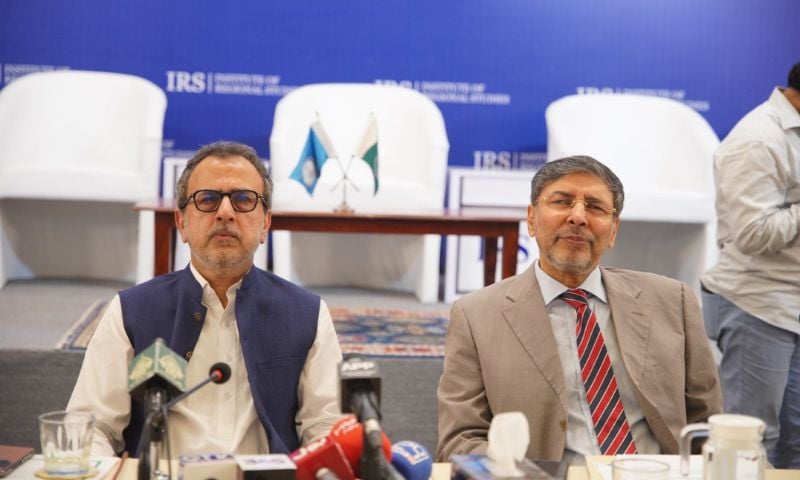
Jauhar Saleem, President of the Institute of Regional Studies, observed that Pakistan and Russia are entering a new phase of bilateral engagement in which economic cooperation, institutional partnerships, and people-to-people exchanges can complement steadily expanding diplomatic relations.
He stressed that policy dialogue must increasingly be accompanied by practical initiatives capable of generating long-term economic and strategic benefits for both countries.
Deputy Minister of Industry and Trade of the Russian Federation Alexey V. Gruzdev reaffirmed Russia’s commitment to expanding industrial and commercial engagement with Pakistan and emphasized new opportunities emerging across Eurasia.
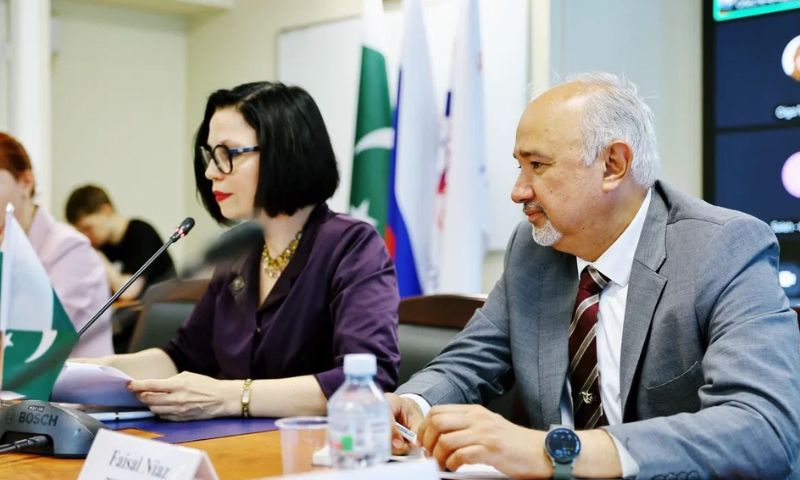
Pakistan’s Ambassador to Russia, Faisal Niaz Tirmizi, highlighted the importance of translating the positive trajectory of bilateral political relations into greater trade, investment, connectivity, and private-sector cooperation.
Closer coordination in regional and international forums
Boris Burmistrov, Deputy Director, Russia Ministry of Foreign Affairs, reaffirmed Moscow’s commitment to strengthening ties with Pakistan through enhanced intergovernmental cooperation, deeper sectoral linkages, and closer coordination in regional and international forums to advance shared interests.
He said Russia and Pakistan continue to build upon their traditions of friendship and partnership for the prosperity of both our nations.
He noted that Russia is convinced that consolidating constructive cooperation with Pakistan is good not only for our two states but for the region and the entire world as well.
Burmistrov added President Vladimir Putin has introduced the concept of Eurasian security architecture based on the principle of indivisibility of security.
“This initiative is open to all countries of the Eurasia and reflects today’s multipolar reality. We believe that this idea offers a natural platform for deepening cooperation on new security challenges, regional stability and connectivity,” he said.
“I am proud that my country has supported sovereign Pakistan from its very first days and made a notable contribution to building the very foundation of Pakistan’s independent economic development including the training of national specialists in various spheres,” he said.
Trade, connectivity and energy cooperation
The first session, moderated by Dr. Roxolana Zigon, focused on trade, transport connectivity, and energy cooperation. Mohsin Sheikh, Chairman of the Pakistan-Russia Business Council, traced the evolution of bilateral trade relations and outlined practical measures to boost commerce through improved logistics, economic corridor development, and stronger business-to-business engagement across Eurasia.
Qazi M. Khalilullah, Executive Director of the Centre for International Strategic Studies Sindh (CISSS) Karachi, underscored the need for resilient, long-term energy partnerships and greater collaboration in energy infrastructure and strategic planning. He proposed initiatives such as enhanced Eurasian cargo connectivity and the appointment of special representatives on Eurasian trade to facilitate closer economic cooperation.
Dr. Prokhor Tebin examined the shifting dynamics of the global economy, arguing that emerging geoeconomic trends present Pakistan and Russia with new opportunities to expand bilateral cooperation. Concluding the session, Dr. Zigon emphasised the importance of maintaining sustained institutional dialogue and translating policy discussions into concrete, actionable outcomes.
Education, industry and business linkages
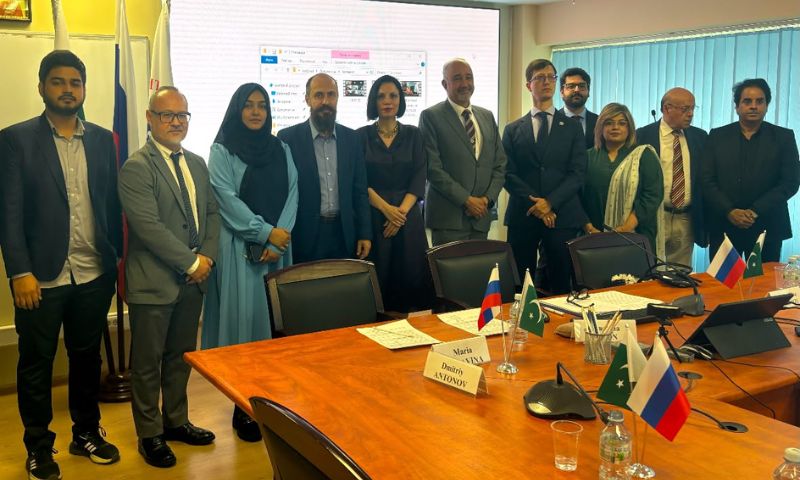
The second session examined industrial development, education, human capital and financial cooperation as key pillars of long-term bilateral engagement. Dr. Asma Naveed of the National University of Modern Languages provided concrete recommendations on bilateral human capital development, including language training in specialist economic sectors, joint and lasting institutional engagement, and establishing Russian language centres in the Pakistani education system.
Dr. Svetlana Minyurova of the Russian Academy of Education highlighted the potential for deeper collaboration between Pakistani and Russian universities through joint research initiatives, technology transfer, academic exchanges, and long-term institutional partnerships.
Dmitry Antonov of the Business Council of Cooperation with Pakistan (Russia) presented practical recommendations for strengthening business-to-business (B2B) engagement, including improving banking channels, developing inland trade routes, and making greater use of Eurasian multilateral platforms to facilitate bilateral commerce.
Participants across both sessions agreed that the evolving global political and economic landscape offers Pakistan and Russia significant opportunities to diversify their economic partnerships, enhance regional connectivity, and expand cooperation in trade, industry, energy, education, science, and technology.
They underscored the need for stronger collaboration among governments, universities, businesses, and research institutions to transform shared strategic interests into tangible and sustainable outcomes.