ISLAMABAD: Pakistan has moved a step closer to hosting high-stakes talks between Iran and the United States, with Deputy Prime Minister and Foreign Minister Ishaq Dar confirming that both sides have expressed confidence in Islamabad’s role as a facilitator.
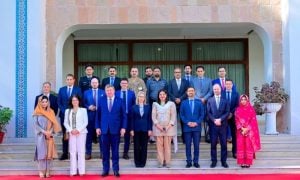
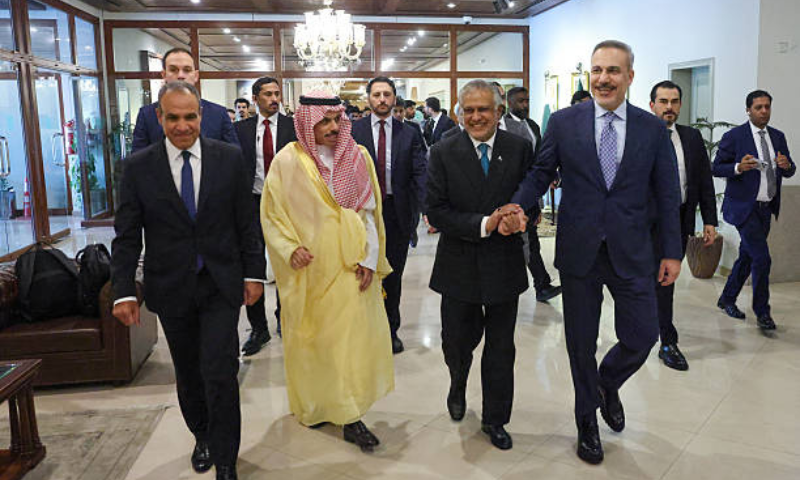
The development follows a quadrilateral meeting in Islamabad on Sunday, where the foreign ministers of Saudi Arabia, Türkiye, and Egypt joined Pakistan to discuss the escalating Middle East crisis and pathways to de-escalation.
Speaking after the meeting, Dar said Pakistan would be “honoured” to host “meaningful talks between the two sides in the coming days”, signalling that diplomatic groundwork has already advanced beyond a preliminary offer.
Iran-US expressed confidence in Pakistan to facilitate peace talks: FM Dar pic.twitter.com/EdEIWQxxYT
— Pakistan TV Digital (@PakistanTVcom) March 29, 2026
“Both Iran and the United States have expressed their confidence in Pakistan to facilitate the talks,” Dar said, adding that the aim would be a “comprehensive and lasting settlement” of the ongoing conflict.
Regional Backing Strengthens Pakistan’s Role
The Islamabad moot — the second such consultation after an earlier round in Riyadh this month — produced unified regional backing for Pakistan’s mediation effort.
🔊PR No.8️⃣2️⃣/2️⃣0️⃣2️⃣6️⃣
Statement by the Deputy Prime Minister /Foreign Minister Senator Mohammad Ishaq Dar at the Conclusion of 2nd Meeting of Four Foreign Ministers
🔗⬇️ pic.twitter.com/JpUbUdhzLb
— Ministry of Foreign Affairs – Pakistan (@ForeignOfficePk) March 29, 2026
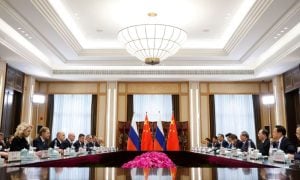
Deputy Prime Minister and Foreign Minister Ishaq Dar said Pakistan’s initiative to host Iran-US talks has received broad international backing, including support from China following talks with Wang Yi and from the United Nations Secretary-General.
“I had a detailed telephonic conversation with Chinese Foreign Minister Wang Yi. China fully supports Pakistan’s initiative to host Iran-US talks. Similarly, I had a telephonic conversation with the Secretary General of the United Nations. The Secretary General has expressed his full support for the peace initiative by Pakistan,” Dar said.
He added that multiple countries have expressed confidence in Pakistan’s efforts, reflecting strong global support for Islamabad’s push to facilitate dialogue and achieve a lasting peace, while calling for continued international backing to ensure the success of the initiative.
“Pakistan will require prayers and support of the entire international community for the success of its endeavour to achieve peace and bring a permanent end to this war,” Dar added.
According to the host summary:
- All four countries termed the ongoing conflict “extremely unfortunate” due to its humanitarian and economic toll
- Ministers agreed that the war benefits “no one” and risks wider regional instability
- Strong emphasis was placed on dialogue and diplomacy as the only viable solution
- Pakistan’s proposal to facilitate Iran-US talks received full support from participating states
The meeting also highlighted the importance of Muslim world unity amid rising geopolitical tensions.
Global Support Builds Momentum
Dar revealed that Pakistan’s initiative has gained traction beyond the region:
- China has expressed full support following a call with Foreign Minister Wang Yi
- The United Nations Secretary-General has backed Pakistan’s peace efforts
- Multiple international partners have conveyed confidence in Islamabad’s mediation role
Pakistan has also maintained active engagement with Washington, reflecting its dual diplomatic channels with both Tehran and the US — a key factor enabling its mediator role.
Why Pakistan Matters in This Moment
Pakistan’s positioning is notable for several reasons:
- It maintains working relations with both Iran and the United States
- It has backing from major regional powers and global stakeholders
- The talks are expected to be structured rather than symbolic, suggesting potential substance
Unlike earlier speculative reports, the latest announcement indicates that talks are now in the operational phase, with timelines narrowing to “coming days.”