Key Points
- PM Shehbaz speaks with Qatar’s Amir on regional security.
- Prime minister urges restraint to preserve regional peace.
- Both leaders reaffirm commitment to diplomacy and dialogue.
- Pakistan thanks Qatar for supporting Islamabad peace initiative.
- Leaders stress adherence to Islamabad MoU commitments.
- Qatar praises Pakistan’s role in regional peace efforts.
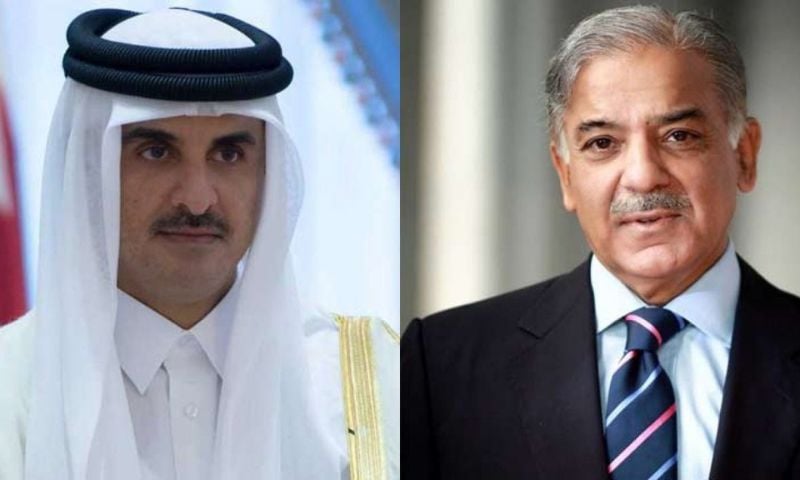
ISLAMABAD: Pakistan’s Prime Minister Muhammad Shehbaz Sharif and the Amir of the State of Qatar, Sheikh Tamim bin Hamad Al Thani, on Friday reaffirmed their commitment to sustained diplomacy and dialogue amid renewed tensions in the Middle East, stressing the need for all parties to honour commitments made under the Islamabad Memorandum of Understanding (MoU).
The understanding was reached during a warm and cordial telephone conversation between the two leaders, according to a statement issued by the Prime Minister’s Office.
Islamabad: 10 July 2026.
Prime Minister Muhammad Shehbaz Sharif held a warm and cordial telephone conversation today with the Amir of the State of Qatar, His Highness Sheikh Tamim bin Hamad Al Thani.
During their discussion, the Prime Minister expressed his deep concern over… pic.twitter.com/GBbjyE6WPm
— Prime Minister’s Office (@PakPMO) July 10, 2026
During the conversation, Prime Minister Shehbaz expressed deep concern over the recent escalation of tensions in the region and expressed Pakistan’s solidarity with the people of Qatar following the recent attacks. He urged all parties to exercise maximum restraint and avoid actions that could further undermine regional peace and stability.
Appreciation for Qatar
The Prime Minister thanked the Qatari leadership for its consistent support for diplomatic efforts that led to the Islamabad MoU and the first round of high-level technical talks held in Burgenstock.
He described Qatar as a key partner in advancing regional peace and acknowledged its constructive role in facilitating dialogue.
Held a telephone conversation with my dear brother, HH Sheikh Tamim bin Hamad Al Thani, Amir of Qatar, today.
I conveyed Pakistan’s solidarity with the brotherly people of Qatar and stressed the need for restraint, dialogue and diplomacy to preserve regional peace.
I also…
— Shehbaz Sharif (@CMShehbaz) July 10, 2026
Both leaders underscored the importance of continued diplomatic engagement and agreed that all parties should adhere to the commitments made under the peace memorandum.
They reaffirmed that dialogue remains the only viable path to resolving the ongoing crisis and maintaining regional stability.
Qatar praises Pakistan’s role
Sheikh Tamim thanked Prime Minister Shehbaz Sharif, Deputy Prime Minister and Foreign Minister Mohammad Ishaq Dar, and Chief of Army Staff Field Marshal Syed Asim Munir for Pakistan’s leading role in promoting peace in the region.
The Qatari Amir also assured Pakistan of his country’s continued support for diplomatic initiatives aimed at reducing tensions and advancing the peace process.
Pakistan steps up mediation efforts
Pakistan has intensified diplomatic efforts to de-escalate renewed military tensions between the United States and Iran and bring both sides back to negotiations under the Islamabad Memorandum of Understanding framework.
The latest diplomatic push follows a fresh exchange of military strikes between Washington and Tehran after an Iranian missile attack on commercial vessels in the Strait of Hormuz.
The Islamabad MoU was signed on June 18 by US President Donald Trump, Iranian President Masoud Pezeshkian and Prime Minister Shehbaz Sharif after Pakistan brokered a ceasefire between the two countries.
Under the agreement, the United States and Iran committed to halt military operations, reopen the Strait of Hormuz to commercial shipping, and negotiate a comprehensive agreement covering Iran’s nuclear programme, US sanctions and a permanent ceasefire within 60 days.
Meanwhile, Qatar has also been holding discussions with both Washington and Tehran to prevent further escalation in the Middle East. According to The New York Times, Qatari officials have been engaging both sides through diplomatic channels in an effort to ease tensions and create conditions for the resumption of negotiations.