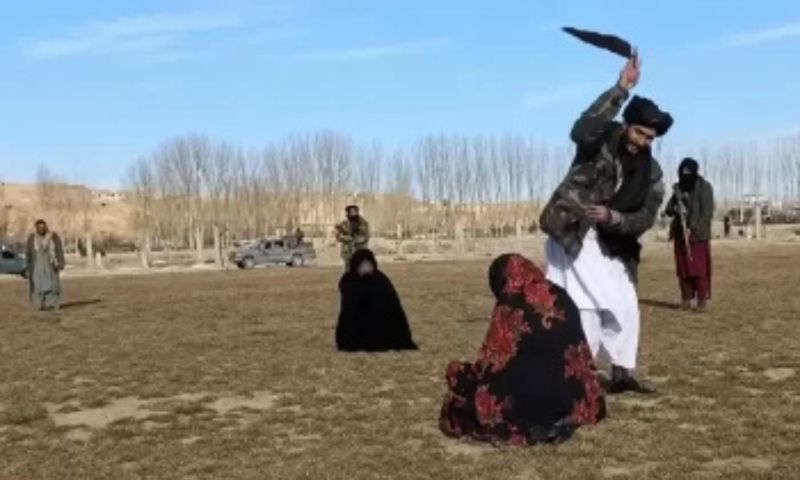
KABUL, Afghanistan: The Taliban publicly flogged 2,745 people, including 422 women, across Afghanistan between February 2022 and April 2026, according to a report by the Afghanistan Human Rights and Democracy Organisation that documented 634 separate public flogging incidents.
According to the report, published on Tuesday, 25 August, the Taliban regime punished 422 Afghan women, 1,761 men and 562 people whose gender was not specified.
The 92-page report, titled “Whips of Power, Spectacle of Control: Documenting the Taliban’s Public Floggings, 2022-2026”, examines corporal punishment carried out by the Taliban regime.
The rights group’s report said Kabul province accounted for the highest share of people flogged, at 88 percent, while Nuristan recorded the lowest share, at one percent.
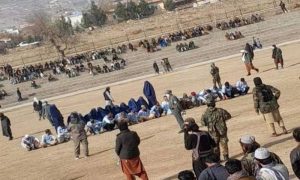
The highest number of public flogging incidents was recorded in 2025, with 262 cases, while the lowest was in 2023, with 30 cases.
Taliban’s use of corporal punishment as tool of social control
The Afghanistan Human Rights and Democracy Organisation said public corporal punishment is often carried out in front of crowds and is used by the Taliban regime as a tool of punishment, intimidation and social control.
The report also documents cases of arbitrary detention, forced confessions and denial of access to defence lawyers, evidence and witnesses.
The organisation described public flogging as a violation of several fundamental rights, including the prohibition of torture and ill-treatment, the right to privacy, freedom of movement, freedom of assembly and association, and the right to a fair trial.
Also Read: Taliban Detain Afghan Women and Girls in Herat Amid Growing Restrictions
The rights group also said the report’s findings could, under international law, be relevant to possible crimes against humanity and war crimes, including torture, persecution, imprisonment, cruel and inhuman treatment, denial of fair-trial rights and outrages upon personal dignity.

The report includes 23 personal testimonies from victims and calls on governments, international organisations and human rights bodies to strengthen independent monitoring, investigate abuses and take steps to hold perpetrators accountable.
Taliban regime’s policies towards women and girls
The organisation said Taliban regime policies towards women and girls amount to “gender apartheid” and should be recognised as a crime against humanity.
It urged the United Nations to take the report’s findings into account when examining the situation of women and girls in Afghanistan.
The organisation also called on the prosecutor of the International Criminal Court to review evidence concerning alleged Taliban regime crimes as part of the court’s investigation into Afghanistan.
Despite the continuation of flogging in Afghanistan, the Taliban regime has stopped officially publicising such punishments since the beginning of this summer.
Taliban regime continues public flogging
The Afghanistan Human Rights and Democracy Organisation called on the Taliban regime to revoke orders permitting flogging and end restrictions on the rights and freedoms of women, girls and other Afghan citizens.
The Taliban regime’s Supreme Court continued publishing reports on the flogging of citizens until May 2026.
Afghanistan International’s review shows that since 22 April 2026, the Taliban Supreme Court has significantly restricted public access to information about corporal punishment.
Also Read: Taliban’s New Police Law Allows Death Threats Against Suspects
The last statement published by the court on a flogging sentence was dated 22 April. In that announcement, the Taliban regime’s Supreme Court said two defendants in Badakhshan had each been sentenced to one year in prison and 39 lashes over an alleged extramarital relationship.
The restriction followed an Afghanistan International investigative report published on 25 April 2026.
That investigation, based on thousands of official Taliban court statements, information from UN experts and reports by human rights organisations, found that more than 107,550 lashes had been inflicted on Afghan citizens from the Taliban regime’s takeover of Kabul in August 2021 through the end of March 2026.
UN experts, including Richard Bennett, the UN special rapporteur on human rights in Afghanistan, have previously called for an end to corporal punishment.
They described such punishments as an “assault on human dignity” and warned that they could amount to torture or other cruel, inhuman or degrading treatment.
The experts have said the widespread use of corporal punishment for such alleged offences forms part of a broader system of structural gender discrimination and social control that is incompatible with Afghanistan’s international obligations.