Key Points
- Pakistan imported 41,798 tonnes of pesticides worth US$188.9 million.
- Climate change is intensifying pest attacks and crop diseases.
- Trichogramma targets pest eggs before destructive insects can hatch.
- Farmers use biodegradable cards containing the beneficial insects.
- Each card costs just Rs30, according to the facility.
- Biological control can reduce reliance on chemical pesticides.
- Mardan’s model has inspired biological-control initiatives elsewhere in Pakistan.
MARDAN, Pakistan: A tiny parasitic wasp is being deployed in Pakistan’s fields as farmers look for alternatives to increasingly costly chemical pesticides.
Farmers are under increasing pressure to produce higher yields from limited agricultural land. At the same time, climate change has intensified insect infestations and crop diseases, forcing farmers to rely heavily on chemical pesticides to protect their crops.
According to official data, Pakistan imported approximately 41,798 metric tonnes of pesticides during the fiscal year 2025–26, valued at around US$188.9 million. While these chemicals play an important role in pest management, their excessive use has raised serious concerns over production costs, environmental pollution, and food safety.
Tiny wasp, big impact
In Mardan — Khyber Pakhtunkhwa’s central agricultural belt around 70 kilometres northeast of Peshawar — an innovative initiative is offering farmers a natural and sustainable alternative.
“Farmers who previously spent up to Rs300,000 on pesticides during a season can reduce that expense to around Rs30,000 by adopting biological control.” – Yaseen, a lab assistant
Established in January 2023 through a collaboration between the Centre for Agriculture and Biosciences International (CABI) and the Khyber Pakhtunkhwa Department of Agriculture, the Trichogramma Rearing Facility (TRF) is producing beneficial insects that naturally control destructive crop pests without relying on excessive chemical pesticides.
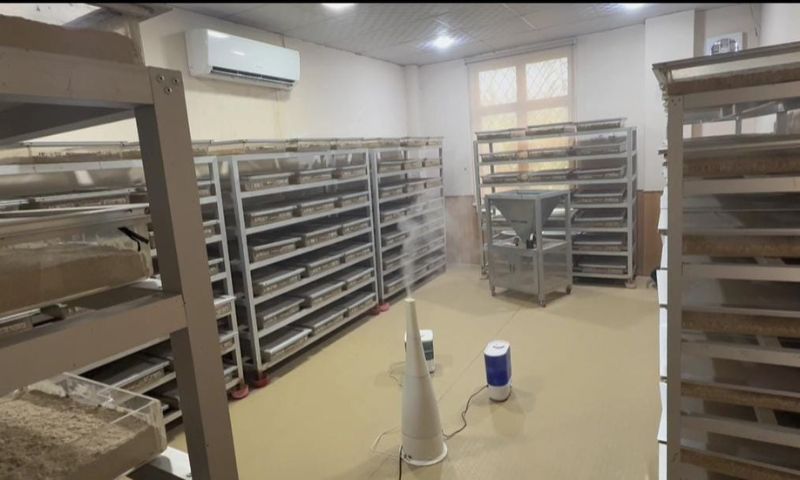
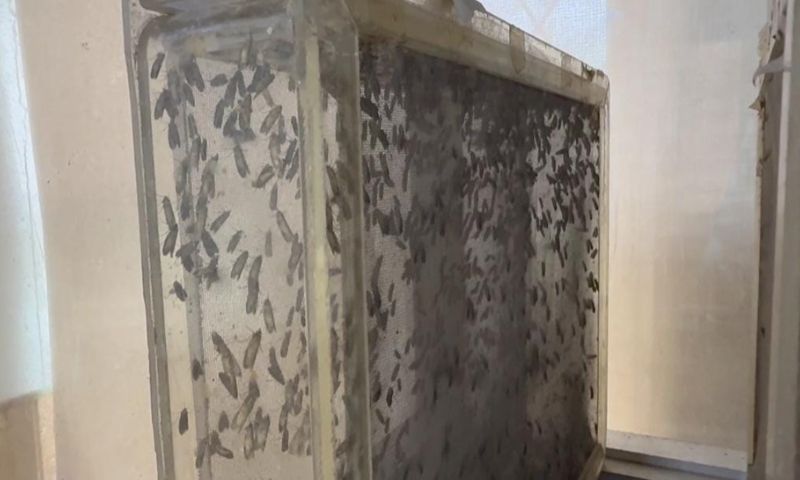
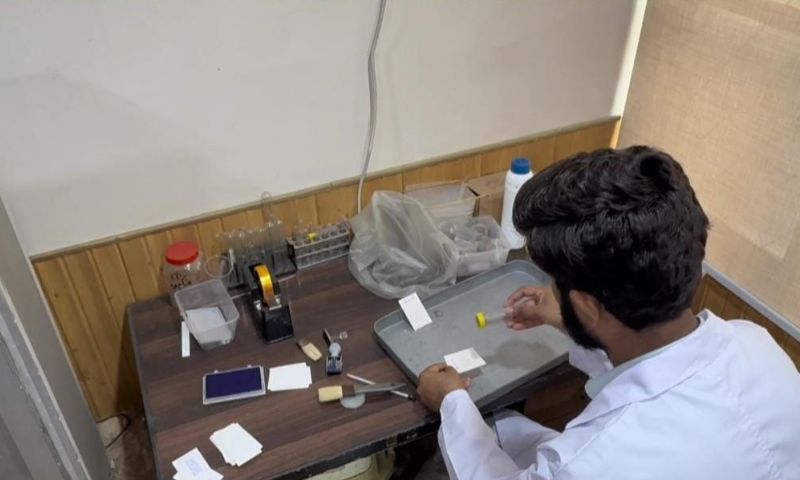
Inside the laboratory, scientists rear Trichogramma, a genus of tiny parasitic wasps that destroy the eggs of the fruit borer — Helicoverpa armigera — before they hatch.
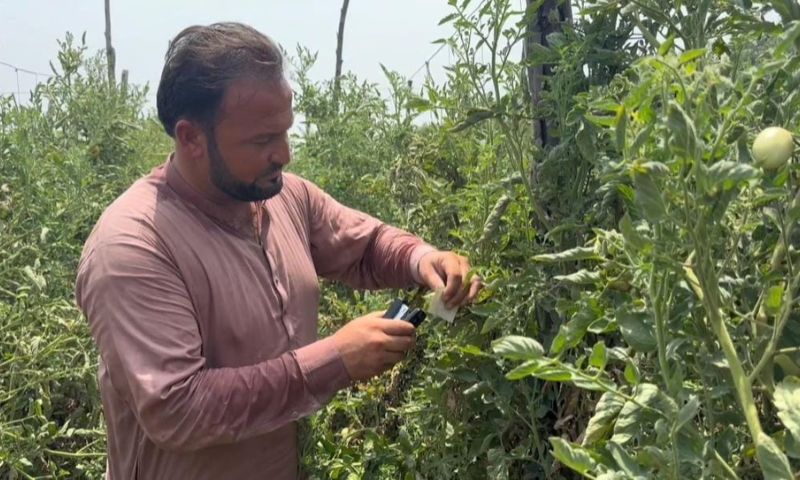
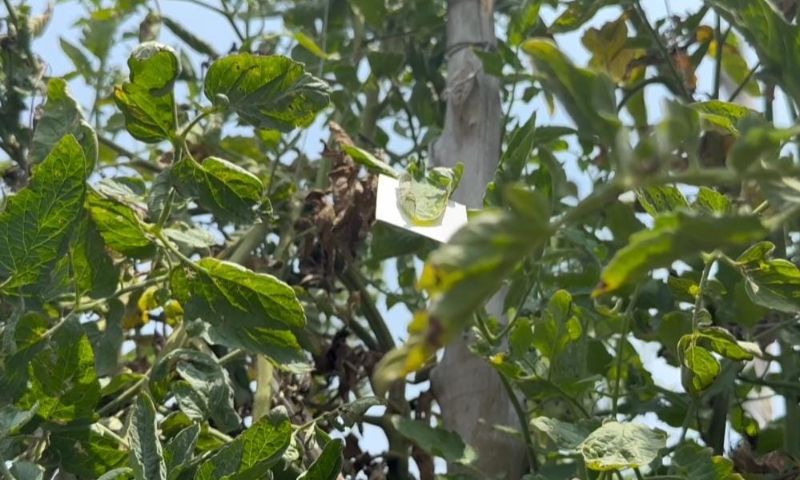
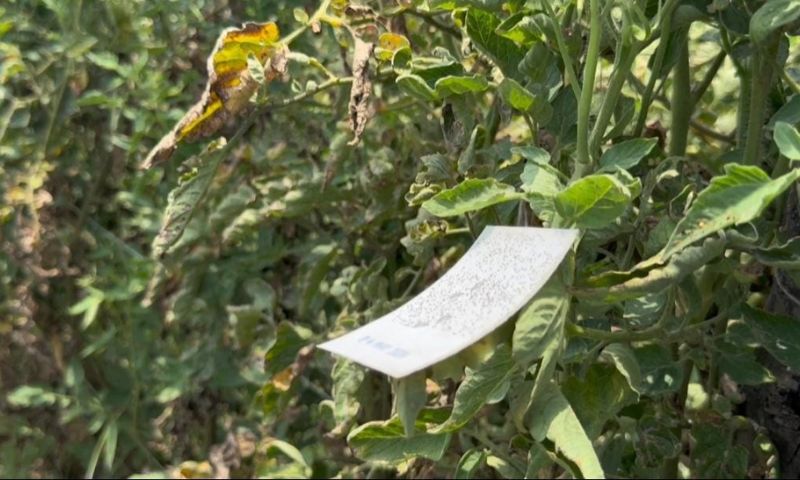
The insects are placed inside biodegradable paper cards and supplied to farmers, who attach them to plants in their fields. Depending on pest pressure, 60 to 140 cards are used per acre, with each card costing only Rs30, says Yaseen, Lab Assistant at the Trichogramma Rearing Facility, Mardan.
The technology has proven effective against more than 250 species of harmful insect pests, including stem borers, bollworms, fruit borers, shoot borers, and rice stem borers. It is now being successfully used in tomato, sugarcane, tobacco, cabbage, maize, cotton, and rice crops.
“Biological control offers a safer and more sustainable solution by using beneficial insects to suppress harmful pests naturally.” – Dr Inamullah, University of Agriculture Peshawar
Yaseen says that Mardan’s warm climate creates ideal conditions for fruit borer infestations, forcing many farmers in the past to spray pesticides twice every week. With Trichogramma cards, farmers now need to place the cards only three to four times during the entire crop season, significantly reducing the use of chemical pesticides.
The financial benefits are equally remarkable. “Farmers who previously spent up to Rs300,000 on pesticides during a season can reduce that expense to around Rs30,000 by adopting biological control. Besides lowering production costs, the technology protects beneficial insects, reduces environmental pollution, and helps produce safer, healthier food free from harmful pesticide residues.”
Beyond chemical pest control
Agricultural experts believe such innovations are becoming increasingly important.
Dr Inamullah, professor of Crop Production at the University of Agriculture Peshawar, says rapid population growth has significantly increased food demand, while climate change has intensified pest attacks and crop diseases, making sustainable crop protection more critical than ever.
He explains that although chemical pesticides can effectively control pests, their excessive use leaves harmful residues on fruits and vegetables. These residues may pose health risks to consumers and can also contaminate soil and water when washed away by rainfall, potentially re-entering agricultural ecosystems and, in some circumstances, the food chain.
“Chemical pesticide costs have become a major burden. In comparison, biological control cards provide a more affordable, reliable, and environmentally friendly solution.” – Muhammad Jamal Khan — a local farmer
“Biological control offers a safer and more sustainable solution by using beneficial insects to suppress harmful pests naturally,” Dr Inam says.
He stresses that expanding biological control requires greater investment in research, stronger collaboration between universities and agricultural institutions, and wider awareness among farmers.
He believes that increasing the production and availability of biological control technologies will reduce dependence on chemical pesticides, improve food safety, protect the environment, and strengthen Pakistan’s agricultural productivity.
Nature delivers for farmers
The impact of the technology is already visible in farmers’ fields.
Muhammad Jamal Khan, a tomato farmer from Kamran Kallay in Mardan, says insect attacks once destroyed nearly half of his tomato crop every season. After agricultural experts introduced Trichogramma cards, pest infestations declined significantly, resulting in healthier plants and improved yields.
“Chemical pesticide costs have become a major burden. Farmers who previously spent between Rs100,000-150,000 per acre now spend Rs200,000-300,000 per acre on spraying. In comparison, biological control cards provide a more affordable, reliable, and environmentally friendly solution,” Khan tells WE News English.
“Continued investment in research, farmer training, and biological control infrastructure will be essential for ensuring Pakistan’s future food security.” – Dr Inamullah, University of Agriculture Peshawar
He also highlights the food safety benefits of biological control. Unlike chemical pesticides, which require farmers to wait at least 72 hours before harvesting because of pesticide residues, crops protected through biological control can be harvested without the same level of concern over chemical contamination.
He recommends applying Trichogramma cards during the early flowering stage, when they are most effective at preventing pest populations from multiplying.
A natural solution spreads
According to Yaseen, the success of the project has extended far beyond Mardan. Farmers from Nowshera, Buner, Malakand, Haripur, Lower Dir, Lower Swat, Khyber, Tank, Peshawar, and Charsadda are now benefiting from the initiative.
Yaseen says that over the past three years, more than 2,000 farmers have directly used the service, while approximately 80,000 Trichogramma cards have been distributed across the region. The growing adoption reflects increasing confidence in biological pest management among farming communities.
Affordability remains one of the programme’s greatest strengths. At only Rs30 per card, biological control is significantly cheaper than repeated chemical pesticide applications. At the same time, it leaves no toxic chemical residues on crops, helping ensure healthier, safer, and higher-quality food for consumers.
Following the success of the Mardan laboratory, the model has been replicated in Muzaffargarh and Muzaffarabad in 2023, highlighting the growing national recognition of biological control as a practical strategy for sustainable agriculture.
Dr Inamullah believes that wider adoption of biological control can reduce dependence on imported pesticides, lower production costs, protect biodiversity, improve food safety, and reduce environmental pollution.
He emphasises that continued investment in research, farmer training, and biological control infrastructure will be essential for ensuring Pakistan’s future food security.
Today, the Trichogramma Rearing Facility in Mardan stands as one of Pakistan’s most successful examples of sustainable agricultural innovation. By harnessing nature to fight crop pests, the project is helping farmers reduce costs, protect the environment, produce safer food, and build a more resilient agricultural future for generations to come, says Muhammad Jamal.