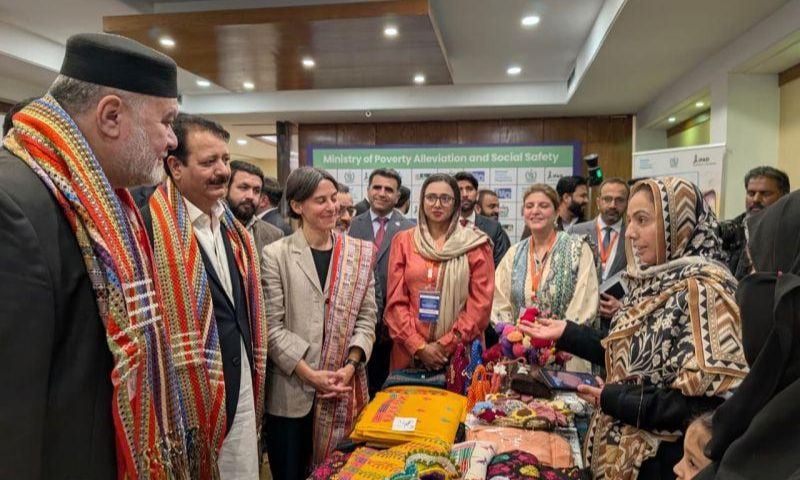
Key Points
- Conference urges a national policy linking social protection with skills, finance and market access
- Pakistan Poverty Alleviation Fund launches a climate resilience and green growth strategy for 2025–2030.
- Delegates from 12 countries call for coordinated action to prevent families from falling back into poverty.
ISLAMABAD: An international conference in Islamabad has called for a National Poverty Graduation Policy to help vulnerable Pakistani households move beyond temporary financial assistance towards sustainable livelihoods, economic independence and long-term resilience.
The two-day International Conference on Inclusive and Resilient Economic Empowerment and Growth, under the theme “From Poverty to Prosperity”, brought together delegates from 12 countries and more than 1,000 participants.
They included government officials, development partners, international experts, private-sector representatives and civil society groups.
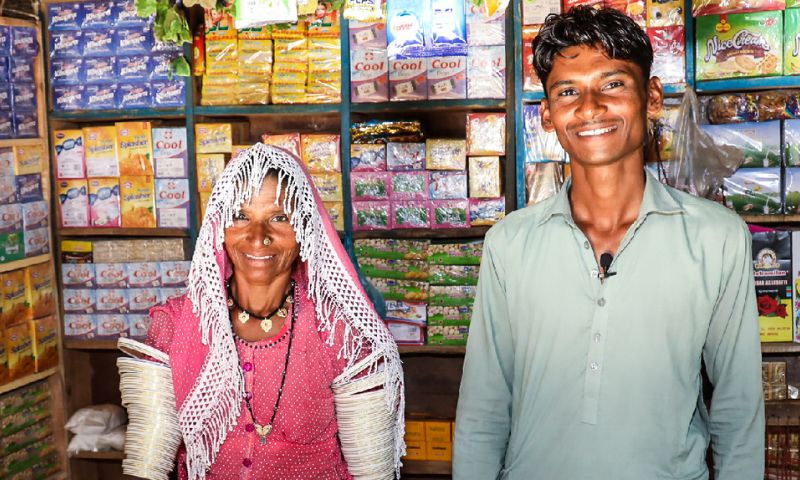
Organised by the Pakistan Poverty Alleviation Fund (PPAF) in collaboration with government ministries and partner institutions, the conference emphasised that lasting poverty reduction requires more than cash transfers.
It called for an integrated approach to social protection and vocational training, productive assets, access to finance, market opportunities and stronger community institutions.
The proposed policy aims to help households establish reliable income sources and avoid falling back into poverty after receiving initial assistance.
Climate resilience
A key development at the conference was the launch of PPAF’s Climate Change and Green Growth Strategy 2025–2030, which places community-level adaptation and resilience at the centre of sustainable poverty alleviation.
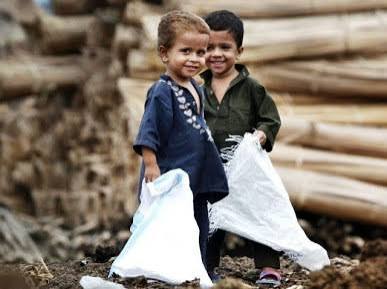
The strategy seeks to help vulnerable communities withstand climate-related and economic shocks while promoting environmentally sustainable growth and more secure livelihoods.
Participants highlighted the need to expand micro, small and medium-sized enterprises, improve financial inclusion, support youth employment and encourage sustainable investment.
They also stressed the importance of green growth and climate-resilient economic activities to protect household incomes against environmental risks.
READ ALSO: Pakistan Poverty Rate Climbs to 28.9 per cent: Economic Survey
PPAF Chief Executive Officer Nadir Gul Barech called for the conference’s recommendations to be translated into practical measures through sustained cooperation among government institutions, development partners and communities.
He proposed making the gathering a regular platform to review progress, strengthen partnerships and assess whether poverty alleviation programmes were delivering lasting results.
Economic participation
Youth empowerment emerged as a central priority, with participants calling for equal access to economic opportunities, particularly for disadvantaged and marginalised groups.
Rana Mashhood Ahmad Khan, chairman of the Prime Minister’s Youth Programme, said sustainable national development depended on ensuring that people from different social and economic backgrounds had access to opportunities and resources.
He highlighted volunteerism and community development, warning that social divisions could widen if deprived sections of society were denied opportunities available to better-resourced groups.
Women’s economic participation also featured prominently. At the Dukhtaran-e-Pakistan Excellence Awards, officials highlighted the need to expand women’s access to education, finance, vocational skills, safe workplaces and decision-making.
Wajiha Qamar, minister of state for federal education and professional training, said women needed stronger institutional support and equal opportunities to contribute to Pakistan’s economic and social development.
“Pakistan’s strength lies in its daughters as much as its sons,” she said.
The conference also presented Youth Excellence and Media Excellence Awards to recognise contributions to youth engagement and the media sector.
Community partnerships
An exhibition of products and enterprises from Pakistan’s provinces and regions highlighted the role of small businesses in generating employment, raising household incomes and connecting local producers with wider markets.
Participants stressed that enterprises needed better market access, opportunities to improve product quality and value addition, and support to expand their operations.
The conference also examined the contribution of cultural industries to economic empowerment and national cohesion. The Pakistan launch of Weaving My South Asian Tapestry by Chandni Joshi highlighted women’s rights, gender equality and development across South Asia.
PPAF and the Centre of National Cohesion and Outreach (CENCo) signed a memorandum of understanding to strengthen cooperation in economic empowerment, social inclusion, community engagement and national cohesion.
Action on declaration
In his concluding remarks, Senate Chairman Syed Yusuf Raza Gilani urged participants to translate the conference declaration into concrete measures.
He said we should assess poverty graduation by lasting improvements in living standards rather than in short-term gains.